
Home | Category: Aboriginals
TIWI
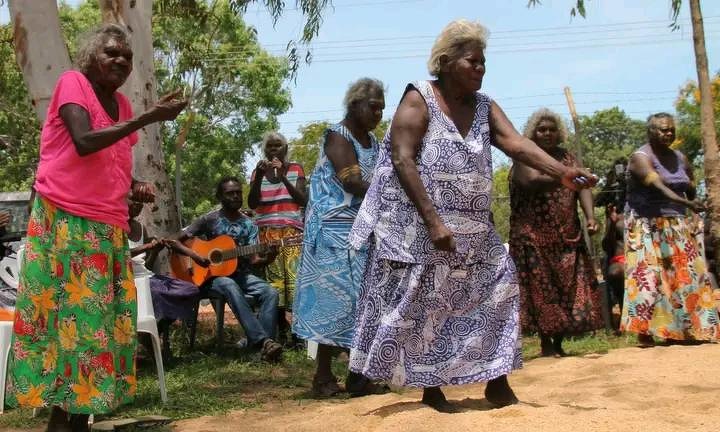
Tiwi women
The Tiwi people are the inhabitants and owners of Melville and Bathurst islands of north Australia. Also known as Bathurst Islanders and Melville Islanders, they number about 2,000 divided between the Bathhurst Island township Nguiu with 1,300 people and the two Melville Island townships of Parlingimpi and Milikapiti with 300 and 400, respectively. The word "Tiwi" means "people" in the Tiwi language.[Source: Wikipedia; Jane C. Goodale, “Encyclopedia of World Cultures, Volume 2: Oceania,” edited by Terence E. Hays, 1996]
Tiwi society is organized around matrilineal descent, with marriage serving as a central institution in both social and cultural life. Art and music are integral to ceremonial expression, playing a vital role in spiritual practice and community identity. Traditionally, Tiwi beliefs reflect an animist worldview in which the natural and spiritual realms are closely intertwined. During the Stolen Generations period from the 1910s to the 1970s many Indigenous people were brought to the Tiwi Islands who were not of direct Tiwi descent.
The distinctive Tiwi language is distantly related to other Aboriginal languages but has no apparent link to the languages of Arnhem Land on the Australian mainland not so far to the south. Nearly everyone uses both Tiwi and English. However, elders lament the decline in Tiwi fluency among younger generations. In the past, fluency in Tiwi was an important marker of adulthood, allowing both men and women to fully participate in the significant ceremonial activity of composing and singing songs.
The Tiwi Islands are about 48 kilometers (30 miles) north of Darwin at 11° 30 S and 131° 15 E. They comprise Melville Island, Bathurst Island, and nine smaller uninhabited islands, with a combined area of 8,320 square kilometers (3,212 square miles). They are relatively flat. Melville Island has low central ridge running west to east. Running south to north from this ridge are nine rivers. On Bathurst Island, elevations are generally low, and the rivers are small, shallow, and largely tidal. Mangrove forests line the tidal stretches of rivers and creeks, while the uplands are dominated by mixed eucalyptus and cypress forests. At the freshwater headwaters of larger rivers lie small pockets of true rainforest, and the coastline alternates between sandy beaches and rocky reefs. This environmental diversity has long supported, and continues to support, a rich and varied diet for the Tiwi people. The climate is monsoonal, with heavy rains falling from November to March. From June to September rainfall is scarce, nights are cool, and smoke from hunting fires often drifts through the air. During the wet season, temperatures average about 27° C with little variation, while the dry season brings greater daily fluctuations.
RELATED ARTICLES:
ABORIGINALS (FIRST NATION PEOPLE) OF AUSTRALIA: NAMES, DEMOGRAPHICS, LANGUAGES ioa.factsanddetails.com
ABORIGINAL AUSTRALIANS IN NORTH NORTHERN TERRITORY: SOME GROUPS, CUSTOMS, LIFESTYLE ioa.factsanddetails.com
ABORIGINAL ART OF NORTHERN AUSTRALIA: ANCIENT ROCK ART AND BARK PAINTINGS ioa.factsanddetails.com
YOLNGU OF ARNHEM LAND: HISTORY, MUSIC, TRADITIONAL LIFE, CUSTOMS ioa.factsanddetails.com
ABORIGINALS IN QUEENSLAND: SOME GROUPS, CUSTOMS, LIFESTYLES ioa.factsanddetails.com
TORRES STRAIT ISLANDERS: HISTORY, TRADITIONAL LIFE, CULTURE ioa.factsanddetails.com
LIFE OF EARLIEST HUMANS IN AUSTRALIA: TOOLS, WEAPONS, ART, SETTLEMENTS ioa.factsanddetails.com
AUSTRALIAN ABORIGINALS AT THE TIME EUROPEAN COLONIZATION BEGAN ioa.factsanddetails.com
AUSTRALIA ABORIGINALS FROM 1900 TO PRESENT: DISCRIMINATION, ASSIMILATION, SOME RESTITUTION ioa.factsanddetails.com
AUSTRALIA’S STOLEN GENERATIONS: VICTIMS, LAWS, RATIONALE, OUTRAGE ioa.factsanddetails.com
AUSTRALIAN ABORIGINAL RELIGION: TRADITIONAL BELIEFS, DEMOGRAPHY AND DEATH ioa.factsanddetails.com
AUSTRALIAN ABORIGINAL CUSTOMS, SOCIETY AND RITUALS ioa.factsanddetails.com
ABORIGINAL LIFE: WHERE THEY LIVE, WORK, DIET, HEALTH, ALCOHOL ioa.factsanddetails.com
TRADITIONAL ABORIGINAL LIFE: FOOD, HOMES, HUNTING ioa.factsanddetails.com
ABORIGINAL MEN AND WOMEN: GENDER, MARRIAGE ioa.factsanddetails.com
ABORIGINAL AUSTRALIAN SEX: PRACTICES, ATTITUDES, ADOLESCENCE ioa.factsanddetails.com
ABORIGINAL AUSTRALIAN ART ioa.factsanddetails.com
Tiwi History

It is believed human activity on the Tiwi Islands date back at least 40,000 years but no hard archaeological evidence from that period has been found. Humans were in Arnhem Land to the south at least 50,000 — and maybe 65,000 — years ago. The Tiwi Islands were connected to the Australian mainland, when sea levels were low during the glacial maximums of the Ice Age periods. As it is believed that the first people in Australia arrived by boat from what is now Indonesia, the Tiwi Islands appear to be a highly possible landing site. Evidence of the earliest human occupants of the Tiwi Islands was probably submerged when sea levels rose between 8,000 and 12,000 years ago. Undersea archaeology is taking place in the Tiwi Islands: Researchers are searching for tools, structures, burial sites, and rock art on the seabed. Australia's continental shelf, which includes the area of the Tiwi Islands, is thought to hold a record of human occupation from the first 50,000 years.
Traditionally, conflict most often arose between matrilineal clans and patrifocal local groups, usually over marriage rights rather than material resources. Such disputes were generally resolved by localized kin groups and if unresolved, could involve affiliated clans whose obligations of close kinship required their intervention. Oral history recalls a handful of interregional disputes resolved through formalized “wars,” staged at agreed times and places, during which opposing sides exchanged volleys of spears and clubs in turn. On a smaller scale, interpersonal conflicts were sometimes settled through ambush or surprise attack.
The Tiwi people are first mentioned in historical records from the early eighteenth century when they came into contact with Dutch, Portuguese, and British explorers. Prior to these recorded encounters with Europeans, evidence suggests early contact with Chinese and Indonesians, though no sustained settlement occurred. The first foreign settlement on the islands occurred in 1824 when the British established Fort Dundas near the present-day township of Parlingimpi. After five years of hardship, the settlement was abandoned, and it would be nearly seventy-five years before another attempt at European settlement was made, early in the twentieth century. [Source: Jane C. Goodale, “Encyclopedia of World Cultures, Volume 2: Oceania,” edited by Terence E. Hays, 1996 |~|]
In 1911, Father Gsell, M.S.C., established a Catholic mission on Nguiu, a southeastern Bathurst Island township. Following this development, there was significantly more contact with white Australians. The township of Parlingimpi, located near the ruins of Fort Dundas at Garden Point, was first established as a government settlement in 1939. In the late 1940s, the government moved the settlement from Garden Point to Snake Bay (Milikapiti). Milikapiti remained a government settlement until the late 1970s when it became the first of three communities to incorporate as a township. Perhaps the most significant event in recent Tiwi history was the return of all traditional Tiwi lands on both Bathurst and Melville Islands under the Northern Territory Land Rights Act of 1976.
Tiwi Religion and Ceremonies
Approximately 90 percent of Tiwi people are practicing Roman Catholics. The Tiwi Islands was the site of some important Catholic missions. Many Tiwi people combine Christian beliefs with traditional Aboriginal spirituality, a practice seen in the Northern Territory. The Catholic Church plays a big part in daily lives of Tiwi people in communities in Nguiu and Parlingimpi, and to a lesser extent in Milikapiti.
Traditional Tiwi religion centers on ancestral spirits, including both those of the recent past and those who, in the Dreamtime, created the land, sea, and all within them. Tiwi ceremonial traditions are openly accepted by the Church and its members, though this was not always the case in the past. [Source: Jane C. Goodale, “Encyclopedia of World Cultures, Volume 2: Oceania,” edited by Terence E. Hays, 1996 |~|]
The annual kulama yam ceremony takes place near the end of the wet season (November–March). This three-day ritual centers on the digging, preparation, cooking, and eating of the kulama yam, which symbolizes fertility and the continuity of life, both human and nonhuman. Alongside the food preparations, participants are required to compose and perform more than a dozen new songs over the course of the ceremony. Other major ceremonies mark the passage of the living into the realm of the dead. Funerary rituals include the commissioning of elaborately carved and painted poles, funded by the close kin of the deceased. Painted bark baskets and spears are also produced for related ritual activities. |~|
The songs and dances performed at these events preserve and transmit history, mythology, and contemporary concerns—ranging from complaints to explanations—through poetic allusion. Both composing and interpreting such performances demand a high degree of verbal skill and deep cultural knowledge of the Tiwi language and tradition. |~|
Death and Afterlife The most important Tiwi myth deals with the permanence of death after Purukupali's son died from neglect. This cultural hero walked into the sea with his son's body and declared that all Tiwi would die and never return to life. The spirits of the deceased reside in the land where they are buried. However, to accommodate the Tiwi's increased mobility to the mainland and overseas, it is said that the spirits can travel back to their "homeland." Life in the spirit world mirrors that of the living in that the dead hunt, fish, and hold ceremonies similar to those of the living. |~|
Tiwi Marriage, and Family
In precontact times — and in some cases still today — marriages were arranged through a system in which a son-in-law was selected for a young woman at the conclusion of her first-menstruation ceremony. Traditionally, the young woman would already have been married by this point, and her prospective son-in-law entered into a reciprocal relationship with her mother. He was obliged to “feed” his mother-in-law, supplying her not only with food but also with goods and services she demanded. In return, he would eventually receive as wives all of her daughters once they reached sexual maturity. [Source: Jane C. Goodale, “Encyclopedia of World Cultures, Volume 2: Oceania,” edited by Terence E. Hays, 1996 |~|]
For women, this arrangement generally determined their first marriage, and often secondary marriages as well, particularly through the levirate with the brothers of a deceased husband. For men, these prestigious unions were frequently contracted later in life—often past middle age—requiring both political skill and accomplishment. Earlier marriages for men, usually after the age of thirty, were most often with older women, such as the widows of elder brothers. Because a woman was commonly married successively to younger men, divorce was rare.
Since European contact, regulations surrounding marriage have shifted. Cohabitation between young girls and their promised husbands occurs less frequently, though such contractual arrangements are still made, and the mother-in-law/son-in-law relationship often continues in the traditional pattern. Marriages typically reflect the cultural preference for unions within the father’s matrilineal clan—partners considered permissible spouses while still close in age. Increasingly, however, marriages occur between Tiwi and non-Tiwi Aboriginal people of mixed (Asian or European) descent.
The precontact domestic unit—consisting of a woman, her daughters, her daughters’ husbands, and her grandchildren—remains a viable structure today, though monogamy has become nearly universal. In townships, clusters of houses function as cooperative economic units, often under the direction of a senior woman, with contributions coming from wages, pensions, and foraging. Ceremonial activities such as dancing and carving are now monetized, as is gambling, which continues to serve as a redistributive mechanism.
The socialization of children is carried out by the extended domestic unit, as in the past. All children attend elementary school in their home communities through the sixth grade, with some continuing their education at Nguiu, in Darwin, or in major southern cities such as Brisbane, Sydney, Melbourne, or Alice Springs. A small number of Tiwi have completed education beyond high school, and each community today has men and women trained as teachers, health workers, and office managers.
Traditionally, the annual kulama yam ceremony was the occasion when initiation of both males and females was completed. Initiates took part in six successive annual ceremonies, progressing in rank until, between the ages of 40 and 50, they achieved senior status as full initiates. Today, initiation is more commonly limited to males (though women still attend and participate) and usually involves only one or two ceremonies. Unlike initiation practices found on the mainland, Tiwi male initiation does not include body scarification, circumcision, or subincision. Instead, it involves a sequence of body painting and decoration, rich in symbolic meaning.
Goodale (1971) said the Tiwi considered sexual intercourse “the direct and only cause of breast formation, growth of pubic and axillary hair, menarche, and subsequent menstrual periods”. Spencer and Gillen (1899) reported men’s inducing female physical maturity among central groups by causing breasts to grow. [Source: “Growing Up Sexually, Volume” I by D. F. Janssen, World Reference Atlas, 2004]
Tiwi Life and Economic Activity
Most Tiwi families today live in houses constructed by outside contractors within the several decades. These houses typically contain two to four bedrooms, a kitchen and bathroom, and are equipped with electricity and plumbing. Some families, however, have chosen to build homes for themselves outside the townships on their own clan lands. While these “rural” locations provide greater peace and quiet, they lack the immediate access to schools, shops, and clinics that are located in the townships. Many families own vehicles or boats, enabling frequent travel to hunt, visit relatives, attend ceremonies, or fly to Darwin for shopping and social visits. [Source: Jane C. Goodale, “Encyclopedia of World Cultures, Volume 2: Oceania,” edited by Terence E. Hays, 1996 |~|]
Before European settlement, the Tiwi sustained themselves through a rich subsistence economy of hunting, fishing, and foraging across bush, sea, and shoreline environments. With colonization, Tiwi increasingly entered employment connected to settlement life, including education, health services, local governance, and community administration. Each community now has a store selling food and goods, yet many Tiwi continue to stress the importance of passing on hunting and foraging skills to younger generations. Preference is often given to “bush food” over store-bought alternatives, and native resources continue to make up a large proportion of the weekly diet.
Several local industries have achieved commercial success, including silk-screened textiles, clothing manufacturing, pottery, and more recently, a large government-initiated pine plantation and tourist facilities. Unlike in many regions of Australia, the Tiwi did not engage in external trade with mainland peoples prior to the twentieth century, when European settlers first established contact.
In the traditional economy, the division of labor was complementary but not rigid. Hunting in the sea or air was the exclusive domain of men, while the extraction of roots, seeds, and fruits from the ground was reserved for women. Beyond these exclusions, both men and women contributed equally to the daily diet, gathering and hunting tree- or ground-dwelling animals, shellfish, turtle eggs, and other resources along the shore. There were no full- or part-time specialists.
Hunting remains central to Tiwi life. On land, Tiwi pursue wallabies, lizards, possums, carpet snakes, pigs, buffalo, flying foxes, bandicoots, as well as turtle and seagull eggs and magpie geese. From the sea they harvest turtle, crocodile, dugong, and a wide range of fish.
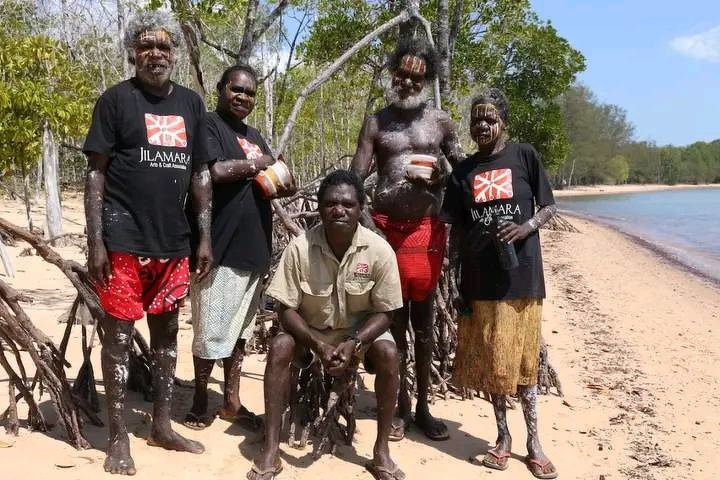
Tiwi men
Medicine and Healing: Traditionally, the Tiwi relied on commonsense medical knowledge, drawing on the curative properties of plants, animals, and other natural resources in their environment. While some men and women were recognized for having more extensive knowledge of specific remedies, there were no dedicated healers or medical specialists. Illnesses believed to result from sorcery—including magical death, bone pointing, and kidney-fat theft—are regarded as originating from mainland peoples, and Tiwi have long believed that only mainland curers can provide effective treatment. The spread of such illnesses remains a feature of contemporary Tiwi life, with many seeking cures from non-Tiwi healers and medical professionals on the mainland.
Tiwi Kinship and Land Tenure
Tiwi society is organized through matrilineal descent (descent through the female line), with each clan tracing its origins to a group of unborn spirit beings located in clan-specific sites, often associated with bodies of water. In the traditional belief system, conception occurs when a father finds one of these spirit children and sends it to his wife, who must be of the same clan origin. Each clan bears a name, and members provide one another with physical, moral, and emotional support across many aspects of life. [Source: Jane C. Goodale, “Encyclopedia of World Cultures, Volume 2: Oceania,” edited by Terence E. Hays, 1996 |~|]
Clans are further grouped into four larger exogamous divisions. For every individual, two clans are especially significant: one’s own matrilineal clan and one’s father’s clan. Marriage partners are ideally sought from the latter. A person’s father’s clan is also tied to a particular natural species, considered to be that individual’s “Dreaming.” This Dreaming provides inspiration for ceremonial dances, songs, and artworks. Within this framework, kinship permeates all social relations—among the Tiwi, everyone is connected.
Tiwi kinship terminology reflects this deeply interconnected social world. In the parental generation, a father’s brothers and a mother’s sisters are equated with the parents themselves, and their children (parallel cousins) are regarded as siblings. Parent’s opposite-sex siblings are distinguished, as are their children, who are classified as cross-cousins and serve as potential marriage partners. Siblings are differentiated by both gender and relative age, and further distinctions are made between those sharing the same father but born to mothers of different clans. Two additional categories are socially significant despite lacking specific terms: 1) Aminiyati siblings — those sharing a grandfather on the father’s side. 2) “One-granny” siblings — those sharing a grandmother on the mother’s side.Among “one-granny” siblings of opposite sex, strict avoidance is observed once sexual maturity is reached. By contrast, the broader category of aminayiti siblings traditionally carried the collective responsibility of maintaining the integrity of the “countries.”
Tiwi land tenure is organized around named local groups that hold responsibility for geographically distinct territories known as murukupupuni (“countries”). The number and boundaries of these countries have shifted over the century of recorded Tiwi history. Today there are seven recognized countries, each represented by delegates to the Tiwi Land Council, established in 1976 when the islands were returned to Tiwi ownership under the Northern Territory Land Rights Act. Traditionally, ownership of country was tied to the burial site of one’s father, but today it is reckoned through paternal descent. Owners are collectively responsible for the maintenance of their country’s physical, natural, and spiritual resources, and for transmitting both knowledge and responsibility to the next generation.
Tiwi Art
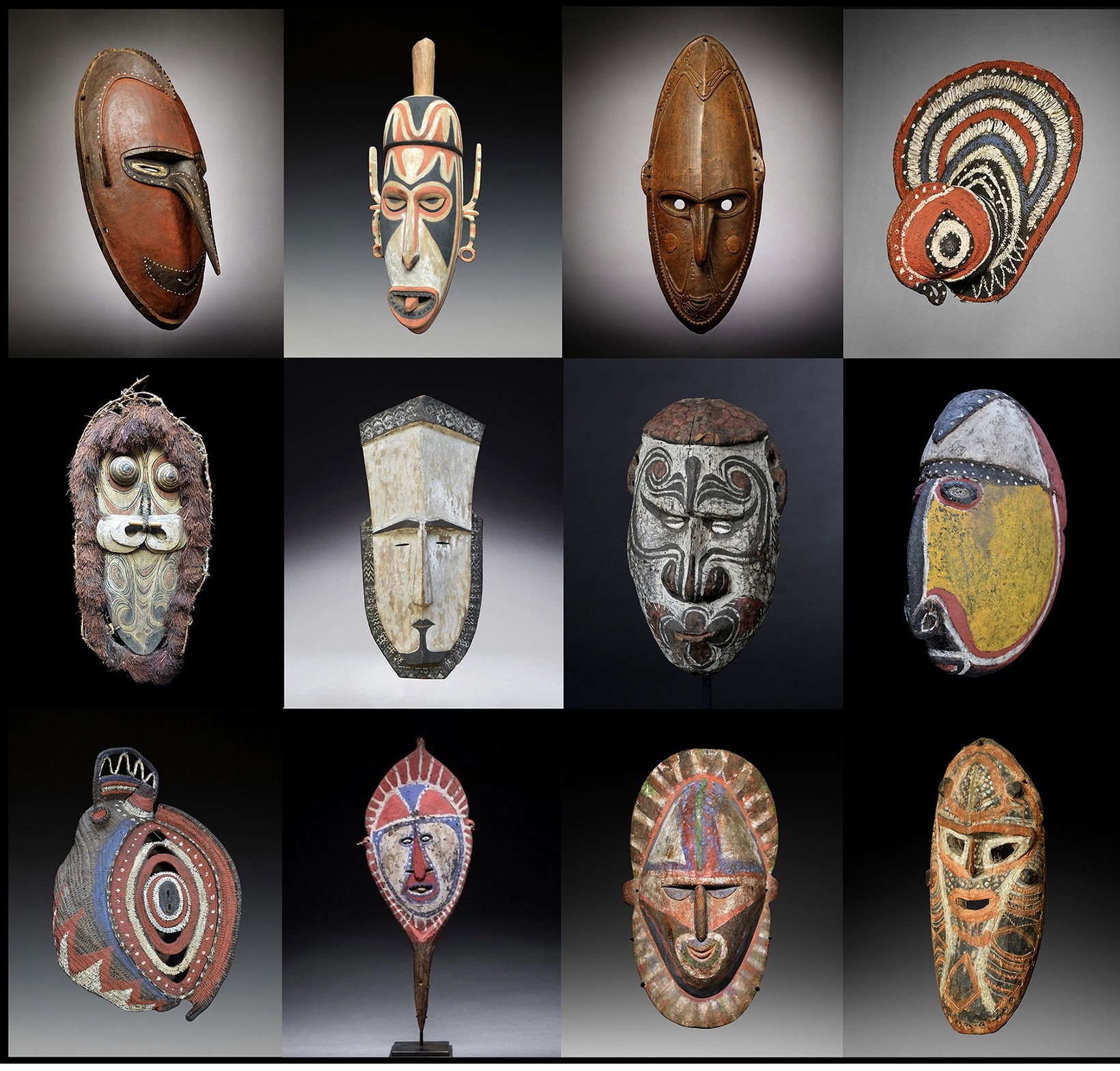
Tiwi Islanders are famous for the wooden sculptures, that are often associated with burial rituals Aboriginals from Snake Bay on Melville Island make carved and painted grave posts that look like abstract totem poles. They are usually about 2.5 meters (8 feet high), are made of carved and painted ironwood and depict episodes from the life of the deceased. Tiwi islanders also produce sculpted figures of animals and birds linked with Creation spirits, bark paintings, silk-screen printing.
Compared with the art of Arnhem Land, Tiwi art is often more abstract and geometric, featuring bold patterns and colors that make it highly collectible. Designs are deeply symbolic: cross-hatching patterns, for example, represent bonds of friendship. Artworks not only carry aesthetic value but also function as vessels of oral tradition, transmitting history, myth, and wisdom across generations.
Painting, practiced for millennia, remains central to ceremonies, including mourning rituals in which the body is painted to honor the deceased. Totem poles, carved and painted with natural ochres, are world-renowned and widely collected. Ochres are made from natural earth pigments, a continuation of ancestral practice. In mourning, the name of the deceased becomes taboo for many years while the spirit returns to the land. Traditional ecological knowledge also shapes Tiwi practice. When hunting, for example, they avoid taking mothers or young animals, reflecting respect for life cycles and conservation of resources. This ethos underscores the close spiritual and practical relationship between the Tiwi and their environment.
Tiwi Culture and Sports
The visual arts — painting, sculpture, and dance — are strong in Tiwi culture. They play an essential role in ceremonial life, reinforcing Tiwi spirituality and worldview, while also being adapted for commercial production in wood sculpture, textiles, clothing, pottery, and related crafts. Dance (yoi) is woven into everyday life. Each person inherits their totemic dance, linked to the Dreamtime and central to spiritual identity, from their father. In addition, narrative dances are performed to depict events from daily life or history. In contrast, since European contact, the Tiwi language has slowly eroded in favor of English, raising concerns about the survival of the verbal arts.[Source: Wikipedia Jane C. Goodale, “Encyclopedia of World Cultures, Volume 2: Oceania,” edited by Terence E. Hays, 1996 |~|]
highest per-capita contributions to professional football in Australia, symbolizing both local pride and national recognition.
Music has long been integral to Tiwi life, particularly within ceremonies such as initiation and the kulama yam ritual, where innovation in song once flourished. Today, this tradition is under threat as customary practices decline. Nevertheless, Tiwi songs—about land, hunting, cooking, family, animals, plants, and the outback—are still passed down through generations. Some have been archived, while others are being revived through research and community projects. The “Strong Women’s Group” plays a key role in conserving and performing traditional songs, ensuring that their transmission continues with cultural sensitivity, given the sacred weight of this heritage.
Australian rules football (yiloga) has become a feature of Tiwi culture. The Tiwi Islands Football League (TIFL) dominates community life, with its Grand Final drawing crowds of up to 3,000 — roughly equivalent to the entire Tiwi population. The islands also field a semi-professional team in the Northern Territory Football League, the Tiwi Bombers, and have produced a remarkable number of elite players for the national Australian Football League. Today, Tiwi athletes represent one of the
Tiwi Social and Political Organization
In precontact times, Tiwi society was structured around matrilineal clans and local groups tied to specific territories, or “countries.” Within matrilineal clans, leadership was largely ceremonial and conferred on senior males based on age and competence. In the country-based system, certain men achieved prominence by arranging large numbers of marriage contracts—reportedly sometimes exceeding a hundred—for themselves. Such leaders commanded influence through the size and regional importance of their domestic groups, and they also gained distinction as ceremonial authorities in song, dance, and art. [Source: Jane C. Goodale, “Encyclopedia of World Cultures, Volume 2: Oceania,” edited by Terence E. Hays, 1996 |~|]
Today, traditional kinship and clan structures coexist with new political institutions introduced under colonial and postcolonial governance. At the community level, each township elects its own council, which holds authority to pass bylaws, manage budgets, and oversee local services. Councils employ clerks and staff for administration, and both men and women serve as representatives. Above the township level is the Tiwi Land Council, established in 1976. Meeting monthly, it addresses land matters as well as broader legal and administrative issues affecting the islands as a whole. Beyond this, Tiwi communities interact with the governments of the Northern Territory and the Australian Commonwealth.
Domestic and intracommunity disputes are usually handled within clans, though government institutions have also taken on a role. The Northern Territory maintains a police station at Parlingimpi and assigns one or two police aides to each township. Questions of jurisdiction—whether a matter should be resolved by kin groups, clans, councils, or the state—remain fluid, reflecting the layered nature of contemporary Tiwi governance.
Image Sources: Wikimedia Commons
Text Sources: “Encyclopedia of World Cultures, Volume 2: Oceania,” edited by Terence E. Hays, 1996, National Geographic, Live Science, Natural History magazine, Australian Museum, Australia Geographic, New York Times, Washington Post, Los Angeles Times, Smithsonian magazine, Encyclopedia.com, Times of London, Library of Congress, The Conversation, The New Yorker, Time, BBC, CNN, Reuters, Associated Press, AFP, Lonely Planet Guides, Culture Shock! Australia, Wikipedia, The Guardian and various websites, books and other publications.
Last updated October 2025