
Home | Category: Animals / Kangaroos, Wallabies and Their Relatives
AGILE WALLABIES
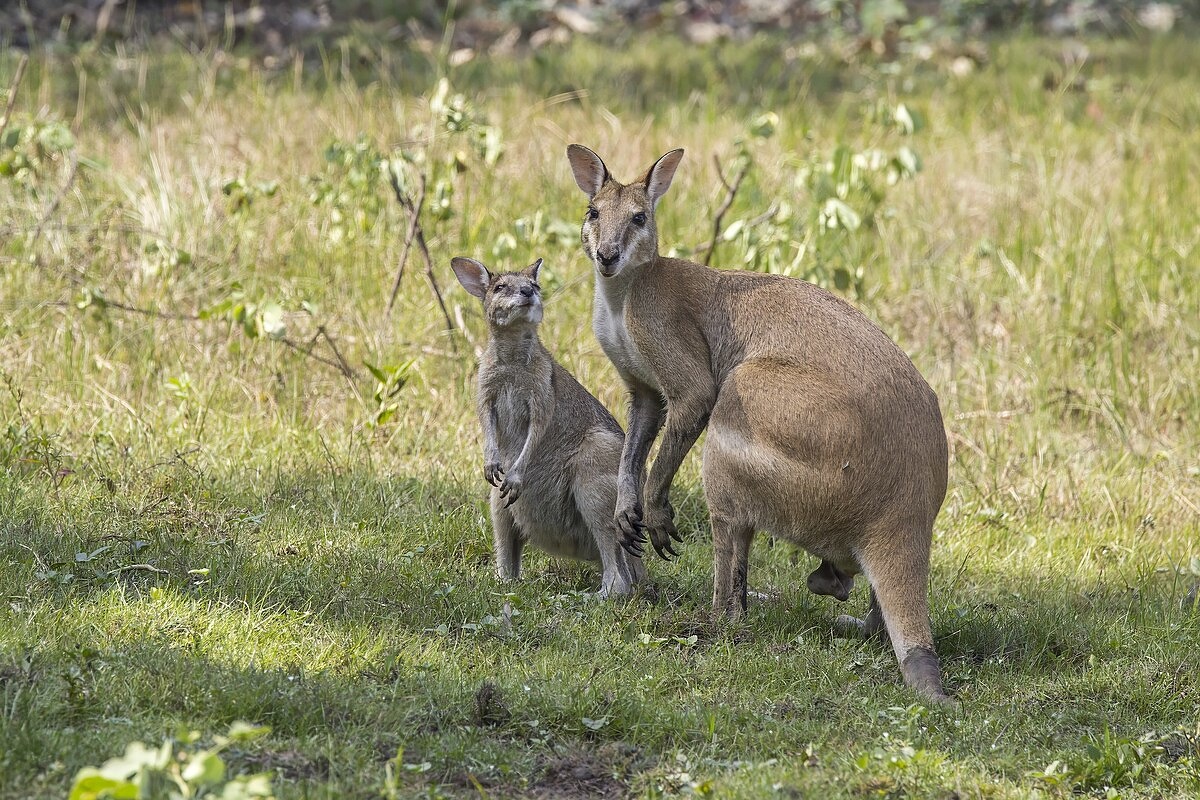
Agile wallaby male and juvenile at Fogg Dam, Middle Point, Northern Territories, Australia
Agile wallabies (Notamacropus agilis or Macropus agilis) are also known as sandy wallabies. The most common wallaby in Australia, they are found in coastal and tropical areas of northern Australia, in northeast Western Australia, the northern portion of the Northern Territory, and the north and east areas of Queensland. There are also some in southern New Guinea. Agile wallablies occur in a wide variety of habitats: open forests and their adjacent grasslands, regions near rivers and streams and floodplains [Source: Jonathan Burian, Animal Diversity Web (ADW) |=|]
Adult agile wallabies on average weigh around 16 kilograms (35.2 pounds) and have head and body length ranging from 60 to 85 centimeters (23.6 to 33 inches). They have a long tail that is roughly equal in size to their body length and has a black tip and have relatively large ears, which are edged with black. Overall, agile wallabies are yellowish-brown or sandy in color, becoming paler below. Sexual Dimorphism (differences between males and females) is present: Males on much larger than females. The average weight for males is 20 kilograms (44 pounds)l for females it is 12 (26.4 pounds). Their lifespan in the wild is typically 11 to 14 years.
Agile wallabies are not threatened or endangered. They are designated as a species of least concern on the International Union for Conservation of Nature (IUCN) Red List and have no special status on the Convention on International Trade in Endangered Species (CITES). In some places, agile wallabies are numerous enough that are considered pests. Large feeding groups can create can cause soil erosion and eat or destroy crops. At the same human habitat modification, extended periods of drought and over-hunting can combine cause dramatic local population drops.
RELATED ARTICLES:
WALLABIES: TYPES, CHARACTERISTICS, BEHAVIOR, REPRODUCTION ioa.factsanddetails.com
KANGAROOS AND WALLABIES (MACROPODS): CHARACTERISTICS, HISTORY, POPULATIONS ioa.factsanddetails.com
WALLABY SPECIES OF SOUTHWEST AUSTRALIA ioa.factsanddetails.com
FOREST WALLABIES (DORCOPSIS): SPECIES, CHARACTERISTICS, BEHAVIOR AND REPRODUCTION ioa.factsanddetails.com
WALLAROOS: SPECIES, CHARACTERISTICS, BEHAVIOR AND REPRODUCTION ioa.factsanddetails.com
ROCK-WALLABIES: SPECIES, CHARACTERISTICS, BEHAVIOR AND REPRODUCTION ioa.factsanddetails.com
BRUSH-TAILED ROCK-WALLABIES: CHARACTERISTICS, BEHAVIOR AND REPRODUCTION ioa.factsanddetails.com
HARE-WALLABIES: SPECIES, CHARACTERISTICS, BEHAVIOR AND REPRODUCTION ioa.factsanddetails.com
QUOKKAS: CHARACTERISTICS, BEHAVIOR, REPRODUCTION, ROTTNEST ioa.factsanddetails.com
PADEMELONS: SPECIES CHARACTERISTICS, BEHAVIOR AND REPRODUCTION ioa.factsanddetails.com
KANGAROO BEHAVIOR: FEEDING, REPRODUCTION, JOEYS ioa.factsanddetails.com
KANGAROOS HOPPING: MOVEMENTS, METABOLISM AND ANATOMY ioa.factsanddetails.com
MARSUPIALS: HISTORY, EVOLUTION, CHARACTERISTICS, BEHAVIOR, REPRODUCTION ioa.factsanddetails.com
MARSUPIALS IN AUSTRALIA ioa.factsanddetails.com
MARSUPIALS IN AUSTRALASIA (AUSTRALIA, NEW GUINEA, NEARBY ISLANDS) ioa.factsanddetails.com
Agile Wallaby Behavior, Diet and Reproduction
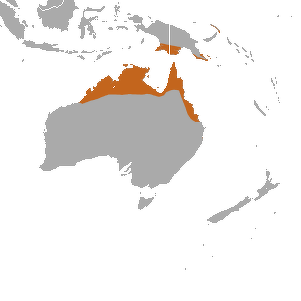
range of agile wallabies
Agile wallabies are nocturnal (active at night), motile (move around as opposed to being stationary) and sometimes solitary and other times social. They organize into groups called "mobs" that are composed of many females that share resting and feeding areas. These groups are generally made up to 10 individuals, but larger aggregations can occur when feeding. Their mean home range size varies with weather conditions: during drier conditions, their ranges increase. [Source: Jonathan Burian, Animal Diversity Web (ADW) |=|]
Agile wallabies are herbivores (eat plants or plants parts) and extremely flexible and opportunistic in what they eat, Their eating habits change depending on environmental conditions and the time of year. During wet season, they eat a variety of native grasses, shrubs and bushes. They may also feed on some varieties of leaves and fruits. These wallabies can go long periods without water. During dry periods, they often dig into the ground to obtain moisture-rich roots. |=|
Agile wallabies engage in seasonal breeding and employ delayed implantation (a condition in which a fertilized egg reaches the uterus but delays its implantation in the uterine lining, sometimes for several months). Births may occur at any time of the year, but usually peak between May and August. The average gestation period is 30 days, the average number of offspring is one and usual weaning age is 10-12 months. Directly after birth, joeys travels to the mother's pouch. They stays within the pouch for an average of seven to eight months and do not usually emerge permanently and reach total independance for several more weeks after that. Females and males reach sexual or reproductive maturity at 12 to 14 months. The adult sex ratio of populations is often female biased, due to higher male youth mortality rates.
Red-Necked Wallabies
Red-necked wallabies (Notamacropus rufogriseus or Macropus rufogriseus) are are medium-sized wallabies common in the more temperate and fertile parts of eastern Australia, including Tasmania. They primarily inhabit eucalypt forests with moderate shrub cover and open areas nearby, and also populate the tall coastal heath communities. Their lifespan in the wild is nine to 15 years if they survive the first couple years. [Source: Liz Ballenger, Animal Diversity Web (ADW) |=|]
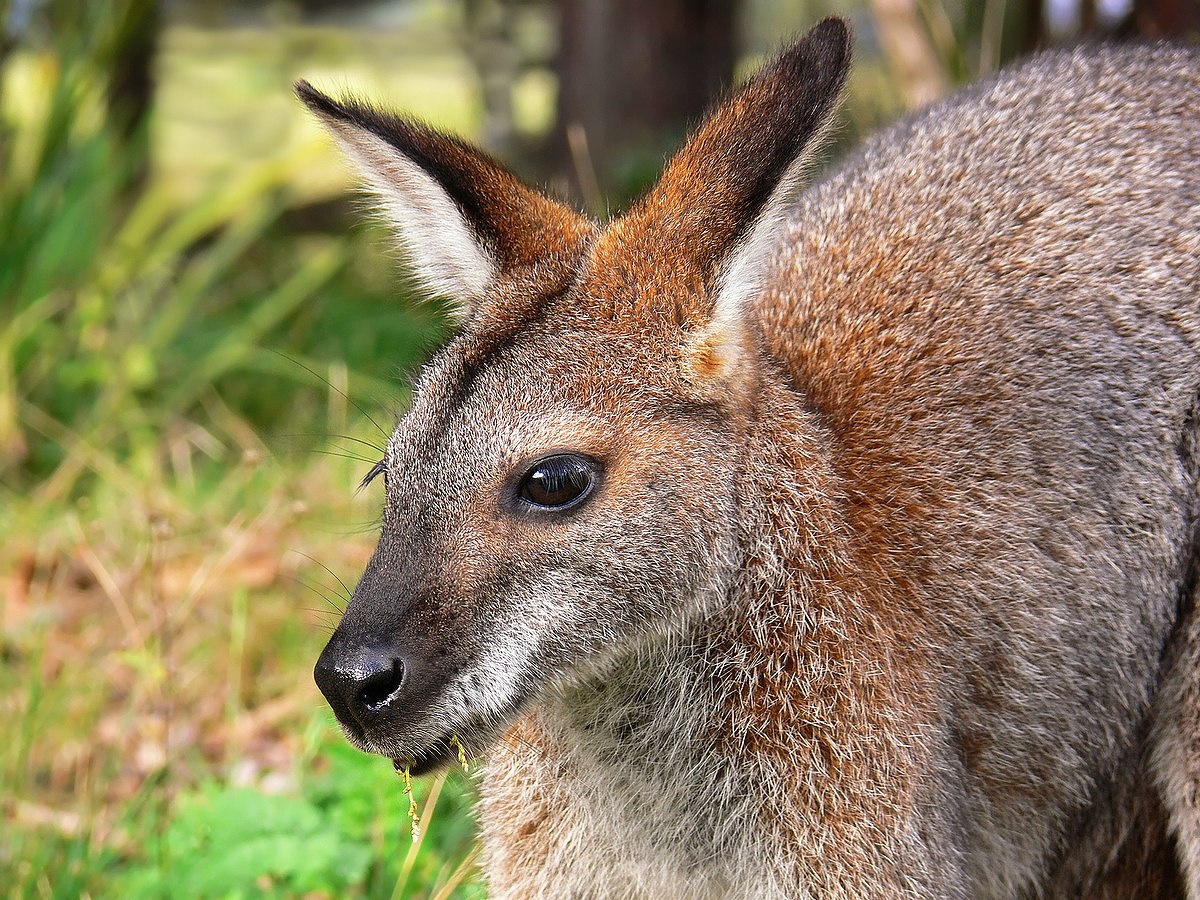
red-necked wallaby female
Red-necked wallabies inhabit the coastal forests of eastern and southeastern Australia and are especially common in Queensland, northeastern New South Wales and Tasmania. There are two subspecies: 1) Bennett's wallabies (Notamacropus rufogriseus rufogriseus) are found throughout Tasmania and the Bass Strait islands. 2) Red-necked wallabies (Notamacropus rufogriseus banksianus) inhabit the Australian mainland. Red-necked wallabies have been introduced to several other places, including New Zealand, England, Scotland, Ireland, the Isle of Man, France and Germany.
Red-necked wallabies range in weight from 13.8 to 18.6 kilograms (30.4 to 41 pounds). They have a head and body length of 0.92 to 1.05 meters (3 to 3.5 feet). Their tail is 70 to 75 centimeters (27.5 to 29.5 inches) long and their hind feet are 22 to 23 centimeters (8.6 to 9 inches) long. Their ear length is 7.6 to 7.8 centimeters (3 to 3.1 inches). Males are significantly larger than females. Red-necked wallabies are named for the reddish fur on their napes and shoulders. The rest of the body is fawny gray with a white chest and belly. The tail is gray above and white below. Hands and feet are gray, becoming black at the ends of the digits. The muzzle is dark brown, and the ears of red-necked wallabies are longer in proportion to other macropods. |=|
On the International Union for Conservation of Nature (IUCN) Red List red-necked wallabies they are classified as a species of “Least Concern”. In the past they were trapped for their fur and killed by ranchers who claimed they ate up grass meant for cattle and sheep for grass despite the lack of evidence that this really occurred. Forest clearing has also reduced their numbers in some places. Even so they are now common or abundant throughout most parts of their range. The species is protected by law in all States in which they it occurs but may be killed under license if they are deem crop or livestock pests or during open seasons in Tasmania. Occasionally, red-necked wallabies can be crop pests, and they have been observed hindering reforestation by feeding on or trampling young seedlings. Some skins of the Tasmanian subspecies (which has longer and denser fur) are exported.
Red-Necked Wallaby Behavior, Diet and Reproduction
Red-necked wallabies are primarily grazers (primarily eat grass or other low-growing plants). They mainly consuming grasses and herbs and eat juicy roots during dry spells to get water. As in other macropods, red-necked wallabies use their tails as a prop. They are (move around as opposed to being stationary) and sense using touch and chemicals usually detected with smell. [Source: Liz Ballenger, Animal Diversity Web (ADW) |=|]
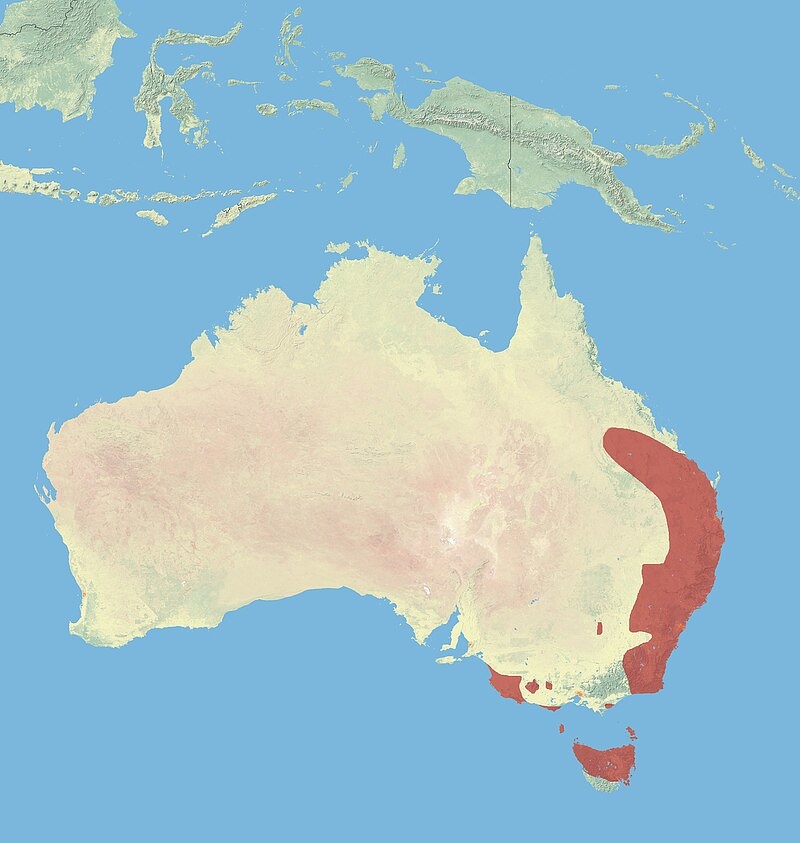
red-necked wallaby range
Red-necked wallabies are mainly crepuscular (active at dawn and dusk), spending daylight hours resting in cover, although they are often seen foraging until late in the morning and beginning evening foraging late in the afternoon. They cool themselves by licking their hands and forearms during nervous excitement or hot weather. They are essentially solitary, but may forage in groups of up to 30 individuals.
Female red-necked wallabies in captivity breed at approximately 14 months of age while males breed at 19 months. There is a post-partum estrus and embryonic diapause (temporary suspension of development of the embryo). The length of the estrous cycle is approximately 33 days and the gestation period is 30 days. One offspring at a time is born to each breeding female; pouch life is about nine months and young may continue suckling until they 12-17 months old.
There are considerable differences between the two subspecies in terms of breeding patterns, however. On the mainland, females give birth in all months, with the greatest number of offspring born in the summer. In Tasmania however, births only occur between late January and July with the majority of young born in February and March. In Tasmanian form of embryonic diapause n form, females who mate at the end of the breeding season may not give birth until eight months later during the next breeding season. In the mainland form and in the Tasmanian subspecies during the breeding season, a new young resulting from a post-partum mating can be born 16-29 days after emergence of the previous pouch young. |=|
Swamp Wallabies
Swamp wallabies (Wallabia bicolor) live in eastern Australia and are also known as black wallabies, black-tailed wallabies, fern wallabies, black pademelons, stinkers (in Queensland), and black stinkers (in New South Wales). Their common name is comes from the fact that some live in swampy areas but largely n account of their characteristic swampy odour. Swamp wallabies are the only living member of the genus Wallabia.
Swamp wallabies live on the eastern coast of Australia in southeastern South Australia, Victoria, eastern Queensland, and eastern New South Wales. They generally live in, but are not restricted to, dense forests, woodlands, and swampy areas. They are known to venture into more open areas, but only if there are nearby areas of thick brush.[Source: Jennifer Ellis, Animal Diversity Web (ADW) |=|]
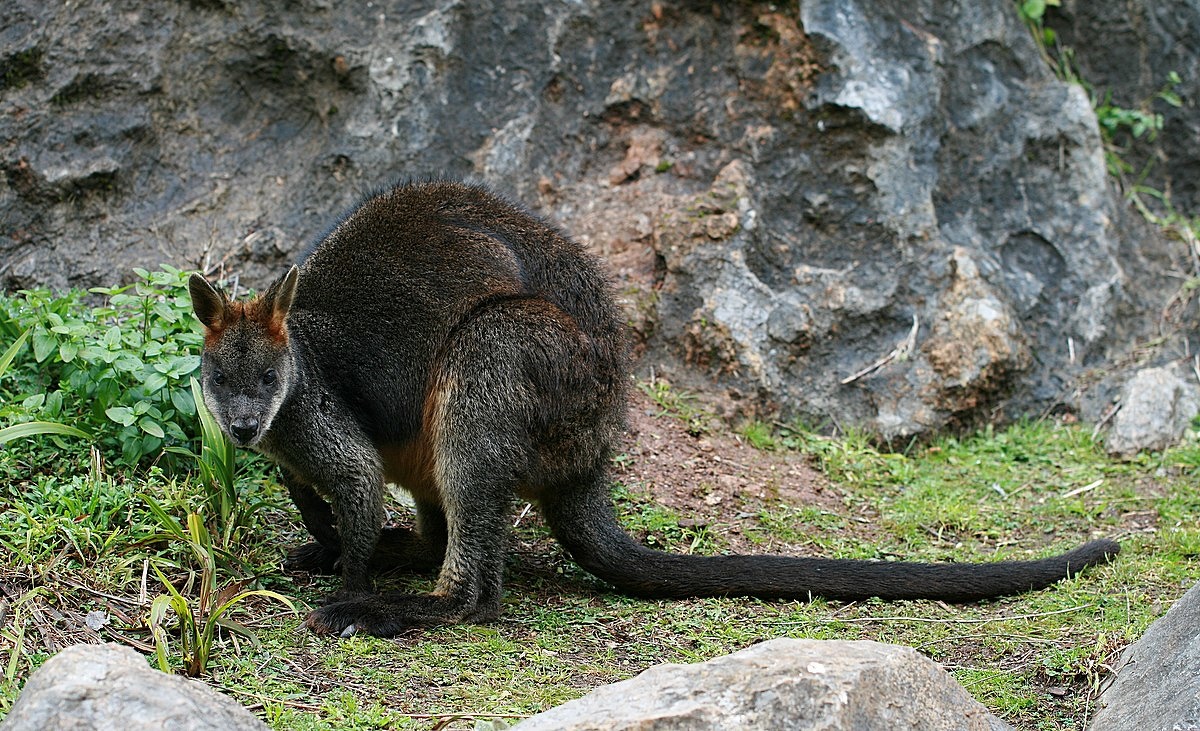
swamp wallaby
The taxonomy of swamp wallabies is still a matter of debate Because they can hybridize with the agile wallabies, many believe that they should be placed in the genus Macropus or Notamacropus. However, because of their unique dentition, pronounced sexual dimorphism in chromosome number, and reproductive behavior, they are currently classified as the last living member of the genus Wallabia. |=|
Swamp wallabies are not endangered or threatened. They are designated as a species of least concern on the International Union for Conservation of Nature (IUCN) Red List and have no special status on the Convention on International Trade in Endangered Species (CITES). The skins of swamp wallabies are still coveted. Around 1,500 skins are marketed each year in Queensland. Because Swamp wallabies are browsers (primarily eats non-grass plants such as bushes and tree parts higher up off the ground) , they sometimes damage agricultural crops. As a result, they have been shot by farmers who view them as pests. Swamp wallabies have suffered somewhat from habitat destruction but they are still abundant,
Swamp Wallaby Characteristics, Diet, Behavior and Reproduction
Swamp wallabies around 70 centimeters tall (2,3 feet) tall and range in weight from 10 to 20 kilograms (22 to 44 pounds), with their average weight being 15.4 kilograms (33.9 pounds). They have long, coarse fur that is generally dark brown in color with darker or black limbs and tails. Many also have a light yellowish cheek stripe that begins at the lip and continues towards the upper ear. Their average lifespan in the wild is 12 years. Sexual Dimorphism (differences between males and females) is present: Males are bigger. Males have a head and body length of 72 to 84 centimeters (28 to 33 inches), with a 69-to-86 centimeter (27-to-34-inch) tail. Females have a head and body length of 66.5 to 75 centimeters (26 to 19.5 inches), 64-to-73 centimeter (25-to-29-inch) tail [Source: Jennifer Ellis, Animal Diversity Web (ADW) |=|]
Swamp wallabys are solitary, motile (move around as opposed to being stationary) and nocturnal (active at night), animals. They sometimes gather at common food sources with other species without displaying territorial defenses. Swamp wallabies have no known natural enemies. They are able to hop bipedally on their hindfeet while holding their heads close to the ground. They may also use their forefeet to move around on all fours.
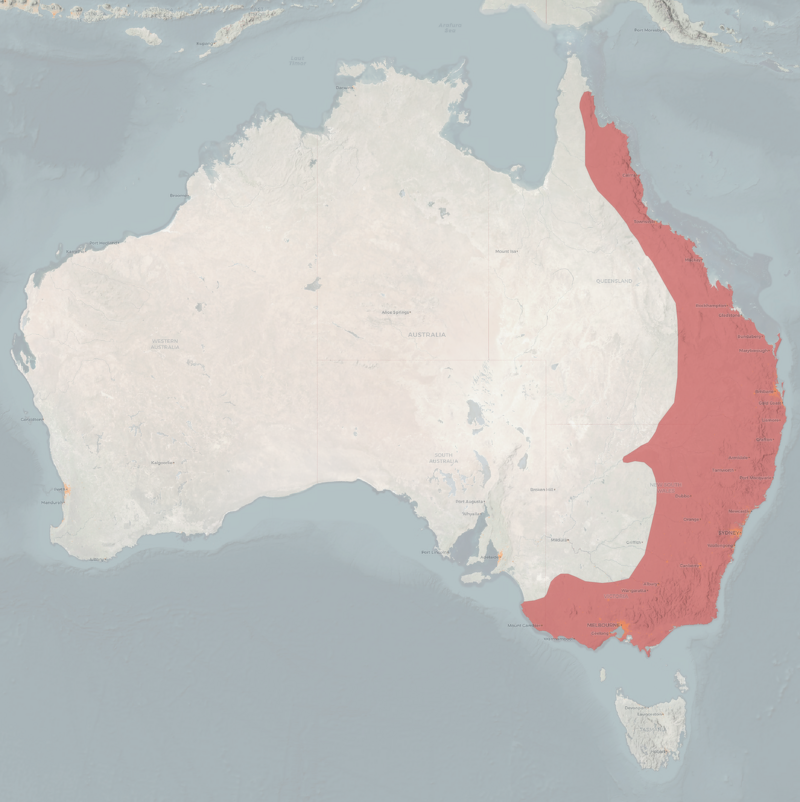
range of swamp wallaby
Swamp wallabies are strictly herbivores (eat plants or plants parts). Their diet consists of soft plants such as buds, ferns, leaves, shrubs, and grasses. They have been known to eat bark, shoots from needle-leaf trees, and plants that can be poisonous to domesticated animals. Swamp wallabies are browsers (primarily eats non-grass plants such as bushes and tree parts higher up off the ground) and use their reduced forelimbs to manipulate their food. They kind of famous for eating Australia truffles.
Both male and female swamp wallabies reach sexual maturity at an age of 15 months. Females are polyestrous and are able to breed all year long. They usually give birth to one young although twins have been reported. The average gestation period is 36 days. Joeys normally weigh less than one gram at birth and spend eight to nine months in their mother's pouch. The estrus cycle is on average 34 days in length. Swamp wallabies are unique in that they are the only marsupials whose gestation period is longer than their estrus cycle. This means that females can mate during the last few days of their pregnancy allowing them continuous breeding and birthing approximately every eight months. After such a mating, a near term fetus grows in one uterus while the new embryo is developing in a second. The suckling of the newborn temporarily halts the development of the second embryo which remains dormant until the first young is ready to leave the pouch. At this time, the second embryo resumes development and is born 33-38 days — the length of one gestation period — later.
Black-Striped Wallabies
Black-striped wallabies (Notamacropus dorsalis or Macropus dorsalis) are medium-sized wallabies found in eastern Australia, west of the Great Dividing Range, from Townsville in Queensland to Narrabri in New South Wales. Also known as scrub wallabies and eastern brush wallabies, they live in places with warm, wet summers and dry winters and are usually found in areas of dense vegetation, including scrub forests, tropical rainforests, forests with a substantial under story, and areas of regrown brigalow scrub. These environments provide shelter during the day. Often these wallabies reside on the edge of dense vegetation areas and migrate into grassy areas at night to feed. [Source: Todd Jewell, Animal Diversity Web (ADW) |=|]
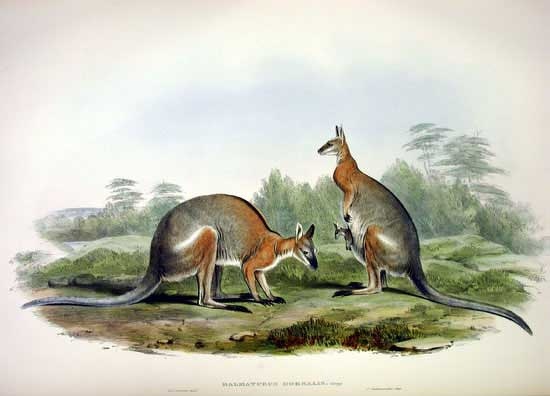
Illustration of a black-striped wallabies from 1863
Black-striped wallabies on average weigh is around five kilograms (11 pounds) and range in length from one to 1.6 meters (3.3 to 5.2 feet), with the tail being 54 to 83 centimeters (1.7 to 2.7 feet) in length. Sexual Dimorphism (differences between males and females) is present: Adult males tend to be three times larger than adult females. Black-striped wallabies get their common name from the black stripe that runs along the middle of their back. They resemble the mainland Australian subspecies of the red-necked wallaby but differ from them in that have the black line on their back, a white stripe over the hip and more red colouration (extending down the arms and further down the abdomen.
Black-striped wallabies are not endangered or threatened. They are designated as a species of least concern on the International Union for Conservation of Nature (IUCN) Red List and have no special status on the Convention on International Trade in Endangered Species (CITES). Historically, black-striped wallabies was widespread throughout New South Wales and Queensland but due to the destruction and alteration of their habitat, they are now confined to smallers part of northern New South Wales and areas of Queensland. The New South Wales population is classified as endangered.
Much of the land that used to be covered in dense forest — the primary habitat of black-striped wallabies — has now been cleared for agricultural fields and pastures. Black-striped wallabies have been considered livestock pest as they eat the same gresses that cattle and sheep do and are blamed for the depletion of grass in the pastures of livestock. Even though studies have shown that cattle are the main cause of the depletion of grasses in the pastures, ranchers in Queensland are allowed to hunt wallabies on their land.
Black-Striped Wallaby Behavior and Diet
Black-striped wallabies are terricolous (live on the ground), saltatorial (adapted for leaping), nocturnal (active at night), motile (move around as opposed to being stationary), social (associates with others of its species; forms social groups), and have dominance hierarchies (ranking systems or pecking orders among members of a long-term social group, where dominance status affects access to resources or mates). Black-striped wallabies sense and communicate with vision, touch, sound and and chemicals usually detected with smell. They use vocal communication to maintain contact with each other in thick underbrush. Forms of tactile communication include play boxing between females and their joeys. Young joeys box playfully but fighting among adult males is a serious matter used to determine dominance ranking within the group and chances of getting mates. [Source: Todd Jewell, Animal Diversity Web (ADW) |=|]
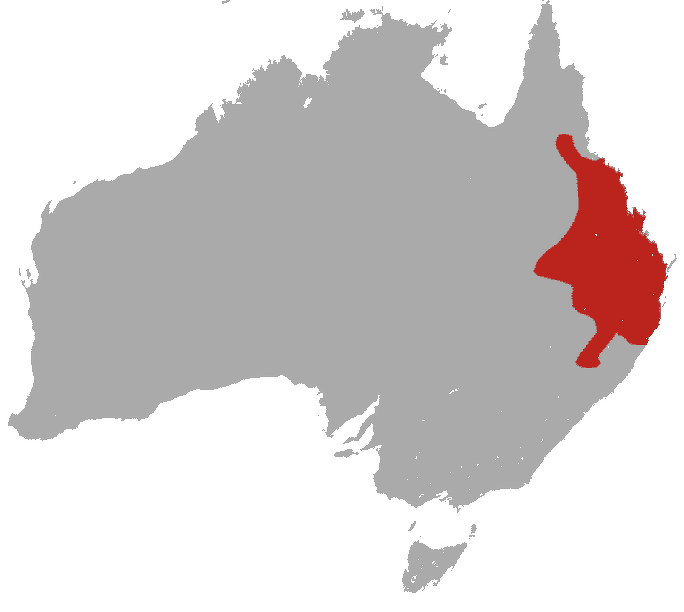
range of black-striped wallabies
Black-striped wallabies are shy and well-known for their preference for thick scrub, where they are easily be hidden. Black-striped wallabies have open-membership groups. This means that group membership and size changes over time, and individuals do not always maintain the same associations. Black-striped wallabies generally live in groups of two to 20 individuals. Most of the feeding is done in groups, with animals typically remaining within 30 meters of each other during feeding times. This closeness allows for communication in the dense vegetation, where sounds can be blocked at distances greater than 30 meters. Black-striped wallabies stay closer together than other macropods, which live in open areas where vegetation does not block sound.
Black-striped wallabies are herbivores (eat plants or plants parts) and are predominantly nocturnal feeders and rest during the day and feed at night in pastures or open fields. They mostly graze (eat grass or other low-growing plants) and feed mainly on monocot grasses, but also browse (eat non-grass plants such as bushes and tree parts higher up off the ground) on forbs (herbaceous flowering plants that are not grasses, sedges or rushes) and other shrubs. They often change their diet seasonally and eat more shrubs when there is less grass available in the winter. They prefer seedheads and the soft, leafy parts of plants.
Black-Striped Wallaby Mating, Reproduction and Offspring
Black-striped wallabies are probably polygynous (males have more than one female as a mate at one time) and engage in embryonic diapause (temporary suspension of development of the embryo). Females have an estrus cycle, which is similar to the menstrual cycle of human females, and generally produces one offspring every year. A particularly breeding season has not been reported, but births in captivity have generally taken place in March, September, and October. The gestation period ranges from 33 to 35 days. The weaning age ranges from 10 to 12 months and the average time to independence is 10 months. On average females reach sexual or reproductive maturity at age 14 months and males do so at 20 months.[Source: Todd Jewell, Animal Diversity Web (ADW) |=|]
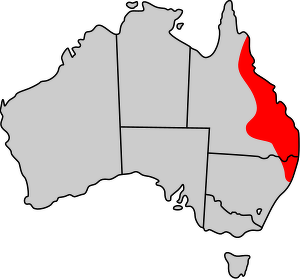
range of whiptail wallabies
Details on the mating habits of black-striped wallabies are not well known but are thought to be similar to those of other wallabies in which males compete for access to females and generally, the dominant male in a social group gets to mate with the females. The extreme sexual dimorphism of black-striped wallabies may play some role in their reproduction. When a female is not nursing a joey, gestation is short. However, the embryo undergoes a diapause if the mother is nursing another offspring when conception occurs.
Young Black-striped wallabies are altricial, meaning they are relatively underdeveloped at birth, and parental care is provided by females. Males have no role in parental care except for maybe helping to protect a group. Young often weigh less than one gram at birth. After birth, newborns makes their way from the birth canal to the opening of the pouch by squirming. Once in the pouch, young attach themselves to a nipple and feed on their mother’s milk. After five to six months joeys may begin to leave the pouch for short periods of time, always returning to the pouch. Joeys begin to spend one to two hours a day out of their mother's pouch, and begin feeding on grass four times a day at the age of around seven months. Joeys becomes increasingly independent and spends more time out of the pouch, and rely less on their mother for milk as time goes on, until finally they becomes independent by at around one year of age.
Whiptail Wallabies
Whiptail wallabies (Notamacropus parryi or Macropus parryi) are found in eastern Australia and are fairly common in certain places from Cooktown in Queensland to near Grafton in New South Wales. Also known as pretty-faced wallabies and Parry's wallabies, they favor relatively high elevations on slopes under canopy cover. No other wallaby prefers this habitat. Whiptail wallabies are not endangered or threatened. They are designated as a species of least concern on the International Union for Conservation of Nature (IUCN) Red List and have no special status on the Convention on International Trade in Endangered Species (CITES). The first found and identified, by Sir Edward Parry in 1834, was kept by him as a pet at his home where it is said it behaved much like a domesticated dog. [Source: Erika Detweiler, Animal Diversity Web (ADW) |=|]
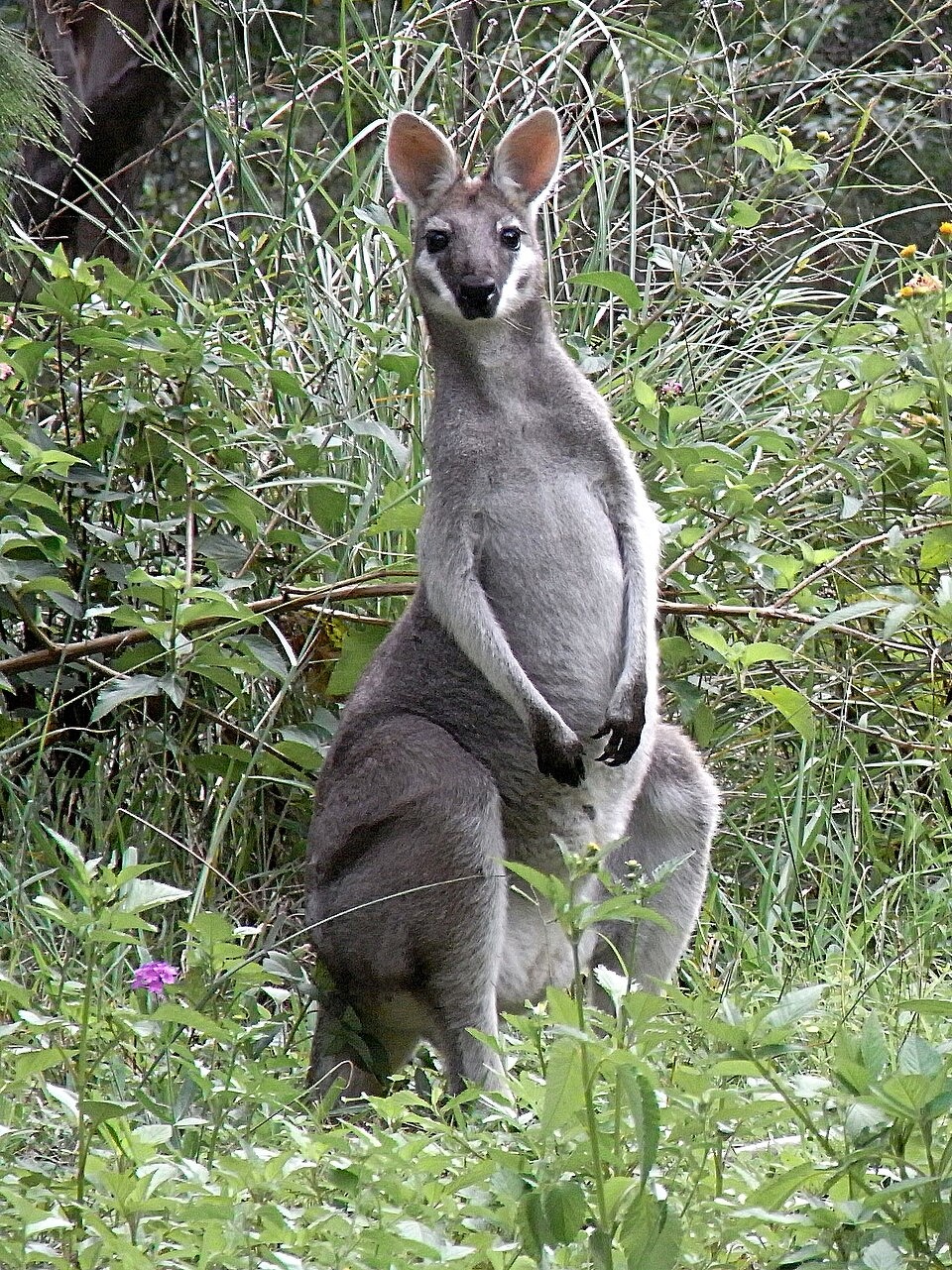
Whiptail wallaby
Whiptail wallabies range in weight from seven to 26 kilograms (15.4 to 57.3 pounds) and can be 2.2 meters (seven feet) long, including their tail. Males weigh from 14 to 26 kilograms (31 to 57 pounds and stand 70 to 93 centimeters (28 to 37 inches) tall. Females weigh from 7 to 15 kilograms (15 to 33 pounds) and stand 65 to 75 centimeters (26 to 30 inches) tall. Whiptail wallabies are identified by their distinctive white cheeks and long tail. Their tail often exceeds their body and head length. The majority of the body is colored pale brown except for the base of the ears, the forehead and the tip of the tail, which are dark brown. Their average lifespan in captivity is 9.7 years.
Whiptail wallabies are herbivores (eat plants or plants parts). They mainly eat grasses, ferns and herbaceous plants. When temperatures are hogh they feed only in the early morning and late afternoon, taking cover under foliage at the hottest times of the day. During the cooler months they are is seen feeding at all times of day. The most identifying behavioral characteristic of Whiptail wallabies is their social structure. They are often seen in mobs of 50 to 80 individuals, with inner subgroups of around 10 individuals. During hot weather, they often licks their forearms to keep itself cool.
Whiptail wallabies reaches sexual maturity between 18 and 24 months for females and over two years for males. Females gives birth to a single young, often around January, after a gestation period of 34 to 38 days. Young nurse for around 37 weeks. Unlike some other species of wallaby, in which mothers forcibly remove their young from their pouch when the time is right, young Whiptail wallabies leave the protective pouch on their own.
Bridled Nail-Tailed Wallaby
Endangered Bridled nail-tail wallabies (Onychogalea fraenata) are found only in a Queensland refuge — the 11,470-hectare Taunton Scientific Reserve near the city of Dingo in Central Queensland. At one time, bridled nail-tail wallabies inhabited are fairly large area of semi-arid eastern Australia. This region is made up mainly of Acacia shrub land and grassy woodlands. [Source: Peter Hundt, Animal Diversity Web (ADW) |=|]
Bridled nail-tail wallabies range in weight from four to eight kilograms (8.8 to 17.6 pounds) and are 0.8 to 1.43 meters (2.6 to 4.7 feet) long. Their head and body length is 43 to 70 centimeters (inches); their tail is 36 to 73 centimeters (inches) long. They are named for the white "bridle" line that starts on the center of the neck and goes around the shoulders and ends at the forearms on each side. A black stripe runs dorsally across the whole body. Sexual Dimorphism (differences between males and females) is present: Males are larger than females. Males weigh between five and eight kilograms (11 and 19.6 pounds) while females weigh from four to five kilograms (8.8 to 11 pounds). The genus Onychogalea gets its common name, nail tailed wallabies, from a small, horny spur (three to six millimeters) at the end of the tail. This "nail" is partially concealed by hair and its purpose is unknown.
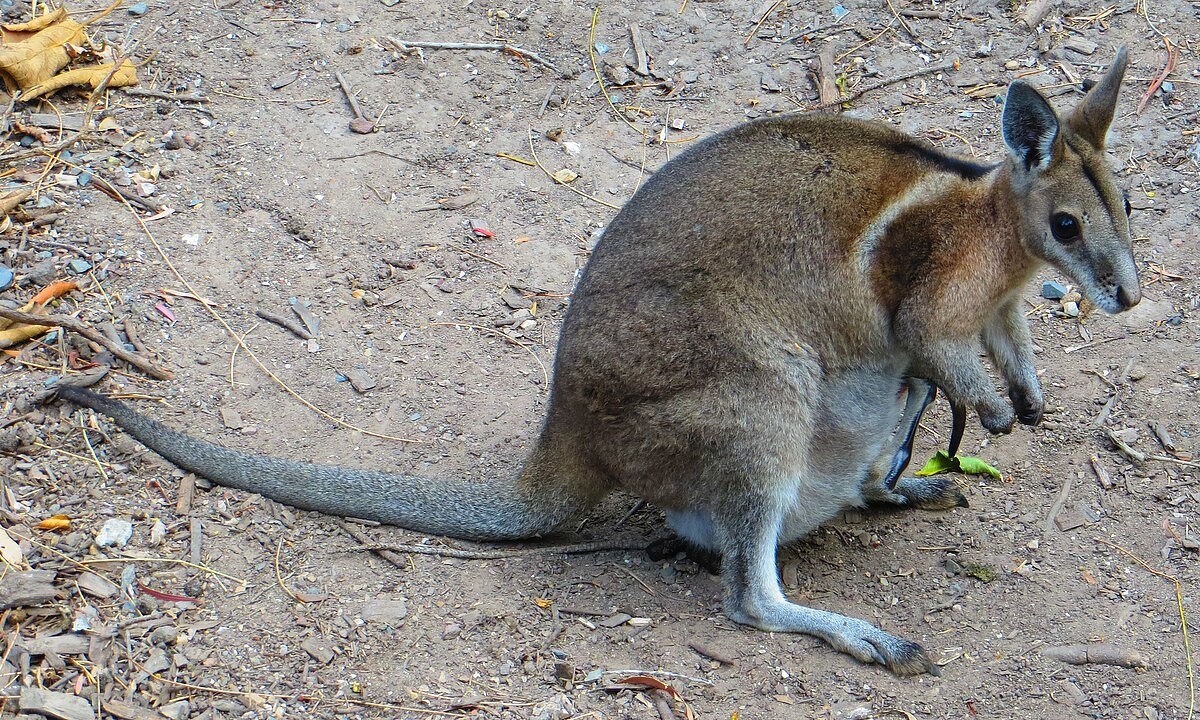
bridled nail-tail wallaby
On the International Union for Conservation of Nature (IUCN) Red List and US Federal List: bridled nail-tail wallabies are listed as Endangered. In CITES (Convention on International Trade in Endangered Species of Wild) they are in Appendix I, which lists species that are the most endangered among CITES-listed animals and plants. The populations of these wallabies has declined due to competition with domestic animals, habitat destruction, and the introduction of carnivores(mainly foxes and dingoes). Bridled nail-tail wallabies has already been successfully reintroduced into the Idalia National Park and there are plans for other reintroductions from animals in captive breeding programs. Bridled nail-tail wallabies is part of a large recovery plan.
Bridled Nail-Tailed Wallaby Behavior, Diet and Reproduction
Bridled nail-tail wallabies are solitar, terricolous (live on the ground), saltatorial (adapted for leaping), nocturnal (active at night),motile (move around as opposed to being stationary), sedentary (remain in the same area), solitary and have dominance hierarchies (ranking systems or pecking orders among members of a long-term social group, where dominance status affects access to resources or mates). Bridled nail-tail wallabies spend much of the day underneath grass or a bush in a small shallow nest, , emerging at night to feed on forbes and grasses. The home ranges of males are about 60 hectares while those of females are about 25 hectares. Movement is very restricted during the day, but at night increases to between 10 and 200 meters per hour. |=|
Bridled nail-tail wallabies are herbivores (eat plants or plants parts), feeding on a diverse selection of forbes, grasses, and woody browse. At Taunton National Park they eat the herbaceous forb Portulaca oleraceae, pigweeds such as Helipterum spp., daisies such as Trianthema triquetra and Zalea galericulata, and grasses such as Sporobolus carolii, Chloris divaricata, Dactyloctenium radulans, and Bothriochloa bladhi.
Bridled nail-tail wallabies are polygynous (males have more than one female as a mate at one time) and engage in year-round breeding. Females give birth to one offsping at a time but are capable of producing three offspring per year if conditions are suitable. The average gestation period is 23.6 days. Young are altricial, meaning they are relatively underdeveloped at birth and complete their development inside the mother's pouch, attached to her nipple. The weaning age ranges from four to five months. Parental care and protection are provided by females. On average females reach sexual or reproductive maturity at four and half months and males do so at six months.
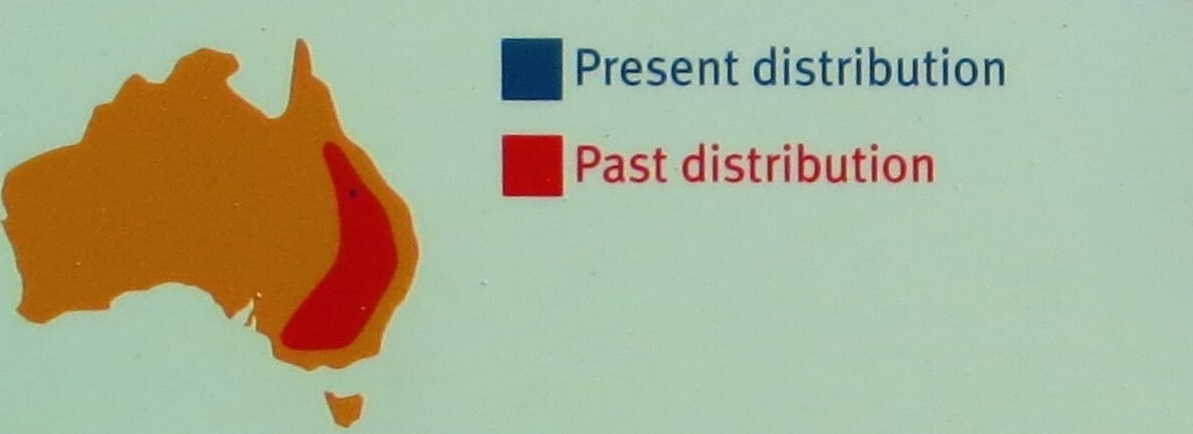
range of bridled nail-tail wallabies
Bridled nail-tail wallaby males roam widely, checking females briefly by smell. They may accompany estrus females that they encounter for up to a week. Groups of males sometimes gather around receptive females. These males follow females roughly in order of size, with the largest male appearring to defend access to a receptive female. The main difference between bridled nail-tail wallabies and most other kangaroos and wallabies is that there is no dominance hierarchy prior to encounter. Because bridled nail-tail wallabies are solitary they do establish dominance relationships until they have encountered one another. However, these animals can recognize dominance from prior encounters, so rather than fight they behave toward one another based upon the hierarchy determined in previous encounters.
Females have an average estrus cycle of 32.6 days during which they increase their home range and activity, and are more attractive to males. Male that are the largest in size and have the largest home ranges have higher copulatory success. Males and females participate in mate chasing. Because females do not try very hard to evade the males, based on their slow speed and repetitive movements, this appears to be a courtship ritual. Copulation times may exceed more than 90 minutes, which is longer than most macropods.
Parma Wallabies — the Smallest and Rarest Wallabies
Parma wallabies (Notamacropus parma) are the smallest wallabies. Rare, cryptic and elusive and about the size of stout cats, they are found in wet sclerophyll (hard-leaved) forests and densely-vegetated areas in northeastern New South Wales close to Queensland. An introduced population lives on New Zealand's Kawau Island. They spend much of their time under thick plant cover, and are only active at night when they emerges to feed on grasses and small plants. Female carry their young in a pouch, like with other marsupials. The name parma (Waterhouse 1845) comes from a word in a New South Wales Aboriginal language, but the source word and language have not been identified. [Source: Wikipedia]
Parma wallabies weigh between 3.2 and 5.8 kg (7.1 and 12.8 pounds), less than one-tenth the size of red kangaroos, and have a head and body of about 0.5 meter (1.6 feet). Their sparsely furred, blackish tail is about the same length as their body. The fur of parma wallabies is reddish or greyish brown above, greyer about the head, and fading to pale grey underneath. Like pademelons, parma wallabies prefer forests with thick undergrowth, and grassy patches, although parma wallabies are also found occasionally in dry eucalypt forest and even rainforest. Parma wallabies are mainly nocturnal and usually shelter and spend the day in thick scrub, through which they can travel at speed along the runways they make. Parma wallabies are mostly solitary, with two or at most three animals sometimes coming together to feed at good food sources. They from cover shortly before dusk and mainly feed on grasses and herbs in forest clearings.
Parma wallabies were thought to be extinct until they were rediscovered in the 1960s. Since 2015, they have classified as Near Threatened on IUCN Red List as they are rarely seen and their population appears to be declining. They are threatened by habitat loss, native predators such as birds of prey, monitor lizards, and snakes and are easily taken by dingoes and non-native feral
Parma wallabies are very shy creatures and have never been commonly-encountered. Before the end of the 19th century, they were believed to be extinct. In 1965, workers on Kawau Island, New Zealand (near Auckland), trying to control a plague of introduced tammar wallabies (a widespread and fairly common species in Australia), were astonished to discover that some of the animals were not tammar wallabies but were a surviving population of parma wallabies. They were captured and sent to institutions in Australia and around the world to breed in captivity and eventually reintroduce them to their native habitat.
In 1967 some parma wallabies were discovered in forests near Gosford, New South Wales. Further investigation revealed that parma wallabies were not common were doing okay were found in forests along the Great Dividing Range from near Gosford almost as far north as the Queensland border. Presumably, individuals had been sighted many times during the years when they were "extinct", but were mistaken for an especially slender and long-tailed individuals of the otherwise similar red-legged and red-necked pademelons. The offspring of the Kawau Island population are smaller than their fully-wild, Australian relatives, even when provided with ample food. It seems that competition, for limited food resources on Kawau island, favored smallers individuals — an incipient example of the evolutionary phenomenon of insular dwarfism.
Image Sources: Wikimedia Commons
Text Sources: Animal Diversity Web animaldiversity.org , National Geographic, Live Science, Natural History magazine, Australian Museum, David Attenborough books, Australia Geographic, New York Times, Washington Post, Los Angeles Times, Smithsonian magazine, Discover magazine, The Conversation, The New Yorker, Time, BBC, CNN, Reuters, Associated Press, AFP, Lonely Planet Guides, Wikipedia, The Guardian, Top Secret Animal Attack Files website and various books and other publications.
Last updated July 2025