
Home | Category: Highland and Mainland Ethnic Groups
FORE PEOPLE
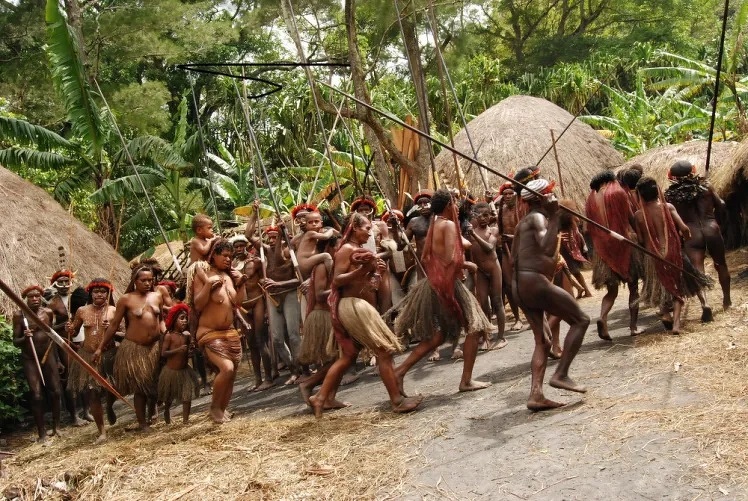
Fore tribesmen
The Fore inhabit the Okapa District of the Eastern Highlands Province in Papua New Guinea. Although they share a common language, the Fore traditionally lacked a collective name for themselves, a centralized political organization, or unifying ceremonies encompassing the entire group. Their traditional subsistence economy is based on slash-and-burn horticulture, supplemented by hunting and gathering. [Source: David J. Boyd, “Encyclopedia of World Cultures, Volume 2: Oceania,” edited by Terence E. Hays, 1996; Wikipedia]
The Fore are best known for their former funerary practice of ritual cannibalism, which led to the spread of kuru—a fatal degenerative neurological disease. Medical researchers now understand kuru to have been caused by an unconventional infectious agent affecting the central nervous system, transmitted through the consumption of the flesh of deceased individuals who carried the disease. With the cessation of ritual cannibalism, kuru has disappeared among the Fore.
Fore territory covers roughly 950 square kilometers (367 square miles), consisting mostly of steep mountainous terrain interspersed with patches of undisturbed forest. It is bounded to the north by the Kratke Mountains, to the west by the Yani River, and to the southeast by the Lamari River—both tributaries of the larger Purari River to the south. The region lies within a lower-montane zone ranging from 400 to 2,500 meters (1,312–8,200 feet) in elevation, with most settlements situated between 1,000 and 2,200 meters (3,280–7,217 feet). Annual rainfall exceeds 230 centimeters (90 inches), most of which falls during the rainy season from December to March. The northern valleys are broad and grass-covered as a result of long-term human clearing and cultivation, while in the south, the forest canopy is broken only by newer clearings as Fore groups continue to establish settlements along their southern frontier.
The Fore population numbers around 20,000 and is divided by the Wanevinti Mountains into North Fore and South Fore regions. The South Fore occupy the larger portion of the territory and comprise the majority of the population—about 12,000 according to the Joshua Project. While the average population density across Fore territory is 21 persons per square kilometer, density in the North Fore area is nearly double that of the South.

Fore in 1962
Language: The main language is Fore is called Fore. It is the southernmost member of the East Central Family in the East New Guinea Highlands Stock and Trans–New Guinea phylum of Papuan languages. There are three dialects: Northern (which is the prestige dialect), Central, and Southern. The Fore share territorial boundaries with speakers of seven other mutually unintelligible languages. Linguist missionaries have developed an orthography for the language and Fore now exists in written form.[Source: David J. Boyd, “Encyclopedia of World Cultures, Volume 2: Oceania,” edited by Terence E. Hays, 1996; Wikipedia]
Facial expressions for things such as fear, sadness, happiness and disgust are fairly universal. One of the groundbreaking experiments that bore this out was conducted in the 1960s by psychologist Paul Ekman of the University of California, San Francisco. He showed some photographs of Americans expressing different emotions to the isolated Fore people of Papua New Guinea. Even though the Fore had never been exposed to western faces before the readily recognized emotions such as surprise, anger, happiness, fear and sadness. When the experiment was conducted in reverse with Americans examining out photographs of Fore expressing different emotions the results were the same.
RELATED ARTICLES:
HIGHLAND TRIBES OF PAPUA NEW GUINEA ioa. factsanddetails.com
ART FROM THE HIGHLANDS OF NEW GUINEA ioa. factsanddetails.com
FAMOUS HIGHLAND TRIBES OF PAPUA NEW GUINEA: KALAM, ASARO MUDMEN AND HULI WIGMEN ioa. factsanddetails.com
HIGHLAND GROUPS OF PAPUA NEW GUINEA: MARING, TAMBUL, SUMAU ioa. factsanddetails.com
MELPA: MT. HAGEN, LIFE, CULTURE AND FAMILY ioa. factsanddetails.com
CHIMBU (SIMBU): HISTORY, LIFE, SOCIETY AND SKELETON MEN ioa. factsanddetails.com
ENGA PEOPLE: RELIGION, LIFE AND SOCIETY ioa. factsanddetails.com
TRIBES OF THE SOUTHEAST NEW GUINEA HIGHLANDS: MAFULU, TAUADE, GOILALA, FUYUGE ioa. factsanddetails.com
ETHNIC GROUPS IN MADANG, PAPUA NEW GUINEA: USINO, TANGU, AIOME ioa. factsanddetails.com
SOUTHERN HIGHLANDS GROUPS OF PAPUA NEW GUINEA: MENDI, FOI, KEWA ioa. factsanddetails.com
ETHNIC GROUPS OF THE GREAT PAPUAN PLATEAU AND WESTERN HIGHLANDS ioa. factsanddetails.com
EASTERN HIGHLANDS GROUPS OF OF PAPUA NEW GUINEA: GAHUKU, TAIRORA, AWA, GIMI ioa. factsanddetails.com
SIMBARI: HISTORY, LIFE, SEX, INITIATIONS ioa. factsanddetails.com
ETHNIC GROUPS IN MOROBE PROVINCE: WANTOAT, SELEPET AND SIO ioa. factsanddetails.com
Fore History
The ancestral origins of the Fore people are uncertain, but linguistic, genetic, and ecological evidence suggests that their ancestors migrated into the region from the north and east. In the past, interparish warfare was a regular feature of Fore life. Guided by an ethic of revenge for real or perceived offenses, small-scale raids and counterraids were launched to kill enemies and destroy their houses, pigs, and gardens. Fighting typically occurred between neighboring parishes, and relations could shift rapidly between hostility and peace depending on circumstance. New infectious diseases, such as influenza, reached the Fore before they had significant contact with Europeans. [Source: David J. Boyd, “Encyclopedia of World Cultures, Volume 2: Oceania,” edited by Terence E. Hays, 1996; Wikipedia]
Until the 1950s, the Fore had little direct contact with outsiders. A few prospectors passed through their territory in the 1930s, and an aircraft crashed there during World War II. Australian exploratory patrols entered the region in the late 1940s, introducing steel tools, salt, and cloth. These patrol officers—known to the Fore as kiaps—conducted censuses, promoted hygiene and road building, and sought to end warfare, traditional religious practices, and cannibalism. They appointed local leaders as government headmen (luluais) or deputies (tultuls). A police post was established at Okapa (then called Moke) in 1951, when colonial authorities estimated the Fore population at about 12,000.
Anthropologists Ronald and Catherine Berndt conducted fieldwork among the North Fore in 1953, as missionaries and traders moved further south. Around this time, a Lutheran mission was founded at Tarabo, and a government patrol post was opened at Okapa. New crops, domesticated animals, clothing, and other goods were introduced, marking the beginnings of a cash economy. Coffee was first planted in 1955, and Fore men began seeking wage labor beyond their homeland.
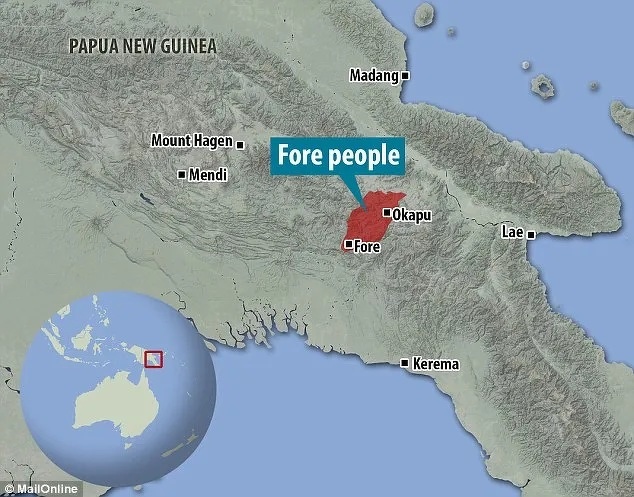
Where the Fore Live
Patrol officer Gordon T. Linsley, stationed at Okapa in 1951, remarked on the rapid pace of change: warfare had greatly diminished, villages were relocating from ridge-tops closer to garden areas, and inter-village tracks and rest houses were being built. Young men, in particular, appeared eager to abandon fighting. However, accusations of sorcery and occasional clashes continued, especially in the Purosa area.
By 1954, another patrol officer, John R. McArthur, was stationed in the region, and the rough track from Kainantu was opened to traffic. Within a few years, vehicles could reach Purosa in the South Fore, greatly improving transport and communication. In 1957, the Kuru Research Center was established at Awande to study the mysterious neurological disease afflicting the Fore. The practice of ritual cannibalism ended around 1960, after which kuru rapidly declined—from about 200 deaths annually to fewer than 10 per year by the late 20th century.
By the mid-1960s, Okapa had become a regional administrative hub with a hospital, school, and several small stores. Local government councils were formed, elections held, and access to formal education and medical services expanded. Most Fore people converted to Christianity and gradually adopted a shared group identity. Interparish conflict and isolation gave way to broader integration, and the Fore now live as active citizens of the independent nation of Papua New Guinea.
Fore Religion
According to the Christian organization Joshua Project, about 98 percent of the Fore identify as Christians. Most conversions took place after contact with missionaries beginning in 1957. Traditionally, Fore religion comprised a complex set of beliefs about the natural world, human existence, and the spiritual realm. It was animated by numerous ancestor spirits, ghosts of the recently deceased, and nature spirits. The Fore believe that the land itself, or bagina, is alive and created the world. The bagina also produced the ancestral guardians, amani, from whom the Fore trace their descent. There were no formal religious specialists, though certain men and women were known to have special access to the spirit world. Among these were healers and sorcerers who could manipulate spiritual powers for healing or harm. [Source: David J. Boyd, “Encyclopedia of World Cultures, Volume 2: Oceania,” edited by Terence E. Hays, 1996; Wikipedia]
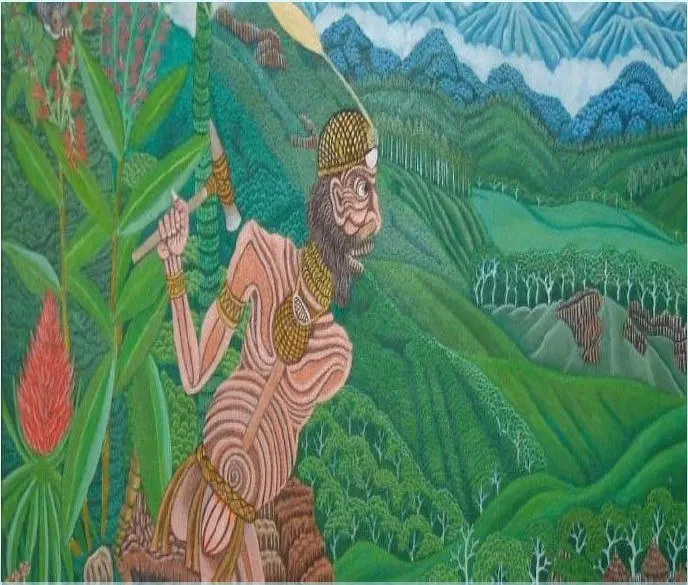
Nokoti
A central theme in Fore cosmology concerns a sacred creator-spirit couple said to have emerged from a swamp in South Fore and traveled throughout the region, leaving behind humans as well as useful plants and animals. This couple provided teachings for proper human conduct that emphasized fertility, strength, cooperation, and loyalty—values reinforced through myth and ritual. The spirits’ presence was invoked during important ceremonies through the sound of sacred flutes. Ghosts and nature spirits were believed capable of causing illness or misfortune when offended, but could also ensure abundant gardens and wild resources when properly respected.
Death, Funerals, Cannibalism: Traditional Fore concepts of the soul are highly developed. Each person is believed to possess five distinct souls: the auma, ama, aona, yesegi, and kwela. After death, elaborate mortuary rituals were performed to ensure that each soul reached its proper destination. The auma, representing a person’s good essence, traveled to kwelanandamundi, the land of the dead, aided by food offerings placed with the body. Death was marked by extended mourning, public display of the corpse, and gift exchanges between the deceased’s paternal and maternal kin. Two to three days after death, the body was either buried, entombed, or—formerly—cooked and consumed.
In the past, mortuary cannibalism was common, especially among women, children, and the elderly. Human flesh was believed to foster fertility and renewal in both people and gardens. The deceased’s ama was thought to bless those who partook, while the aona (a person’s special skills or powers) passed to a favored child, and the yesegi (ancestral vitality) to all the children. Purification rituals ensured that the kwela—the dangerous pollution associated with death—did not harm participants. Through these practices, the Fore maintained that a person’s positive qualities remained within the community while their souls moved to kwelanandamundi. Today, mortuary cannibalism has been abandoned, and each lineage maintains its own burial grounds. The spirit of the deceased is believed to linger near the grave before departing to one of several known spirit places to dwell indefinitely.
The Fore attribute most serious illnesses, including kuru, to sorcery, while minor ailments may be caused by witches, ghosts, or nature spirits, or by violations of social taboos. Traditional healers use medicinal plants, incantations, bloodletting, and divination. Local curers—often called “bark men” or “bark women”—treat common ailments, but sorcery-induced illness requires the attention of powerful “dream men,” usually from distant parishes or even outside the Fore area. These specialists gain insight in dreams induced by hallucinogenic plants and heavy tobacco inhalation.
Sorcery is viewed ambivalently—as a disruptive yet potent force that can both destroy and defend. It is not inherently evil but represents a source of power, wealth, and protection. Historically, accusations of sorcery sparked migrations and warfare. The North Fore typically feared attacks from other parishes, while the South Fore were more concerned with sorcery from within their own kin groups, possibly encouraged through bribes by enemies. To prevent attacks, the Fore took care to conceal food scraps and water sources from outsiders.
Originally, sorcerers within a kin group were regarded as protectors of their people, but the kuru epidemic shifted this perception. Sorcery was blamed for the disease, leading communities to hold meetings imploring the unknown sorcerers to stop their attacks. Although most Christian Fore today reject the efficacy of sorcery, traditional beliefs persist beneath the surface of modern religious practice.
Nokoti
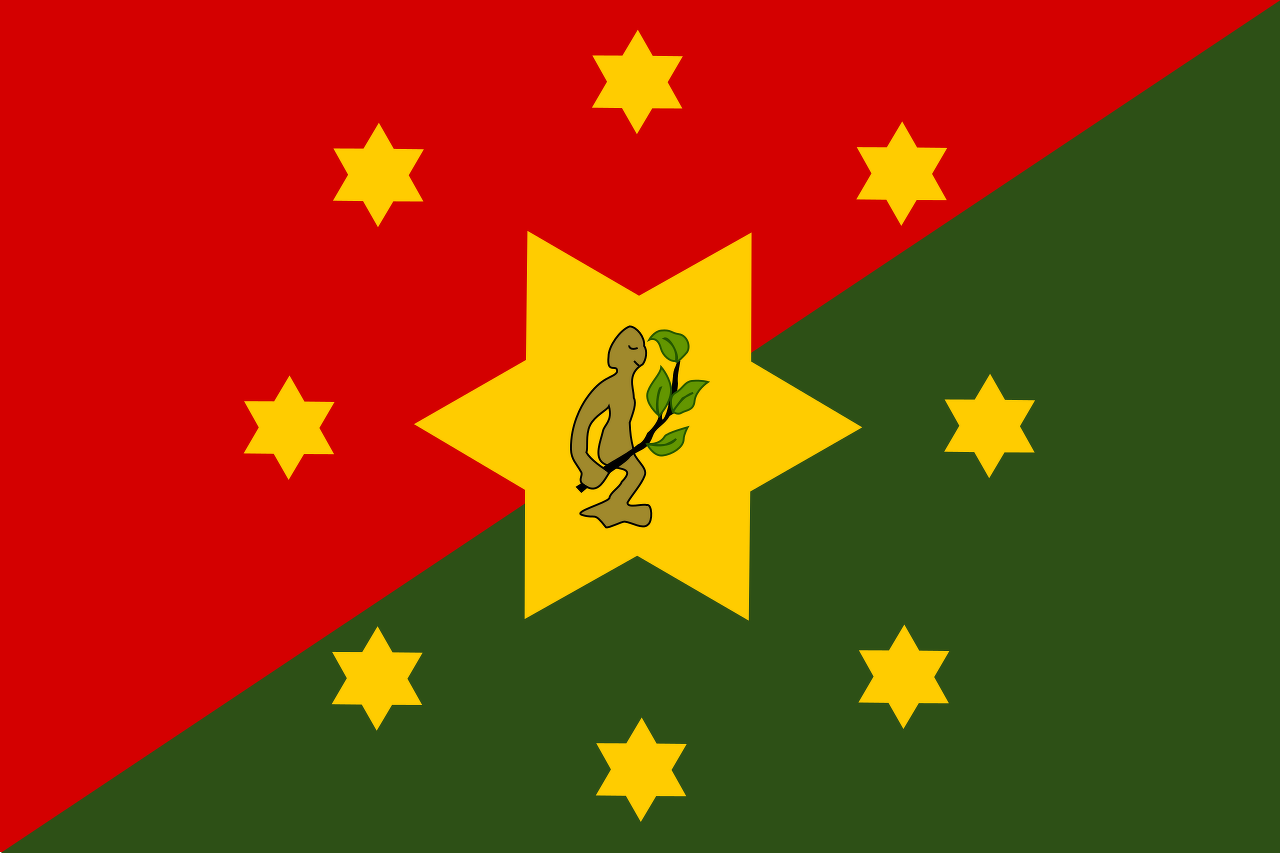
Nokoti in the central star of the Eastern Highlands flag
The Nokoti, also known as Nokondi, are forest spirits common in Fore folklore. They are portrayed as tall, masculine figures who carry small axes or bags containing their magical powers. The Nokoti dwell in isolated, mysterious parts of the forest—often near unusual rock formations or misshapen trees. The places where the Nokoti live (ples masalai in Melanesian) are considered sacred and must not be disturbed. Anyone who intrudes risks being afflicted by illnesses caused by nokoti kionei (Nokoti poison). For example, if a family with a child slept overnight in a ples masalai, the Nokoti might steal and hide a lock of the child’s hair. If the hair were not recovered, the child would die from illness; adults would not die but would suffer painful inflammation of the genitals. [Source: Wikipedia]
The Nokoti are not always harmful. They can bless individuals with exceptional hunting skills or increased fertility. One well-known tale tells of a hunter who discovered a distinctive rock formation while hunting. At its summit, he encountered a Nokoti named Walusubo, sitting on sugarcane leaves. The hunter asked for Walusubo’s bag of magic. Walusubo agreed to give it to him in the future and instructed him to eat the sugarcane leaves in the meantime. He also taught the hunter special knowledge that greatly improved his hunting success. After the hunter died, his kin returned to the rock, but Walusubo had died with him—they were nagaiya (spiritually linked). Though the magic bag vanished, the kin found that eating the sugarcane leaves from that rock gave them strength to defeat their enemies. Since then, the formation has been known as Walusubo Yaba, or “Walusubo’s Stone.”
With the arrival of colonial rule, the Nokoti began to appear in stories not as benefactors but as tricksters or criminals. Their appearance became more distorted—lankier, sometimes maimed from earlier misdeeds. This transformation in Nokoti folklore reflects the broader shift from an indigenous hunting-based culture to a colonial capitalist one. In newer tales, the Nokoti steal women’s skirts, shells, and beads, dressing trees with their stolen clothes before vanishing back into the forest. In another story, villagers attempt to capture a Nokoti thief but find him gone—and their valuables lost forever. Other accounts describe Nokoti being caught while robbing a store and sent to Australia, or stealing the money a kiap (colonial patrol officer) was using to pay his workers, or attacking patrol camps and huts.
In modern times, the Nokoti have become an important symbol of Fore cultural heritage. In 1997, the government of the Eastern Highlands declared the Nokoti a symbol of regional unity and placed their image at the center of the Eastern Highlands flag. Today, the Nokoti are remembered as mischievous yet protective forest spirits—figures embodying both the danger and generosity of the natural world.
Fore Family and Marriage
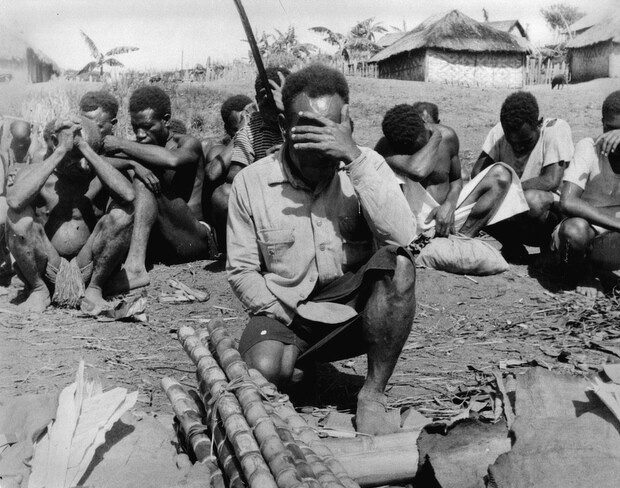
Fore man in the 1960s making a bride price offering
In the past, the Fore observed strict residential segregation due to beliefs about the dangers that female menstrual pollution posed to men. All males above 8–10 years of age lived communally in large men’s houses, while women and younger children resided in smaller, separate dwellings. Over time, this segregation was largely abandoned. Nuclear families, sometimes joined by elderly relatives or unmarried siblings of the husband or wife, came to occupy individual houses and became the primary units of production and consumption in Fore society. [Source: David J. Boyd, “Encyclopedia of World Cultures, Volume 2: Oceania,” edited by Terence E. Hays, 1996; Wikipedia]
A Fore girl became eligible for marriage when she first menstruated. Upon marriage, she left her home with the women to live with her husband. If her husband belonged to a different clan, she had to leave behind her family and friends, including any nagaiya. During the marriage ceremony, the husband’s family paid a marriage fee to the bride’s family, which was thrown onto the bride’s head as “head pay.” The husband and bride then attended separate feasts. The groom was often pierced in the nose, as piercings were believed to increase a man’s strength.
Marriage among the Fore involves the relatives of both the bride and the groom in a lengthy and complex series of prestations. In the past, this could begin soon after a girl’s birth when, following the custom of infant betrothal, she was promised as the future wife of a young cross cousin. Among the North Fore, the preferred marriage relationship includes both matrilateral (on the mother’s side) and patrilateral (on the father’s side) cross cousins—two cousins who are the children of a brother and a sister. Among the South Fore, however, marriage between patrilateral cross cousins is forbidden. Today, couples usually announce their intention to marry, which initiates negotiations between their relatives over the bride-wealth payment that concludes the marriage ceremonies. The newly married couple resides with the husband’s relatives. Many Fore men aspire to polygyny, but the shortage of marriageable women, historically caused by the high death rate from kuru, means that relatively few achieve it. Although most younger widows remarry, many men spend long periods without wives. Under these circumstances, most marriages end with the death of a spouse, and divorce accounts for only about 5–10 percent of dissolutions.
From birth, Fore infants experience nearly constant physical contact with parents, siblings, and other caretakers. As toddlers, they are free to explore their surroundings and are often encouraged in spontaneous acts of aggression. From an early age, girls assist their mothers in gardening tasks, while boys form small friendship groups that roam the hamlet lands to explore, hunt, and play together. Sometimes these groups build their own houses and cook, eat, and sleep independently. At about 8–10 years of age, boys begin formal initiation into the secret world of men, where values of cooperation, mutual support, and loyalty are emphasized. The Fore inherit land rights and valuables through the recognized patriline. Although married women retain rights to land belonging to their natal group, they cannot pass these rights on to their children.
Fore Kinship, Society and Land
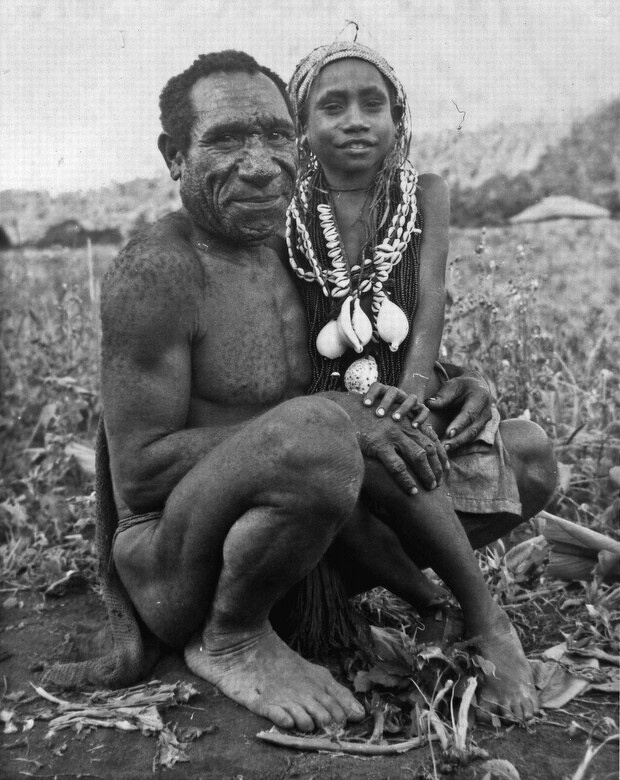
Fore man with his daughter in the 1960s
Fore society has very little formal hierarchy; there are no chiefs or fixed systems of authority. The culture is strongly patrilineal—sons marry and remain on their fathers’ land, while daughters marry into other clans. These marriage alliances are often short-lived. Women are generally regarded as inferior to men, though power distinctions are based more on age and adulthood than on gender. [Source: David J. Boyd, “Encyclopedia of World Cultures, Volume 2: Oceania,” edited by Terence E. Hays, 1996; Wikipedia]
Social organization centers on kinship groups, which are typically patrilineal but may include refugees or distant relatives who have joined from elsewhere and are fully integrated with equal rights and duties. Male lineage alone does not grant special privileges; in fact, incorporating unrelated men through land grants is seen as strengthening the group.Each kinship group usually occupies a village with several small offshoot hamlets. These consist of one men’s house and smaller houses for women and children. New hamlets are established when nearby garden land is exhausted and new areas must be cleared. A cluster of villages and hamlets may include 50–400 people, averaging around 185.
Kinship is the dominant organizing principle. Although genealogies rarely extend beyond two generations, all major social groups are thought to share common descent, with ideology emphasizing patrilineal ties. Yet Fore kinship is flexible—outsiders can become “one blood” through adoption, alliance, and cooperation. Kin groups are structured hierarchically. The smallest unit, the lounei (“line”), usually resides together and is exogamous. Several lines form a subclan, whose members live nearby and consider themselves closely related. Multiple subclans make up a clan, which is not exogamous and may have members living outside its recognized territory.
Fore kinship terminology follows the Iroquois system. Father’s brothers and mother’s sisters are addressed by the same terms as Father and Mother, while a father’s sisters and mother’s brothers are “Aunt” and “Uncle.” Parallel cousins (children of same-sex siblings) are called brothers and sisters, while cross cousins (children of opposite-sex siblings) are distinguished as cousins.
Land rights are held communally by all adult clan members occupying the land. Garden plots are assigned to individual families, and outsiders may occasionally be granted temporary use rights. Land is never individually owned and passes through the male line. Disputes over land for gardens or grazing sometimes lead to armed conflict, with groups banding together to defend territory using bows and arrows. When defeated, a group abandons its land and seeks refuge with allied kin or friends.
Initiations and Nagaiya

Fore tribesmen
The most important ritual complex among the Fore was the initiation of boys into manhood. Young boys were taken from their mothers and lived with men. Over several years, they were taught the practices of nosebleeding, swallowing canes, and vomiting. These rituals were believed to promote strength, growth, fertility, and protection from female pollution. The boys also learn the beliefs, behaviors, and responsibilities expected of adult men. At puberty, girls are briefly secluded, undergo nose bleeding, and receive instruction from older women about their new roles. The Fore also hold large pig feasts once or twice each decade, often tied to initiations, which serve as major social and political events.[Source: David J. Boyd, “Encyclopedia of World Cultures, Volume 2: Oceania,” edited by Terence E. Hays, 1996]
Men born at the same time or in the same childbirth hut are considered nagaiya, or agemates, forming lifelong bonds as strong as kinship ties. Nagaiya hunt, fight, and share hardships together, and betrayal between them is punishable by death. Boys may also become nagaiya through shared initiation ceremonies, which include a period of seclusion in the forest, receiving new names, and sacred flute playing. Although women can have nagaiya, the relationship is more central to men. [Source: Wikipedia]
Nagaiya support each other in all aspects of life—during hunting, war, and personal conflicts. For example, if a man quarrels with his wife, his nagaiya help mediate the dispute through ritual actions and shared meals, leading eventually to reconciliation. They also share symbolic burdens, such as diet restrictions when a man’s wife menstruates or during other periods of ritual danger.
When a man dies, his nagaiya attend his funeral and receive anonkaiyambu (“head pay”). They are then obligated to avenge his death, so men without surviving nagaiya fear dying unavenged. After a man’s death, his nagaiya or brothers may become potential husbands for his widow, creating both social tension and continuity within Fore kinship networks.
Fore Life: Villages, Food, Art and Chores
Fore settlements are scattered across the landscape, with small groups living at the forest’s edge near their food gardens. Each settlement typically consists of several large houses clustered near cleared garden land. In earlier times, hamlets included one or two communal men’s houses and a row of smaller houses for women and children, separated by an open space with cooking pits. Small huts for menstruation and childbirth stood at the edge of the clearing, and the entire settlement was enclosed by a defensive stockade. Today, the men’s houses and stockades have disappeared, and most families live together in single dwellings within larger, more permanent villages. [Source: David J. Boyd, “Encyclopedia of World Cultures, Volume 2: Oceania,” edited by Terence E. Hays, 1996; Wikipedia]
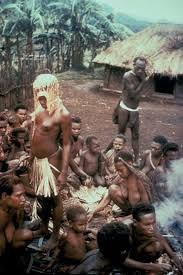
Fore
Labor among the Fore is divided but flexible. In gardening, men fell trees while women clear underbrush and prepare the soil. Women handle most planting, cultivation, harvesting, and transport of crops, though men may help. Men grow pandanus, tobacco, and certain ritually significant red varieties of sugarcane, bananas, yams, and taro. Women tend pigs under male supervision and take the main responsibility for childcare, with help from men and older siblings. Women also cook most food, while men gather firewood and prepare earth ovens. Traditionally, women made clothing and net bags, and men crafted weapons, tools, and ornaments. [Source: Wikipedia]
The Fore diet includes pigs, small animals, insects, wild plants, and root crops such as taro. About 150 years ago, the introduction of the sweet potato greatly increased food production, as it thrived in poor soil and served as both a staple food and pig feed. Around the same time, the Fore began domesticating pigs, reducing their reliance on hunting. Studies from the 1950s found that the Fore maintained a highly varied and nutritious diet for the region, showing no signs of malnutrition despite the absence of modern medical or nutritional services.
Fore art focuses on body adornment—feather headdresses, shell necklaces, and headbands. Men traditionally carved wooden bows, arrows, and shields, while women made woven garments and intricately patterned net bags.
Fore Agriculture and Economic Issues
Fore subsistence has traditionally been based on swidden horticulture and pig husbandry, supplemented by limited hunting and foraging. New gardens are created in forested areas through slash-and-burn clearing, fenced, and planted using digging sticks. The sweet potato is the primary crop and staple food for both people and pigs. Pigs, regarded as a major form of wealth, are raised with great care, often living close to their owners and being fed daily with garden produce. Gardens also include taro, yams, manioc, pitpit (Saccharum edule and Setaria palmifolia), maize, winged beans, bananas, sugarcane, and various leafy vegetables and herbs. In recent decades, crops such as lima beans, peanuts, cabbages, pumpkins, onions, and papayas have been added. Coffee cultivation has become the main cash crop and commercial activity, involving nearly all Fore households. [Source: David J. Boyd, “Encyclopedia of World Cultures, Volume 2: Oceania,” edited by Terence E. Hays, 1996]
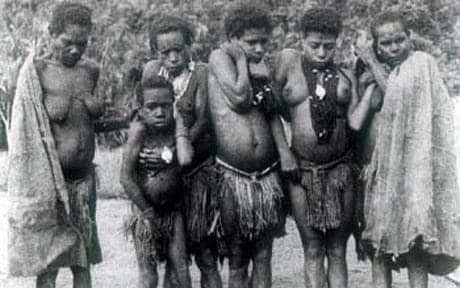
Fore women in the 1960s
Like many neighboring groups, the Fore have largely replaced traditional manufacturing with purchased goods. Western-made clothing, tools, and utensils are now common, bought with income from cash crops. Men remain responsible for house building and the fencing of gardens and pathways, while women continue to make utilitarian net bags from hand-spun bark fiber. Before the 1950s, the Fore also produced salt from the ash of Coix gigantea for local use and trade, but this practice disappeared with the availability of commercial salt.
Regional trade once played a key role in Fore life. Goods circulated through intricate exchange networks linking communities within a day’s walk of each other. Stone axe blades were acquired from the north and west in exchange for salt, fur pelts, bird plumes, and betel nuts. From the southeast came black-palm bows and arrowheads traded for salt and piglets, while shells from Papuan groups to the south were exchanged for tobacco and net bags. Today, most Fore obtain outside goods through small local shops and the periodic market at Okapa.
Traditional Fore Political Organization and Warfare
The traditional Fore political structure was organized around the parish or “district,” made up of one or more neighboring hamlets whose members shared a sacred spirit place, common territory, and mutual defense. Each parish was divided into sections, which once served as military units responsible for joint defense and negotiation of hostilities. Sections consisted of lines, exogamous descent and political groups whose unity was often expressed in kinship terms as being “one blood.” Leadership rested with big-men, respected for their skill, oratory, bravery, and ability to organize warfare, trade, and alliances. Their authority depended on personal ability and was constantly challenged by rivals. Today, this local leadership structure coexists with elected offices in provincial and national politics, where some Fore big-men now serve. [Source: David J. Boyd, “Encyclopedia of World Cultures, Volume 2: Oceania,” edited by Terence E. Hays, 1996]
Big-men also acted as peace negotiators and maintained order through persuasion and the threat of sorcery. Within parishes, cooperation and reciprocity were key to unity, and serious offenses—such as theft, adultery, violence, or sorcery—were met with public condemnation and demands for restitution. Within households, tension between husbands and wives was moderated by relatives’ intervention and by men’s fear of female pollution through menstrual contact.
Foreign influence transformed Fore society throughout the mid-20th century. Missionaries replaced traditional religion with Christianity, ending ritual cannibalism that had spread kuru disease. Warfare and rigid clan boundaries faded as new roads, trade networks, and crops like coffee and steel tools arrived. Clinics reduced mortality and introduced modern medicine, while men and women began interacting more freely across clan lines.
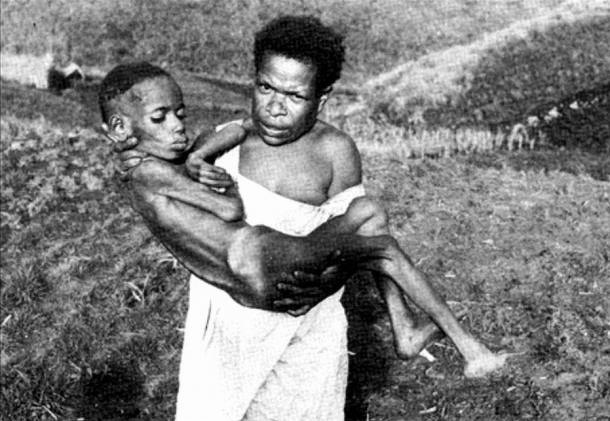
Fore mother with a child with Kuru
Before colonial contact, warfare was common between Fore clans, usually sparked by sorcery accusations, theft, or revenge. Battles involved bows and arrows, ambushes, and open-field fighting coordinated by pako—respected neutral envoys who mediated and later helped negotiate peace. Despite frequent conflict, the Fore viewed war as a last resort and sought peace through rituals involving pigs and symbolic plant offerings of daka leaves and sugarcane. [Source: Wikipedia]
Alliances were reinforced through large pork feasts that promoted lasting peace between clans. With the arrival of Australian patrols in the late 1940s, warfare ceased. Colonial forces established law courts and appointed luluai—local representatives who mediated disputes—under what became known as the “pacification project.” Although early relations were uneasy and sometimes exploitative, the Fore eventually accepted colonial authority. The combination of centralized governance, new economic opportunities, and the Fore’s own desire for peace brought enduring stability to the region.
Kuru and the Fore
In the 1950s, the neurological disease kuru was identified among the South Fore people. The epidemic was caused by the local practice of ritual endocannibalism, in which relatives consumed the bodies of their deceased kin. Between 1957 and 2005, kuru claimed an estimated 2,700 lives. The disease, an incurable neurodegenerative disorder caused by prions, led to progressive loss of coordination and muscle control, ending in death. Its prevalence peaked in the 1950s and 1960s.
Kuru likely first appeared around the early 1900s in the Uwami village of the Keiagana people and spread southward through the Fore region. A European prospector, Ted Eubank, reportedly noticed symptoms in the 1930s, but it was not formally documented until 1957 by Berndt and Berndt, and later studied by D. Carleton Gajdusek and Vincent Zigas, who introduced it to Western medicine. Gajdusek observed that kuru was linked to mortuary cannibalism, a view later confirmed through the research of Shirley Lindenbaum and Robert Glasse.
In these rituals, women and children most often consumed the brains of the deceased—the organ most concentrated with the infectious prions—while men mainly ate muscle. Consequently, women were affected eight times more often than men, and the disease also struck children and the elderly at high rates. By the 1950s, mortality approached 35 per 1,000 in a population of roughly 12,000, severely distorting the female-to-male ratio in the South Fore to as low as 1:3. Kuru has been considered eradicated since 2005.
The practice of transumption—the respectful consumption of the dead—was the Fore’s most common mortuary custom until the 1960s. It expressed love and grief, ensured the safe passing of the deceased’s spirit, and symbolically preserved the person’s strength within the family. Women were believed to be spiritually suited to contain the dangerous kwela (death pollution) in their wombs. After mourning for several days, women cut, divided, cooked, and shared the body, consuming nearly every part, including powdered bone mixed with vegetables. Over subsequent weeks, a series of purification rituals cleansed the soul and sent it to the land of the dead.
When the link between transumption and kuru became clear, Australian authorities outlawed the practice in the late 1950s. It soon ceased, though it persisted slightly longer in the more isolated southern Fore. The resulting demographic crisis—caused by the heavy loss of women—forced men to assume maternal roles, healers were consulted, and communities feared extinction. Initially, the Fore attributed kuru to sorcery, but they later accepted its physical cause, even though traditional beliefs about witchcraft and spiritual illness remain strong today.
Image Sources: Wikimedia Commons
Text Sources: “Encyclopedia of World Cultures, Volume 2: Oceania,” edited by Terence E. Hays, 1996, National Geographic, Live Science, Metropolitan Museum of Art, Natural History magazine, Australian Museum, New York Times, Washington Post, Los Angeles Times, Smithsonian magazine, Encyclopedia.com, Times of London, Library of Congress, The Conversation, The New Yorker, Time, BBC, CNN, Reuters, Associated Press, AFP, Lonely Planet Guides, Google AI, Wikipedia, The Guardian and various websites, books and other publications.
Last updated October 2025