
Home | Category: Highland and Mainland Ethnic Groups
EASTERN HIGHLANDS PROVINCE
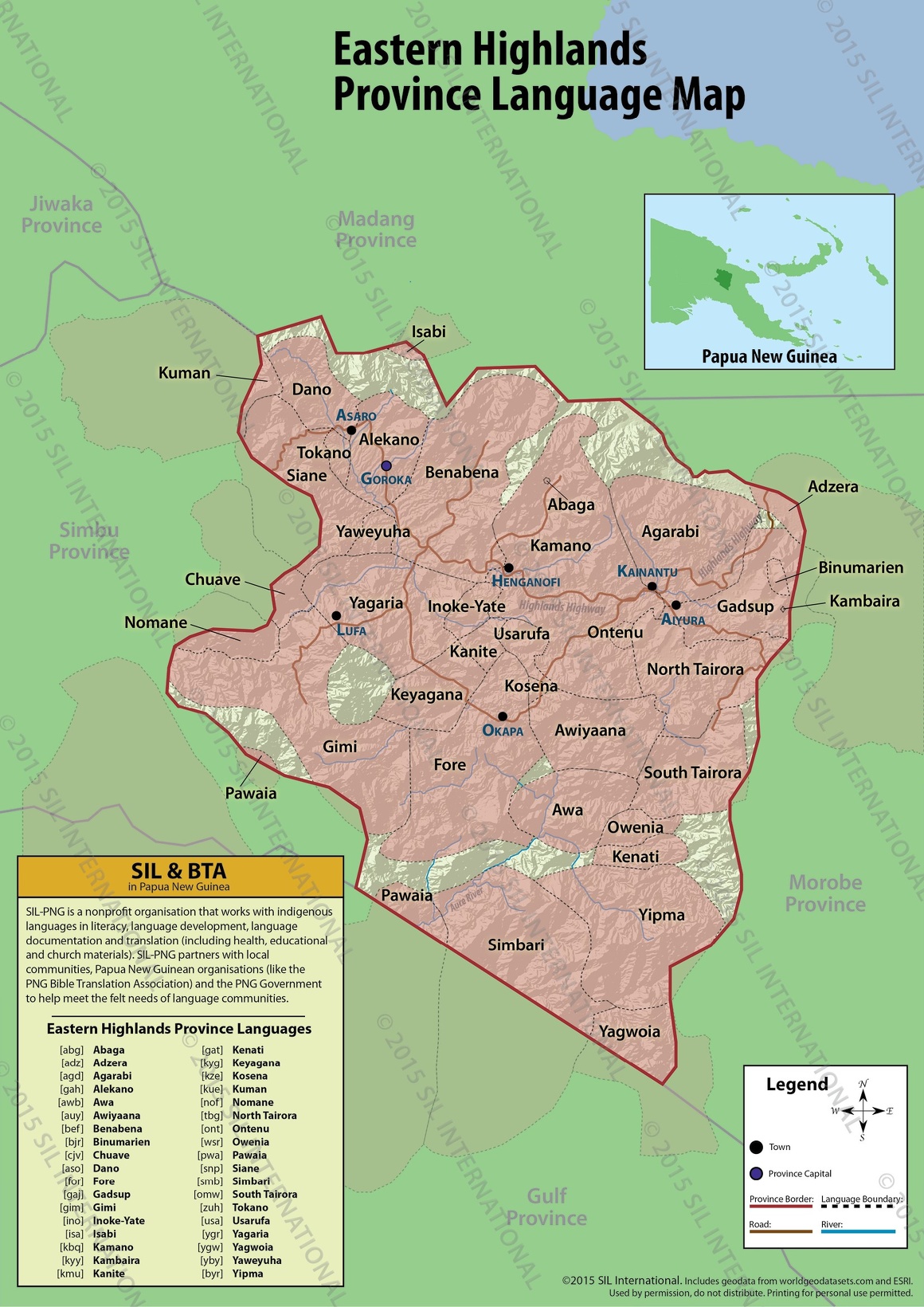
From SIL
The Eastern Highlands province (EHP) covers an area of 11,157 square kilometers (4,308 square miles) and has a population of 784,835 people according to the 2021 census, making it Papua New Guinea’s second most populous provinces. It also one of the fastest growing the population was 579,825 in 2011 according to the census that year. The Eastern H highlands province shares borders with Madang Province to the north, Morobe Province to the east, Gulf Province to the south, and Simbu (Chimbu) Province to the west. The province is the home of the Asaro mud men and is usually reached by air from Goroka Airport or by road on the main Highlands Highway.
The eight Districts of EHP are Daulo, Goroka, Henganofi, Kainantu, Lufa, Obura-Wonenara, Okapa and Unggai-Bena. Their development status varies significantly. The provincial capital of Goroka is located at an elevation of 1,200 meters (3,940 feet) with the area immediately around it around 1,550 meters (5,85 feet) high. Another important town, Kainantu, is situated at an altitude of 1,900 meters (6,235 feet). Key geographical features include the Kassam Pass and Daulo Pass, which provide important access routes and scenic viewpoints.
The geography of Papua New Guinea's Eastern Highlands is defined by rugged mountain terrain, broad, fertile river valleys like the Markham and Ramu, and lush, elevated areas around cities like Goroka and Kainantu. The province features high peaks, including Mt. Michael (3,750 meters, 12,303 feet) and Mt. Tabletop (3,686 meters, 12,903 feet), and is traversed by rivers like the Asaro and Lamari, which feed into the Purari river system. The Ramu River also feeds the Yonki Hydro-Power Station.
The Goroka District of the Eastern Highlands Province is bounded to the north by the Bismarck Range. The Goroka Valley is drained by the Asaro and Bena Bena rivers. The surrounding mountains reach over 3,000 meters (9,842 feet). Centuries of forest clearance have left little timber in the region, though the extensive grasslands are now being reforested through administration-sponsored schemes. The climate is fairly uniform throughout the region, with cool nights, warm days, and relatively wet and dry seasons that alternate with the southeast and northwest monsoons, respectively. The annual rainfall is 220 to 250 centimeters (87 to 98 inches), A marked dry season has sometimes led to periodic food shortages in the past. The heaviest rainfall is from November to March.
RELATED ARTICLES:
HIGHLAND TRIBES OF PAPUA NEW GUINEA ioa. factsanddetails.com
ART FROM THE HIGHLANDS OF NEW GUINEA ioa. factsanddetails.com
FAMOUS HIGHLAND TRIBES OF PAPUA NEW GUINEA: KALAM, ASARO MUDMEN AND HULI WIGMEN ioa. factsanddetails.com
HIGHLAND GROUPS OF PAPUA NEW GUINEA: MARING, TAMBUL, SUMAU ioa. factsanddetails.com
MELPA: MT. HAGEN, LIFE, CULTURE AND FAMILY ioa. factsanddetails.com
CHIMBU (SIMBU): HISTORY, LIFE, SOCIETY AND SKELETON MEN ioa. factsanddetails.com
ENGA PEOPLE: RELIGION, LIFE AND SOCIETY ioa. factsanddetails.com
TRIBES OF THE SOUTHEAST NEW GUINEA HIGHLANDS: MAFULU, TAUADE, GOILALA, FUYUGE ioa. factsanddetails.com
ETHNIC GROUPS IN MADANG, PAPUA NEW GUINEA: USINO, TANGU, AIOME ioa. factsanddetails.com
SOUTHERN HIGHLANDS GROUPS OF PAPUA NEW GUINEA: MENDI, FOI, KEWA ioa. factsanddetails.com
ETHNIC GROUPS OF THE GREAT PAPUAN PLATEAU AND WESTERN HIGHLANDS ioa. factsanddetails.com
SIMBARI: HISTORY, LIFE, SEX, INITIATIONS ioa. factsanddetails.com
FORE PEOPLE OF PAPUA NEW GUINEA: HISTORY, LIFE, RELIGION, CULTURE, KURU ioa. factsanddetails.com
ETHNIC GROUPS IN MOROBE PROVINCE: WANTOAT, SELEPET AND SIO ioa. factsanddetails.com
Eastern Highlands Ethnic Groups
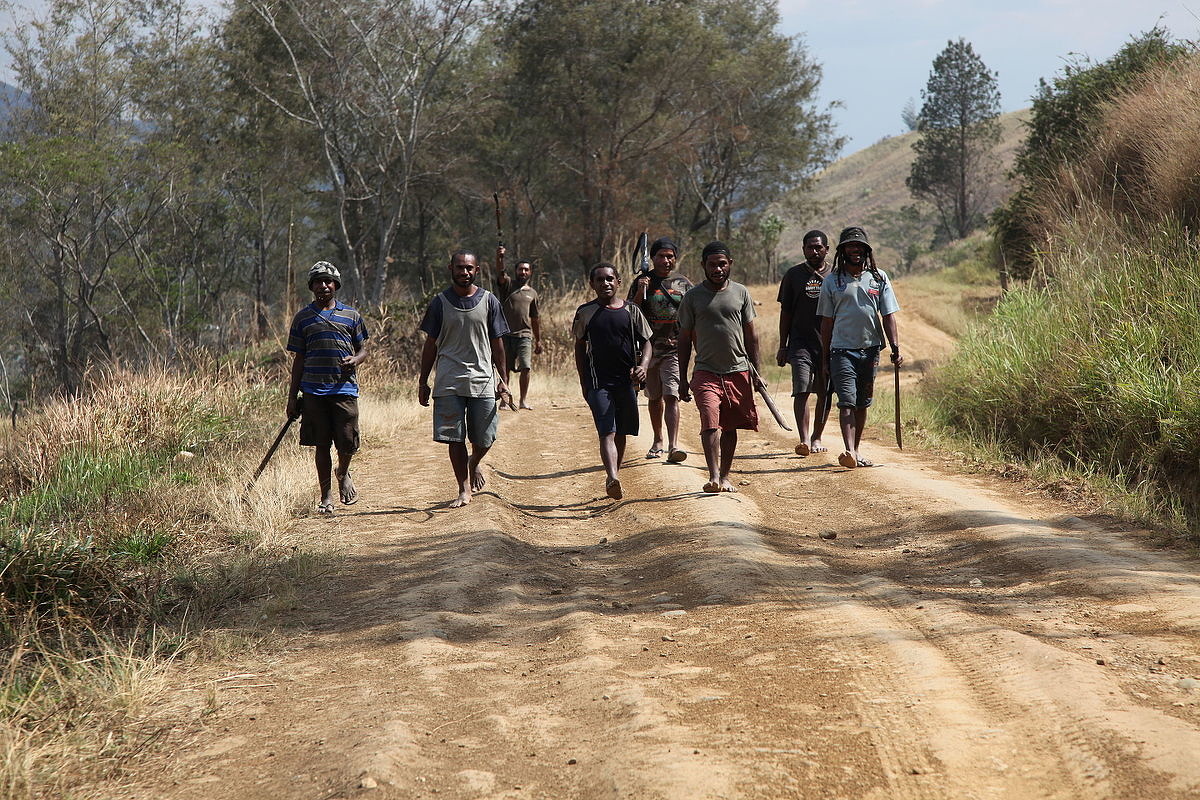
Young men engaged in tribal wars in the Eastern Highlands in 2010
The Eastern Highlands of Papua New Guinea is home to numerous groups, including the Fore, Upper Asaro, Simbari, Gahuku, Kamano, and Tairora people. A 2024 study published in ScienceDirect.com analyzed population genetics and identified 21 distinct linguistic groups in the region. These groups, which include the South Fore linguistic group, are genetically and linguistically distinct despite being geographically close.
Some of the Eastern Highlands groups are well-known for their distinct cultures, languages, and historical practices. Some groups, like the Upper Asaro and Simbari, are associated with specific locations within the province, such as the Asaro River Valley and the mountain fringes, respectively. The Fore live in the Okapa District and are separated into North and South regions. The Upper Asaro inhabit the area above the Asaro River Valley in the Goroka District. The Simbari are a mountain-dwelling group that reside on the fringes of the province. The Gahuku: speak Alekano, which has around 62,000 speakers. The Kamano one of the numerically largest groups in the Kainantu sub-district. The Tairora are another largest groups; they live mostly in the Kainantu sub-district. Among the other notable groups in the province are the Agarabi, Gadsup, Auyana, and Awa peoples.
Siane People
The Siane people are a collection of culturally and linguistically similar ethnic groups living in the highlands of Papua New Guinea's Eastern Highlands Province. Their Papuan language, also called Siane, has five dialects and belongs to the East-Central Family of the East New Guinea Highlands Stock. According to the Christian organization Joshua Project the Siane, Koreipa population was around 59,000 in the early 2020s and 99 percent of them were Christian. In the 1970s, the Siane population was estimated to be around 18,000. [Source: “Encyclopedia of World Cultures, Volume 2: Oceania,” edited by Terence E. Hays, 1996 ~]
Villages and Housing: Siane settlements are typically located on minor mountain ridges at an altitude of approximately 2,000 meters. A typical village houses 200 to 250 inhabitants and is structured around a central path. Along this path, large, oval-shaped men's houses are interspersed with separate dwellings for women and children. Domestic units are not co-resident; instead, a husband and his older sons live in the men's house, often with their male relatives, while the immediate female relatives live in a separate dwelling. The basic economic unit, however, consists of a man, his wives, and their children.
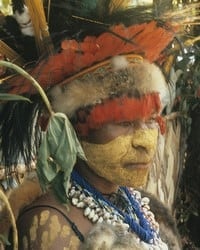
Siane man
Agriculture and Chores: The Siane practice swidden agriculture, planting a variety of crops in their gardens, including sweet potatoes, taro, yams, maize, green vegetables, bananas, and sugarcane. Men are responsible for clearing new garden sites, building fences, and constructing support poles for the climbing plants. Women take charge of planting, weeding, and harvesting the crops, as well as cooking. They also tend to pigs and collect water, firewood, and straw. Additionally, men construct houses and prepare bark for women's clothing.
Siane Society is organized into 16 "tribes," which are culturally and linguistically similar but not politically unified. Key kin groups include localized patrilineal clans and patrilineages, along with nuclear and extended families. Clans and kinship groups are exogamous, and residence is almost always patrilocal. Polygyny is the ideal marital form. The most inclusive politically integrated unit is the clan, which historically also served as the military unit. Patrilineages are the landholding units. A strong sense of competitiveness exists between unrelated clans, which is demonstrated through feasts, alliances, and, in the past, warfare. Clan "big-men" gain prestige by hosting competitive dance feasts with contributions from their followers, which include pork, shells, bird of paradise feathers, and shell-adorned bark strips.
Religion: Siane beliefs include an animatistic concept of "spirit," a nonmaterial, supernatural essence associated with all living things. A living person has a unique spirit, or oinya, which becomes a ghost (korova) upon death. This ghost is eventually reabsorbed into the general "pool" of spirit, from which new oinya are formed. Siane people believe that they can be possessed by korova, which requires exorcism. The ghosts of ancestors are worshipped and propitiated through large pig feasts during birth and initiation ceremonies, as they are thought to be influential in human affairs. While a major god, Oma Rumufa or "Black Way," is recognized as existing before creation, this deity is not worshipped.
Art: Gerua art works from the Siane people form the centerpieces for dances at their Pig Feast, a ceremony performed by each clan once every three years. The feast honors the korova, ancestral spirits who are invited into the community to witness the dances, hear the playing of sacred flutes, supervise initiation rites, and partake in a ceremonial meal of pork. The climax of the rites is the dancing of the gerua, in which some two hundred dancers carry the brightly painted boards, surrounded by as many as two thous and spectators.
See Wenena Gerua (Ritual Board) from the Eastern Highlands ART FROM THE HIGHLANDS OF NEW GUINEA ioa.factsanddetails.com
Gimi People and Their Unusual Past Customs
The Gimi People live in Eastern Highlands Province, According to Joshua Project they numbered 77,000 in the early 2020s and 99 percent are Christians. The Gimi language, also known as Labogai, is a Papuan language spoken by 23,000 people in 2000. Gimi has 5 vowels and 12 consonants, including voiceless and voiced glottal consonants. [Source: Wikipedia]
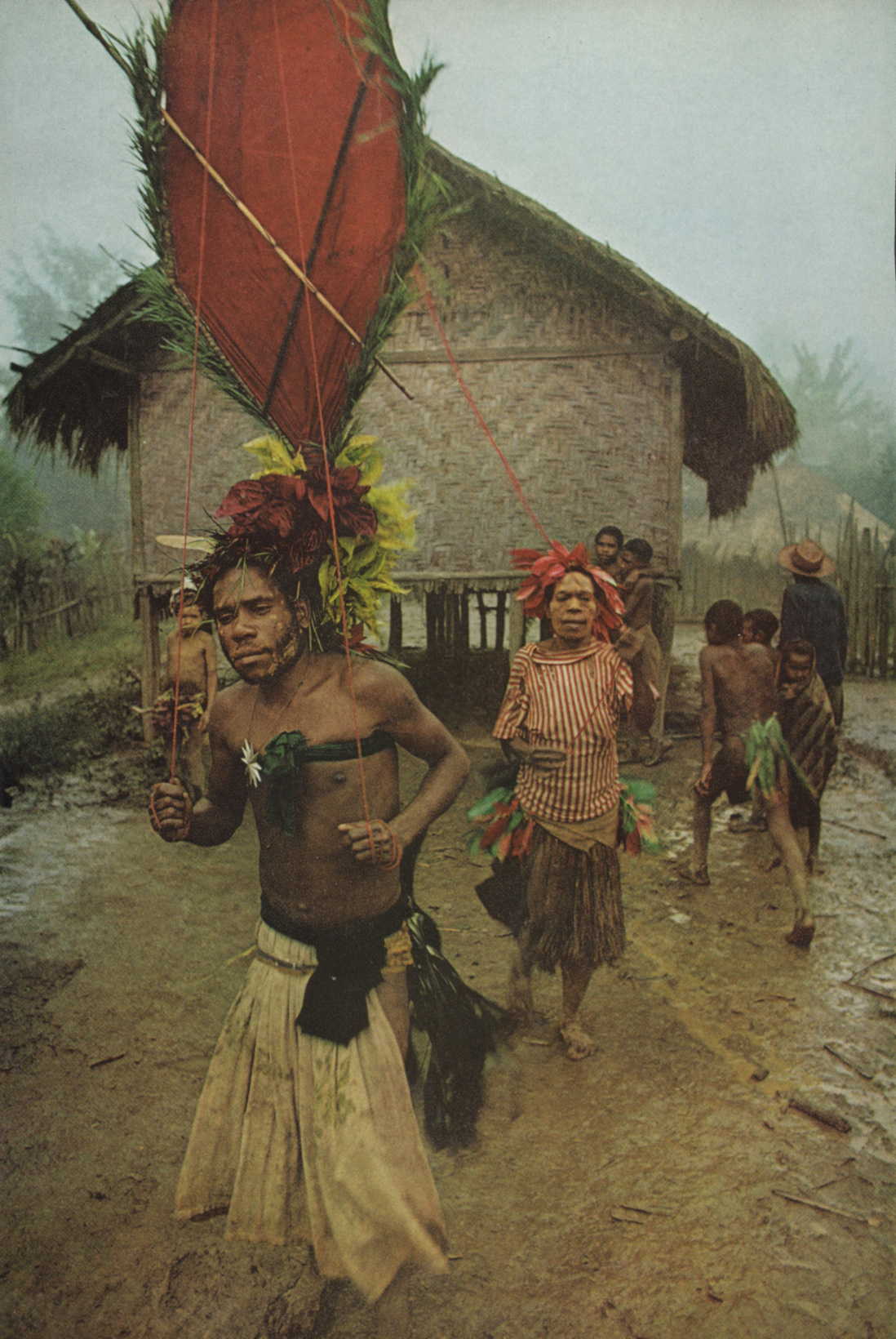
Gimi people in 1977: Linked by an “umbilical cord” at a ritual, a young man and his mother dramatize maternal influence, rarely acknowledged publicly; researchers have traced much of the antagonism between the sexes to women’s pervasive role in raising male children and to fathers’ attempt-through initiation rites-to transform boys into men, from National Geographic
According to a 1977 National Geographic article, Gimi boys went through an initiation ceremony in which they were forbidden from having anything to do with women — seeing their mothers, talking to them, and so on. They were also not allowed to eat anything that symbolized women, such as frogs (which squat), or owls and birds with short beaks (considered to have “no nose,” meaning no penis). They could not reveal any of the secrets of what took place inside the special men’s house to women without putting their lives at risk. [Source: "New Guinea's Gimi People" by Gillian Gillison, National Geographic July 1977; "Living Theater in New Guinea" by Gillian Gillison, National Geographic, August 1983]
Gimi people adorned themselves in magnificent costumes when performing all-night dramas in their villages. The costumes, made from materials found in the forest — such as bamboo, grass, and natural paints — are too elaborate to describe here. Check Geographic articles “The Gimi People” and “Living Theater” sourced above.
Possums, wrapped in leaves and medicinal bark and cooked over an open fire, were given to a new mother and her midwives as symbols of fertility. To seek voodoo-like revenge, the Gimi wrapped poisonous bark around a victim’s discarded fingernail clippings or feces and then cooked it in a banana leaf.
Murderers were identified, according to Gimi belief, by offering a possum a sweet potato and whispering a suspect’s name. If the possum bit the sweet potato as the name was spoken — ah hah — a likely suspect was found. Next, the possum was killed and live caterpillars were attached to its limbs. The possum was then cooked, and if any of the caterpillars survived, that meant the suspect was guilty. If none survived, it was considered a hung jury, and the men ate the possum and caterpillars.
Even those who died of natural causes were believed to have been murdered. A method used to find a suspect in a so-called “heart attack murder,” for example, was to place the dead man in a doorway. All the suspects were then gathered, and each had to lift one of the dead man’s feet. If the “murderer” lifted the foot, the dead man was expected to give a sign. As one might guess, nothing usually happened.
Awa
The Awa people are an ethnic group from the Eastern Highlands Province living on both sides of the Lamari River at elevations from 900 to 2,400 meters (2,950-7,875 feet). They are known for their traditional subsistence agriculture, producing crops like yams, taro, and sweet potatoes. They produce a modest amount of coffee as a cash crop but they have limited access to modern infrastructure like roads and schools and their remote villages are difficult to reach. It takes a full day's walk to reach the nearest road, school, or medical aid post. According to Joshua Project there are approximately 3,900 Awa, Mobuta people in Papua New Guinea. In 1996, the Irakia Awa population was 299.
Language: The Awa language is a part of the Trans-New Guinea language family. It is in the Kainantu-Goroka branch and further falls under the Kainantu and Gauwa subgroups. Speakers: There were 2,100 native speakers of the Awa language in 2003. Awa women historically lived with their mothers and siblings in separate houses from the men's communal houses, where fathers and other adult males lived with young initiated boys.
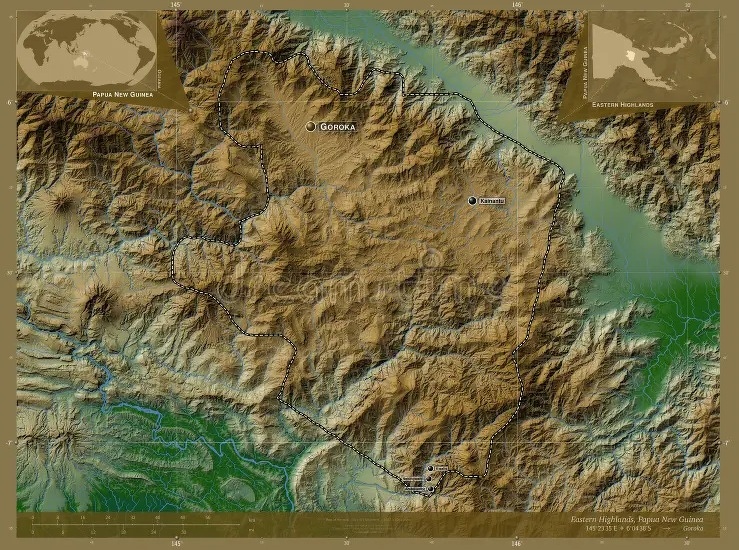
Eastern Highlands Province topographical map Dreamtime
The Awa are sometimes described as a "fringe" group in the context of the New Guinea Highlands because their traditional subsistence relies less on sweet potatoes compared to more populous valley groups, suggesting a survival of an older agricultural adaptation. According to Joshua Project 90 percent of them are Christians. Traditionally, they believe their traditional role in the cosmos is to reorder the spiritual forces of the world, which they feel were left in a disordered state after the death of their "ancient ancestor," the Nommo.
“Growing Up Sexually” reported: According to Newman and Boyd (1982/1998) a five -stage male initiation includes nosebleeding, forced vomiting, force feeding of prescribed food, sweating, and bilateral incision of the glans penis (penis bleeding), on two occasions, the second of which is ‘severe’. This topical bleeding is supposed to ‘grow’ the penis by draining it from the feminine, fluid component of blood. Later in the sequence there is explicit instruction in sexual intercourse, which is held to be potentially hazardous for the male and too ‘powerful’ for uninitiated males to engage in, social consequences of adultery, and so on. This instruction includes visualisation of penetration depth with the aid of a wild fruit. The conclusion is married life. Women, after their menarche (which is not ritually marked) experience ritualized serial sexarche with patrikinsmen of their future husbands, held necessary for opening of the vagina and letting out bloody fluids said to harm their husbands. They are also well instructed in matters of reproductive life. [Source: “Growing Up Sexually. Volume I” by D. F. Janssen, World Reference Atlas. 0.2 ed. 2004. Berlin: Magnus Hirschfeld Archive for Sexology, Berlin, September 2004]
Gahuku
The Gahuku are also known as the Gahuku-Gama, Garfuku and Gorokans. They occupy the open grassland and ridges immediately to the west of the town of Goroka, the provincal capital and administrative center of the Eastern Highlands. The names "Gahuku," and "Gama" are names of tribe or district group, but the former has been extended by linguists to include a non-Gahuku groups that speak the same language. According to Joshua Project the Gahuka population in early 2020s was 62,000. At first European contact in 1930, there were an estimated 50,000 people living in the Goroka area, but it is difficult to say how many of those were Gahuku. In the 1990s, slightly more than 16,000 Gahuku speakers are Officially recognized. [Source: Terence E. Hays, “Encyclopedia of World Cultures, Volume 2: Oceania,” edited by Terence E. Hays, 1996]
Language spoken by the Gahuku people is known as Alekano, or sometimes Gahuku. It is a Papuan language spoken in the Gahuku Rural LLG of the Eastern Highlands Province of Papua New Guinea, with an estimated 25,000 speakers. Some linguists classify Gahuku as a dialect—alongside Asaro (Gururumba)—of the Gahuku-Asaro language, which belongs to the East-Central Family within the East New Guinea Highlands Stock of Non-Austronesian languages. Many Gahuku people are bilingual, also speaking Asaro, Benabena, or Siane. Today, most younger adults and children speak Tok Pisin, and an increasing number are learning English in schools.
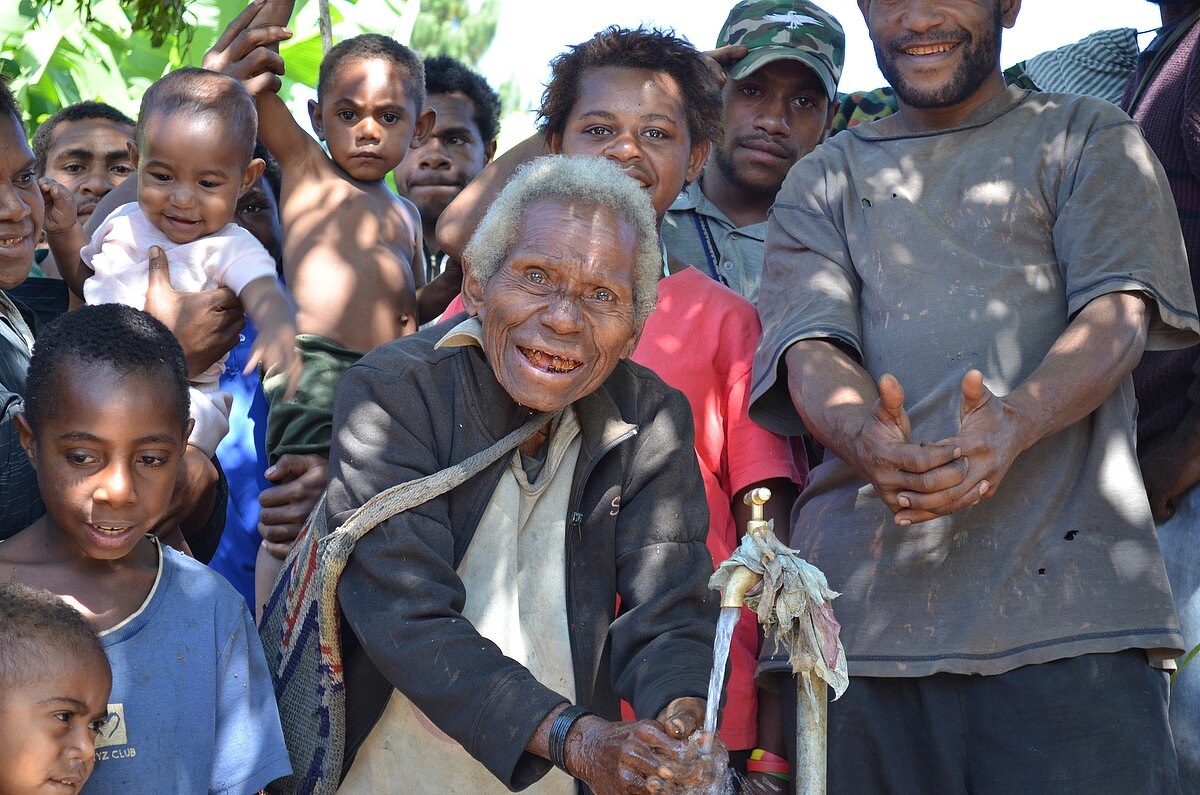
people in Goroka
The name Gahuku derives from the largest tribe of its speakers, while Gama is the second largest clan. Speakers from other clans object to using these names for the language. To avoid this, linguist Ellis Deibler proposed Alekano as a neutral name, which is now the term most often used by linguists—though it remains largely unfamiliar to local speakers. The word Alekano means “bring it,” and carries the same meaning in the closely related Tokano and Dano languages to the northwest. Alekano’s five unrounded vowels make it typologically unusual, and it has twelve consonants—with /w/ appearing only in the village of Wanima, in derived forms, or in Tok Pisin loanwords.
History: Archaeological finds from the Kafiavana rock shelter suggest that hunter-gatherer populations occupied the Goroka Valley as early as 9,000 B.C., with a gradual shift to horticulture thousands of years later. Trade with coastal groups is indicated by cowrie shells dated to around 7,000 B.C. The Gahuku had no direct contact with Westerners until 1930, when an Australian gold prospecting party entered the area. Soon afterward, an aerodrome was built at Bena Bena, and Lutheran missionaries arrived in 1932. The town of Goroka became an Australian administrative post in 1939, and during World War II, over a thousand American and Australian servicemen were stationed in the Bena Bena–Goroka region. In the postwar period, new roads, airstrips, economic changes, and political developments, along with proximity to Goroka, brought the Gahuku people fully into the modern world.
Religion: According to the Joshua Project, 90 percent of the Gahuku people are Christian. The Gahuku had no systematic cosmology. They did not believe in any gods, and only a few demons or other malignant spirits inhabited their world. However, they tapped into an impersonal supernatural force through rituals, especially by blowing sacred flutes. This united men with each other and their ancestors, endowing them with powers of growth and fertility. All deaths, regardless of their apparent proximate causes, were attributed to sorcery. Women were viewed as the primary accomplices, if not the actual perpetrators. It was believed that a "breath-soul" animating principle simply departed at death, leaving behind only a shade that usually showed no interest in the living. The Gahuku had no belief in an afterworld until the introduction of Christianity. There was no formal priesthood, and major roles in rituals and ceremonies were simply allocated to elders, who were viewed as repositories of the requisite knowledge. While Lutheran missionaries have been present in the area since the 1930s, they made slow progress in converting the Gahuku to Christianity until recent years. ~
Annually, during the dry season, male initiation ceremonies were held over several months to induct groups of age mates into the men's house cult. These rites typically concluded with a pig festival lasting several months. During this festival, group obligations (e.g., to allies) were discharged through gifts of pigs and pork. Less regularly, perhaps every three to five years, a fertility rite was conducted to stimulate the growth of crops, pigs, and the human population. Nowadays, Christian holidays, such as Christmas, are occasions for public festivals. ~
Gahuku Family, Marriage and Kinship
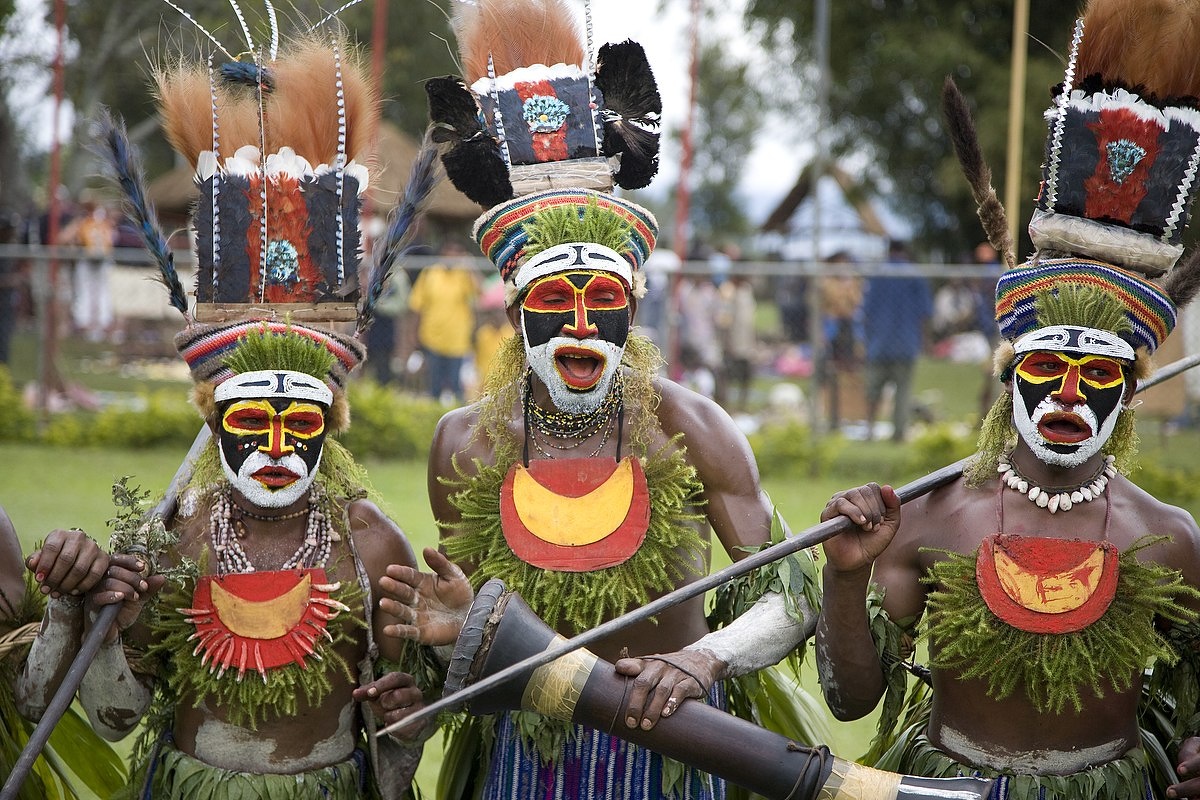
tribal show in Goroka
Because women were believed to be dangerous to men, boys were traditionally removed from their mothers’ care and inducted into the men’s house at about ten years of age, where they lived with all initiated males of the village. A typical domestic household therefore consisted of a woman, her unmarried daughters, and young sons. A man’s cowives—between whom relations were usually tense—lived in separate houses. Although husbands and wives sometimes worked together in gardens, everyday life was marked by strong sexual segregation. Today, however, nuclear families living together have become the norm. [Source: Terence E. Hays, “Encyclopedia of World Cultures, Volume 2: Oceania,” edited by Terence E. Hays, 1996]
Despite the cultural notion that the “female principle” was antagonistic and dangerous to men, a man was considered incomplete without a wife to bear him children. During initiation ceremonies, boys around fifteen were formally betrothed to girls of similar age chosen by lineage elders. After betrothal, the girl moved to her fiancé’s village to live in his mother’s house, while the young man underwent a period of seclusion and instruction from senior males. He was then required to avoid his betrothed for as long as seven years before cohabitation. During this time, he took part in institutionalized courtship in other villages, sometimes persuading girls to elope with him. Betrothals were often broken if the girl matured too quickly or left with another man.
When cohabitation finally took place, the groom shot an arrow into his bride’s thigh, the couple shared a public meal, and she was then escorted to her new home. Marriages were frequently unstable, ending in desertion or divorce proceedings initiated by the husband’s lineage, often seeking the return of bride-wealth—typically due to childlessness, which was always blamed on the woman. Polygyny was permitted but uncommon. With the influence of missions, schools, and modernization, arranged marriages and long betrothals have largely disappeared.
Children have always been central to Gahuku life, but men traditionally had little involvement in child-rearing until boys entered the men’s house. Early care was provided mainly by women and older siblings. From about age five, boys began a series of initiation rites that gradually placed them under the authority of adult men. When a person died, land rights passed to other members of the lineage or clan, while movable property was usually inherited by male relatives.
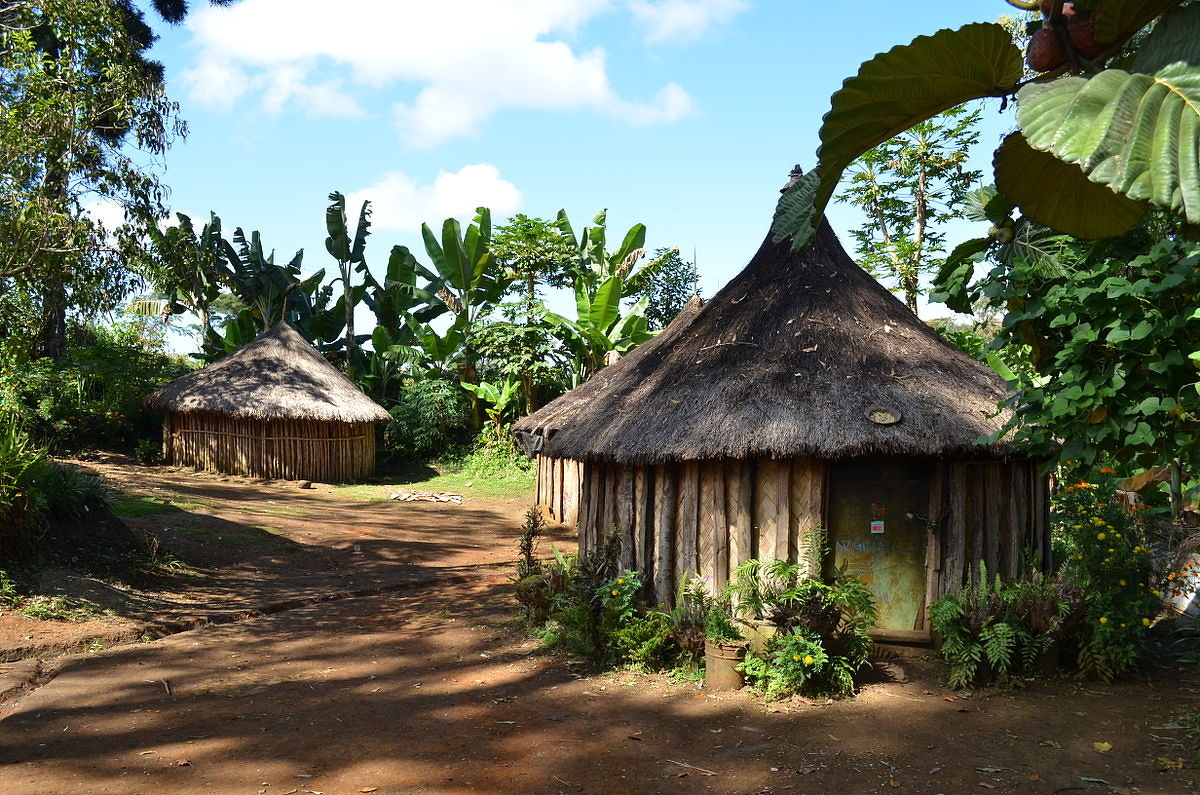
Goroka
In Gahuku belief, women play only a secondary role in reproduction, serving as vessels for a man’s semen. A child was thought to share a closer spiritual bond with the father than with the mother. Descent was therefore patrilineal, traced through the male line for about four generations to a common ancestor. Members of each patrilineage lived together in the same village, held collective rights to land, and worked together in communal labor. Their unity was expressed through ownership of sacred flutes and through the pooling of resources for bride-wealth exchanges.
Several lineages formed subclans and clans, which were exogamous, named, and generally localized on their own land. Clans acted as corporate groups in activities such as warfare and large-scale ceremonies. Within families, Gahuku people carefully distinguished older and younger siblings, reflecting a strong concern with seniority. Kin terms extended broadly to all members of the same generation within both lineage and clan. For men, special agemate relationships formed through coinitiation, creating lifelong bonds of mutual loyalty.
In regard to land ownership, while bamboo and casuarina stands were individually owned by the men who planted them, land itself was held collectively by patrilineal descent groups. Membership in these groups conferred use rights. Boundaries near settlements were well defined, but beyond them, claims were often disputed, especially with enemy groups living less than an hour’s walk away. In modern times, individual land claims—once foreign to Gahuku custom—have gained importance, particularly with the spread of entrepreneurship and coffee plantations, becoming a frequent source of land disputes.
Gahuka Villages, Life, Agriculture and Society
Before intensive European contact, Gahuku villages ranged in population from 70 to 700 people and typically contained 20 to 50 houses occupied by women and children. Houses were arranged in a single straight line, with one or two men’s houses located at one end. Villages were fortified with double palisades and built on narrow ridge tops for defensive purposes. Temporary shelters were erected in garden areas, beyond which pigs grazed in the grassy, unclaimed land separating one village from another. Groves of casuarinas and bamboo, together with their ridge-top settings, gave each village a distinct identity and marked it as a center of ritual and ceremonial life. Since the pacification period, settlement patterns have become more dispersed, and the traditional conical grass houses have often been replaced by rectangular dwellings with woven cane and bamboo walls. [Source: Terence E. Hays, “Encyclopedia of World Cultures, Volume 2: Oceania,” edited by Terence E. Hays, 1996]
The Gahuku subsistence system continues to rely heavily on gardening, with sweet potatoes as the staple crop. Bananas, yams, taro, greens, and legumes are also cultivated. Because the region lacks extensive forest, hunting has long been of minor importance, but domestic pigs remain a vital source of protein and play a central role in exchange and ceremonial transactions. Since the 1950s, coffee cultivation has provided a major source of cash income, supplemented by employment opportunities in the nearby town of Goroka.

men at the Goroka tribal show
Tasks were traditionally allocated by age and sex, with no occupational specialization. Young girls learned gardening, cooking, weaving string bags, and childcare from an early age. Boys spent much of their childhood in play until initiation, after which they assumed male responsibilities such as hunting, land clearing, house construction, and warfare. Until the 1930s, the Gahuku lived in a relatively self-contained world, maintaining trade and exchange relationships with neighboring groups—particularly the Asaro and Benabena—and extending as far as the Ramu Valley. Exchanged goods included salt, shells, pigs, bird plumes, and stone axes. Today, the rise of modern trade stores has largely replaced these traditional networks.
Traditional tools, such as wooden digging sticks and stone adzes, have mostly been supplanted by steel implements. Likewise, bark “G-strings” for men and string aprons for women have largely given way to Western-style clothing. However, bows and arrows are still commonly owned and used by men. As in many New Guinea Highland societies, Gahuku artistic expression focuses mainly on body decoration and ornamentation for ceremonies, festivals, and courtship. Traditional bush medicines and purification practices were once widely used on a self-help basis, though most people now rely on Western medical services.
Beyond the village, the tribe was the largest political and social unit, comprising 300 to 1,000 people and including two or more clans. Each tribe—such as Gahuku or Gama—claimed a common territory and a sense of shared ancestry, which bound its male members in mutual friendship and prohibited internal warfare. Tribes acted collectively in major rituals, including initiation ceremonies and pig festivals. Some tribes formed alliances for warfare, and every tribe maintained permanent friend or enemy relationships with others.Within the lineage, authority was vested in senior males, the recognized custodians of customary lore and tradition. Beyond kin boundaries, certain individuals could achieve status as “men with a name”—leaders known for aggressiveness, skill in warfare, and diplomacy, often possessing exceptional oratorical ability. Leadership was influential rather than hereditary: although a son might succeed his father, succession depended on merit rather than birthright.With European contact, village officials were appointed under the Australian administration, later replaced by elected representatives in the provincial government.
Violations of social norms—such as disrespect toward elders, failure to assist kin, breaches of exogamy, incest, or adultery within the clan—were subject to public shaming or physical aggression, which was common among both men and women. Moots, or community councils, often led by big-men, sought to resolve disputes peacefully through consensus. Nevertheless, feuding (hina) within or between groups could erupt, serving as a temporary response to conflict. Ultimately, disputes were expected to be settled through compensation or ceremonial reconciliation. In contrast, true warfare (rova)—a permanent state of hostility between tribes—was once a central feature of Gahuku life. Until its suppression by the Australian administration in 1950, warfare was endemic, with battles and raids fought mainly during the dry season. Such conflicts, often triggered by land disputes or accusations of sorcery, aimed to destroy enemy villages and gardens, kill as many opponents as possible, and force survivors to flee to allied groups.
Nose Bleeding and Cane Swallowing of the Bena Tribe Neheya Initiation
The Bena or Bena Bena people are an indigenous group of the Eastern Highlands Province of Papua New Guinea, with a population of around 112,000. They are known for their unique cultural practices, including initiation rituals like the Neheya Initiation, and their traditional language. While Protestant Christianity is their primary religion today, their history involves traditional beliefs, such as reverence for ancestors and the spirit world. [Source: Google AI]
The Neheya Initiation, also known as the “Drin Kol Wara” or “Drink Cold Water” ritual, is an ancient male initiation ceremony practiced by the Bena people of the Eastern Highlands in Papua New Guinea. Traditionally performed in secrecy, the ritual has long been restricted to men, with women forbidden even to witness it. However, as Western and religious influences increasingly threaten its continuation, Bena elders have begun sharing their stories to preserve this sacred tradition for future generations. [Source: Tribes of Papua New Guinea]
The Neheya comprises a series of rigorous purification rites, including nose bleeding, tongue and genital bleeding, and the dramatic cane-swallowing ceremony. These acts symbolize the cleansing of the body and spirit. Through initiation, young men are believed to gain strength, wisdom, and leadership—qualities that make them respected members of the community and desirable husbands.
The cane swallowing ritual serves as a spiritual and physical purification, especially after acts that are believed to pollute the body, such as eating food prepared by a menstruating woman, engaging in sexual intercourse, or feeling weakened before combat. The ritual is said to clear the mind, purify the heart, and restore vitality. Each cane, carefully crafted from local material, is smoothed, bent into a U-shape, and left to dry in the kitchen hut for about a month. Measuring up to three meters, the cane is periodically soaked in water to preserve its outer coating.
The initiation period, lasting two to three months, takes place in the haus man (men’s house). The length of the stay depends largely on the availability of pork, the primary food during this time. Initiates sleep face-up to “straighten” their intestines in preparation for the cane swallowing. Their diet consists of hosamaya—a meal of pork fat and boiled kaukau (sweet potato)—prepared by postmenopausal women, believed to ensure the cane’s smooth passage through the body.
The nose bleeding ritual, an essential part of the Neheya, involves inserting sharp-edged grass, known as “nose bleeding grass,” into the nostrils to release blood and symbolically purge impurities. After this cleansing, initiates proceed to the cane swallowing, performed near a flowing creek where water washes away bodily expulsions. Guided by experienced Neheya masters, the initiates push the cane carefully down their throats while chanting and songs fill the air. Cold water is splashed on their bodies to regulate temperature and aid endurance. The ritual demands immense courage; one misstep could be fatal, causing internal bleeding. Yet those who endure emerge transformed—cleansed, courageous, and spiritually awakened. Upon completion, initiates bathe, don traditional attire, and return to their village not as boys, but as men—recognized, respected, and renewed in spirit.
Tairora
The Tairora live in or near the Aiyura Valley in the Kainantu District of the Eastern Highlands Province. Also known as Kainantu, Ndumba, Ommura, Tai-ora and Taiora, they are the traditional enemy of the Gadsup. Usually, group names and place names are the same. For instance, "Tairora" refers to a kinship group, a settlement, and a creek near the present-day town of Kainantu. In the 1920s, Europeans generalized this designation to include the create a larger ethnolinguistic group.According to Christian group Joshua Project the population of Tairora in the late 2020s was 24,000 (11,000 northern Tairora and 13,000). In the 1990s, it was estimated the number of Tairora speakers was around 14,000 and that reflected a steady, yet slight, rate of increase since European contact. At that time there were sizable numbers of Tairora, especially from northern settlements, in the towns of Kainantu, Goroka, and Lae. [Source: Terence E. Hays, “Encyclopedia of World Cultures, Volume 2: Oceania,” edited by Terence E. Hays, 1996 ~]
Tairora speakers occupy about 1,035 square kilometers (400 square miles) of the region south and east of Kainantu. The region is a catchment area for the Ramu and Lamari River headwaters. The terrain is highly diverse, with large, open grassland dominating the northern basins at elevations of 1,625 to 1,880 meters (5,330 to 6,170 feet) above sea level, and steeply incised forest- or grass-covered ridges in the south, where the Kratke Range culminates in Mount Piora, at 3,450 meters (11,320 feet).
Language: Tairora (Tairoa) is a Kainantu language and a member of the Eastern Family of Non-Austronesian Languages in the East New Guinea Highlands group. Many Tairora are bilingual with neighboring languages (Agarabi, Auyana, Binumarien, Gadsup, and Kamano in the north; Awa and Waffa in the south) and currently most males and younger women are fluent in Tok Pisin. Summer Institute of Linguistics translators have produced a considerable amount of religious and educational material in Tairora, but the number of people who are literate in their own language is still fairly small. 1) Dialects of Tairoa proper (North Tairoa) include Aantantara (Andandara), Arau-Varosia (Arau-Barosia), Arokaara, Saiqora (Sai’ora), Tairora. 2) Dialects of South Tairoa (Omwunra-Toqura) include Aatasaara (Atakara), Haaviqinra-Oraura (Habina-Oraura), Omwunra-Toqura (Obura-To’okena), Vaira-Ntosara (Baira), Veqaura (Meauna), Vinaata-Konkompira (Pinata-Konkombira).
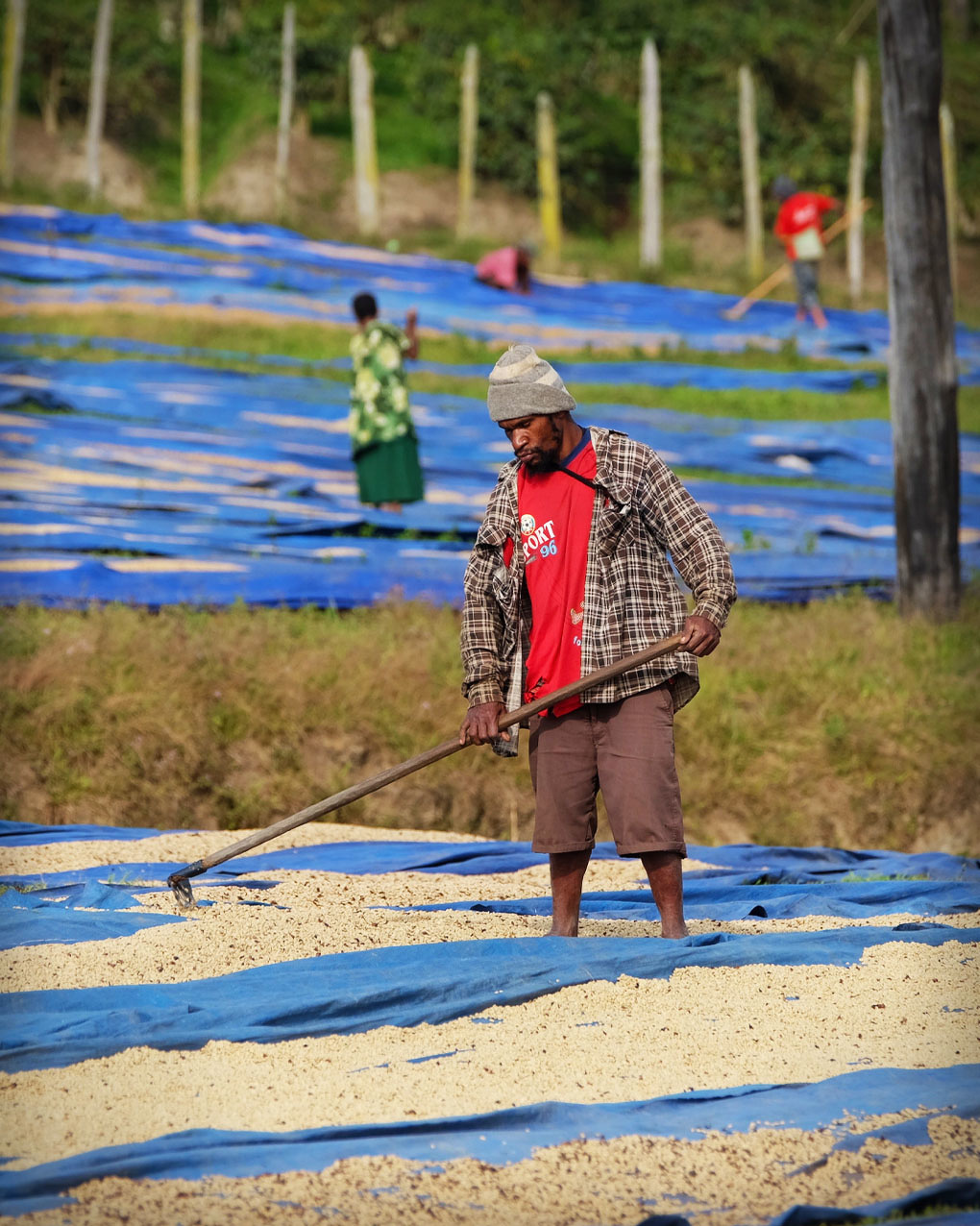
Tairora farmer preparing light roast coffee
History: People who are perhaps ancestral to the Tairora have occupied the region for at least 18,000 years. The earliest known era, the Mamu Phase, appears to have been a period of continuous growth and development based on hunting and collecting. After 3,000 years ago, during the Tentika Phase, evidence of sedentary living and the adoption of horticulture emerges. Oral traditions generally point to Tairora homelands to the west and southwest; however, groups' origin myths tend to be highly localized. Tairora territory borders those of other language groups on all sides, and the region's linguistic and cultural diversity is the result of many different influences.
Since the earliest contact with European missionaries, gold prospectors, and administrators in the 1920s in the north and the 1950s in the south, the Tairora social universe has expanded considerably. Notable events were the establishment of the Upper Ramu Patrol Post (now Kainantu) in 1932 and the Aiyura Agricultural Experimental Station in 1937, both of which were located in the north. These events began the processes of pacification and economic development that led to the current situation, in which the Tairora play a prominent role in provincial government.
Religion: According to Christian group Joshua Project 98 percent of Tairora are Christian. The traditional Tairora cosmos is filled with a wide variety of supernatural beings, including ghosts, monstrous anthropomorphs, localized nature spirits, and zoomorphic forest spirits. Men's house rites draw on a generalized ancestral force, and individuals employ diverse types of magic. Since the 1940s in the north and the 1960s in the south, a variety of Christian missions have operated, with fewer converts in the south than in the north. In the 1990s, most adult Tairora knew spells and magic to meet their needs. Elderly individuals of both sexes conducted rituals and ceremonies at the hamlet or settlement level, and some were noted diviners and shamans. Today, many settlements have resident mission catechists.
Tairora Family, Marriage, Kinship and Society
Traditionally, out of concern for the supposed weakening effects of contact with women, all Tairora males over the age of 10–12 lived in men’s houses. A family household typically included one or more adult women (often a mother and daughter, or sisters), their uninitiated sons, and unmarried daughters. Variations included groups of several young women or young bachelors. Increasingly, especially in the north, Tairora have adopted the practice of nuclear families living together in a single household. Husbands and wives rarely formed a joint work unit except during the early stages of garden preparation. Pairs of clans often maintain long-standing patterns of intermarriage, with adult men negotiating complex bridewealth payments. Although settlements have high rates of endogamy (marriage within the village or clan), this is not a formal preference; many women marry in from former enemy groups, and in the past such marriages were sometimes arranged as part of peace-making ceremonies. Spouses of both sexes are often chosen during childhood, though formal betrothal is delayed until adulthood. [Source: Terence E. Hays, “Encyclopedia of World Cultures, Volume 2: Oceania,” edited by Terence E. Hays, 1996 ~]
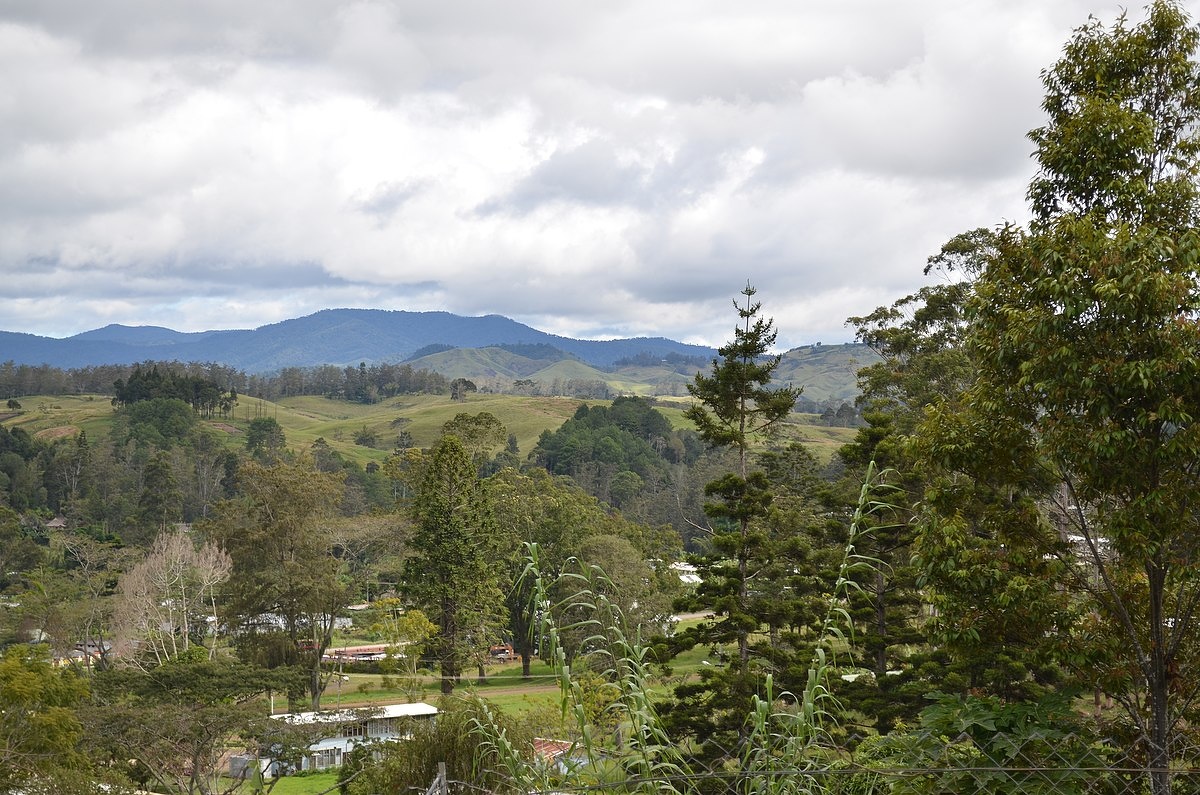
Kainantu
According to Hays (1982 and 1998) sex instruction is given to women at age 17 or 18 as part of ritual called nraase, which signals marriageability. “Premarital [sexual] intercourse is never approved”. During boy initiation ceremonies, boys are told that sexual intercourse is only for adult men to engage in, and only for adult men to survive.” The fact that ‘ummanra have little knowledge of sex at their young age [10-12 years old ] may suggest that such stories constitute warnings that are meaningful to them mainly in terms of their severity”. Nettle rubdowns on penes are ‘to make them grow long and have hair”. [Source: “Growing Up Sexually. Volume I” by D. F. Janssen, World Reference Atlas. 0.2 ed. 2004. Berlin: Magnus Hirschfeld Archive for Sexology, January 2005]
Virilocal residence (living in the husband’s home or community) is the norm, with a bride usually moving into the household of her husband’s mother. Polygyny is permitted, but few men have more than one wife. Co-wives typically live in separate hamlets and often object strongly to their husbands’ polygynous unions. Divorce or prolonged separation is not uncommon, but these are traditionally available only to men. Women’s alternatives to an unhappy marriage were limited to running away or suicide. Remarriage after divorce or widowhood is common, and permanent bachelors are rare; nearly all women (apart from albinos and lepers) marry at some point.
The care and upbringing of children are primarily the responsibility of women and older girls. Once boys are initiated and move into men’s houses, adult men take over their training and socialization. Girls assist their mothers from an early age, while boys roam freely with age-mates until adolescence. Young children are disciplined through distraction and verbal correction rather than corporal punishment, though older boys may face harsh discipline in the men’s house. Today, many children—especially in the north—attend mission or government schools, where parents have limited oversight. In regard to inheritance when a person dies, gardens and movable property ideally pass to adult unmarried children; otherwise, they are divided among married sons.
Tairora society is ideologically patrilineal (along male lines). However, residence can blur such distinctions, particularly in the north, where immigrants and refugees may acquire “quasi-agnate” status. Clans are named, patrilineal, and exogamous, but not localized. Land within any settlement is associated with specific clans, yet clan segments may reside—and claim land—in neighboring settlements. Clan members seldom act together in rituals, exchanges, or warfare.
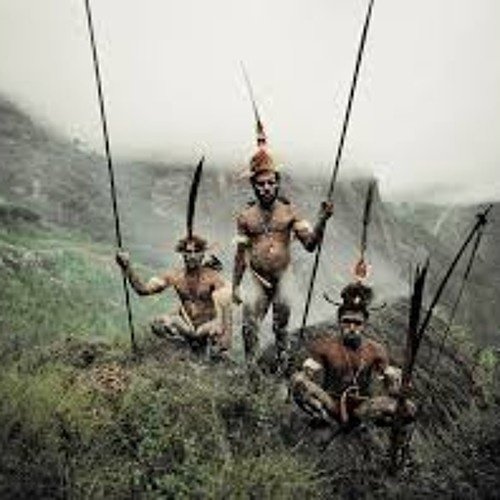
Tairora in warrior clothing
In the north, kinship terminology is of a modified Iroquois type, distinguishing between same-sex and cross-sex parental siblings. Parallel cousins (children of a father’s brother or a mother’s sister) are called by sibling terms, while cross-cousins (children of a mother’s brother or a father’s sister) are distinguished as potential marriage partners. Farther south, kinship terminology shows Omaha-type tendencies, reflecting patrilineal descent and the influence of bridewealth exchange. In principle, all land—both gardens and forest—is held by patrilineal descent groups, though residence also confers usufruct rights. In land disputes, claims linked to one’s father’s or mother’s clan carry more weight than those based solely on residence. Elders are called upon to authenticate genealogies and histories of land use. Watercourses, paths, fences, and open village spaces are considered common property shared by all residents.
In the north, social identity is based more on residence than strict descent. Clans are linked into kin groups forming near-connubia—alliances within which warfare is prohibited. In the south, clans are joined in exogamous, nonwarring pairs. Residents of a settlement act collectively in warfare, ceremonies, and exchanges more often than kin groups do. An egalitarian ethos shapes social life, emphasizing individualism but fostering strong bonds among age-mates of both sexes. Traditional leadership followed the “big-man” model, with influence gained through warfare, negotiation, and intercommunity management. Since independence, elected provincial representatives have replaced Australian-appointed officials.
Disputes most often concern sorcery accusations, failure to fulfill compensation or bridewealth obligations, marriage arrangements, land disputes, pig damage, and, more recently, coffee theft. Such conflicts are usually mediated through informal moots involving kin and age-mates. Increasingly, unresolved cases are brought before elected officials or formal courts in Kainantu. Violence within one’s clan is discouraged, though domestic abuse is common. Warfare was once endemic throughout the Tairora area and revived in the 1980s. Each settlement maintains “traditional enemies” among neighboring groups, though relations shift over time. Peace is restored through ceremonies that often include intermarriage. Land disputes rarely trigger fighting compared to cases of murder or alleged sorcery.
Tairora Villages, Daily Life and Economy
Settlements in northern Tairora territory are generally closer together and more nucleated than those in the south, where they form small hamlet clusters about a half day’s walk apart. Most are located at elevations between 1,500 and 1,900 meters (4,921 to 6,234 feet), and traditionally had about 200–250 residents before recent population growth. Wherever the terrain allowed, ridge-top sites were preferred for defensive reasons; except among a few groups living in the open northern grasslands, villages were surrounded by high palisades. Until the 1960s in the north—and still today in much of the south—settlements were centered on one or more large men’s houses, each enclosed by its own palisade. Women’s houses were clustered downslope where possible, while separate seclusion houses—used by women during menstruation and childbirth or for refuge—were isolated from living areas and fenced off. Traditional houses were circular, with low grass-and-timber walls, conical thatched roofs, and no windows, tightly sealed against the cold highland nights. Increasingly, Tairora now build rectangular houses with woven-bamboo walls. [Source: Terence E. Hays, “Encyclopedia of World Cultures, Volume 2: Oceania,” edited by Terence E. Hays, 1996 ~]
Tairora have traditionally been subsistence farmers. Sweet potatoes are the staple crop, with yams and taro also important, especially in the south. The Tairora are skilled gardeners who employ fallowing, mounding, and ditching techniques; in the south, elaborate bamboo irrigation systems are used in taro gardens. Other significant crops include legumes, maize, bananas, sugarcane, and leafy greens. Tree crops such as pandanus nuts and, in some areas, betel nut, are also cultivated. Domestic pigs provide the main source of animal protein, but they are generally slaughtered only for ceremonial occasions, when pork is distributed in exchange transactions. Hunting and gathering remain important, particularly in the forested southern areas where both game and wild plants are more plentiful. Game animals also play a key role in ritual and ceremonial exchange. Forests and grasslands supply raw materials for tools, medicines, and ornaments. In recent decades, cash cropping has been introduced, with coffee proving the most successful; in the north, cattle raising has also become an important source of income.
Life-cycle rituals include feasts for newborns after seclusion, septum and ear piercing for both sexes, first-menstruation and nubility rites, a two-stage male initiation sequence, weddings, and funerals. Seasonal yam and winged-bean festivals, peacemaking ceremonies, and, formerly, renewal rituals in the north bring communities together. In recent times, public dance festivals have become a source of income in the north, with admission fees charged to visitors. Funerary observances last several days; at the end, the deceased’s spirit is believed to possess a living person who escorts it from the settlement toward the land of the dead in the Markham Valley to the northeast, where life continues as in the human world with gardens and pigs. The body is buried in a fenced grave on clan land. As in much of the New Guinea Highlands, visual art plays a limited role. Apart from body decoration and ornamentation during ceremonies, artistic expression is largely confined to the decoration of string bags, arrows, and shields. In the north, men sometimes wore wooden frames with painted bark panels for public dances. Jew’s harps are played for private amusement, while hourglass drums accompany singing. A rich oral tradition—comprising myths, stories, and chants—serves as a main form of artistic and educational expression. The Tairora environment provides a wide range of medicinal plants, and most people possess knowledge of common remedies and apply them independently. Some men and women are known as skilled healers and diagnosticians. Today, most settlements have, or are near, mission or government medical aid posts.
Except for modern trades such as mechanics or carpentry, there is little occupational specialization. Men are responsible for building houses and fences, clearing and ditching gardens, and crafting tools and weapons; women plant, weed, and harvest most crops, while men handle tree crops, bananas, sugarcane, yams, and taro. Both sexes collect wild foods. Women usually cook vegetable dishes, while men prepare and cook meat. Locally produced items include bows, arrows, clubs, spears (in the north), shields, digging sticks, wooden spades (in the north), adzes, knives, daggers, string bags, pandanus sleeping mats, and bamboo cooking tubes (wooden ones in the north). Traditional clothing consists of bark or rush skirts and sporrans, and in the north, wooden codpieces for men. From lowland neighbors to the east, the Tairora obtain black palm for arrow shafts and tool handles, bark cloth for capes, and shells for ornaments. Stone adze blades were imported from various sources, and the southern Tairora served as major distributors in the Baruya salt trade. Export goods traditionally included rush skirts, string bags, and bird plumes, though by the 1980s many had been replaced by Western goods available in locally owned trade stores.
Image Sources: Wikimedia Commons
Text Sources: “Encyclopedia of World Cultures, Volume 2: Oceania,” edited by Terence E. Hays, 1996, National Geographic, Live Science, Metropolitan Museum of Art, Natural History magazine, Australian Museum, New York Times, Washington Post, Los Angeles Times, Smithsonian magazine, Encyclopedia.com, Times of London, Library of Congress, The Conversation, The New Yorker, Time, BBC, CNN, Reuters, Associated Press, AFP, Lonely Planet Guides, Google AI, Wikipedia, The Guardian and various websites, books and other publications.
Last updated October 2025