
Home | Category: Marsupials
GOLDEN BANDICOOTS
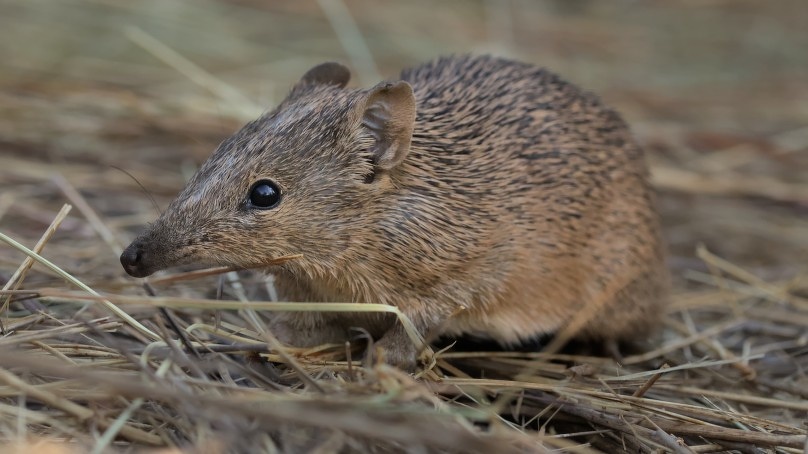
Golden bandicoot, from Australian Wildlife Conservancy
Golden bandicoots (Isoodon auratus) are a short-nosed bandicoot species found in northern Australia. They are the smallest members of their three-species genus (Isoodon) and are distinguished from the brown bandicoots by their golden color and much smaller size. Historically, they were found throughout the interior of Australia in much of northern, central and western Australia, into southwestern New South Wales, but now they are restricted to a few areas in Western Australia and the Northern Territory and the Barrow, Middle, Augustus, Marchinbar and Uwins Islands.
Golden bandicoots occupy a variety of habitats — dry savannahs, acacia or eucalyptus overstory, vine thickets, coastal scrub areas, rainforest margins and sometimes occupy rocky, sandstone and spinifex areas. There are several recognized subspecies: 1) Isoodon auratus auratus, also known as mainland golden bandicoots, which reside in the Kimberley region of Western Australia and on three of the Wessel Islands in Northern Territories: Marchinbar, Raragala, and Guluwuru Islands; 2) Isodon auratus barrowensis, or Barrow Island golden bandicoots, which are found on Augustus, Barrow and Middle Islands off Western Australia. [Source: Molly Norlin, Animal Diversity Web (ADW) |=|]
Golden bandicoots have a compact. hunched body, sharp claws and a long nose and look a little like rats. They range in weight from 300 to 670 grams (10.6 to 23.6 ounces) and have an average length is 35 centimeters (13.8 inches). Sexual Dimorphism (differences between males and females) is present: Males are larger than females. The coarse, stiff coat of golden bandicoots is brownish gold and is streaked with black on the upper and side parts of the body. The belly and feet are a light amber color. The tail is long and sparsely haired. Golden bandicoots have rounded ears, and their eyes are very dark in color. Their lifespan in the wild is typically two to three years. [Source: Molly Norlin, Animal Diversity Web (ADW) |=|]
On the International Union for Conservation of Nature (IUCN) Red List, golden bandicoots are listed as Vulnerable. The mainland subspecies is considered extinct in some areas of Australia, other populations are listed as vulnerable under various Australian conservation acts. The Western population are listed as vulnerable under Western Australia’s Biodiversity Conservation Act 2016 (WA). The Barrow Island subspecies is listed as vulnerable under the Australia’s Environment Protection and Biodiversity Conservation Act 1999 and the Western Australian Wildlife Conservation Act.
Threats have included or include predation by non-native species, especially by feral cats, and habitat destruction and degradation. Populations of golden bandicoots on Barrow and Middle Islands appear to be stable largely because they are few non-native species on these islands. Preventing the spread of feral cats to these islands is one the main conservation goals, especially on Barrow island, where the largest population of golden bandicoots lives. Fires can has also negatively affect populations of bandicoots ad fires rob them of their cover, making them easy prey. In some areas, golden bandicoots compete with non-native black rats for food resources.
RELATED ARTICLES:
BANDICOOTS: CHARACTERISTICS, BEHAVIOR AND REPRODUCTION ioa.factsanddetails.com
BANDICOOT SPECIES IN SOUTHERN AUSTRALIA: CHARACTERISTICS, BEHAVIOR AND REPRODUCTION ioa.factsanddetails.com
BILBIES: CHARACTERISTICS, SPECIES BEHAVIOR AND REPRODUCTION ioa.factsanddetails.com
POSSUMS OF AUSTRALIA AND NEW GUINEA: SPECIES: CHARACTERISTICS, BEHAVIOR AND REPRODUCTION ioa.factsanddetails.com
BRUSHTAILED POSSUMS: CHARACTERISTICS, BEHAVIOR, REPRODUCTION, SPECIES, PESTS ioa.factsanddetails.com
GLIDERS OF AUSTRALIA AND NEW GUINEA: MARSUPIAL EQUIVALENTS OF FLYING SQUIRRELS ioa.factsanddetails.com
GLIDER SPECIES (SUGAR, MAHOGANY, GREATER, YELLOW-BELLIED): CHARACTERISTICS AND BEHAVIOR ioa.factsanddetails.com
CUSCUSES: CHARACTERISTICS, SPECIES, BEHAVIOR AND REPRODUCTION ioa.factsanddetails.com
CUSCUSES OF SULAWESI factsanddetails.com
MARSUPIALS: HISTORY, EVOLUTION, CHARACTERISTICS, BEHAVIOR, REPRODUCTION ioa.factsanddetails.com
MARSUPIALS IN AUSTRALIA ioa.factsanddetails.com
MARSUPIALS IN AUSTRALASIA (AUSTRALIA, NEW GUINEA, NEARBY ISLANDS) ioa.factsanddetails.com
Golden Bandicoot Behavior and Reproduction
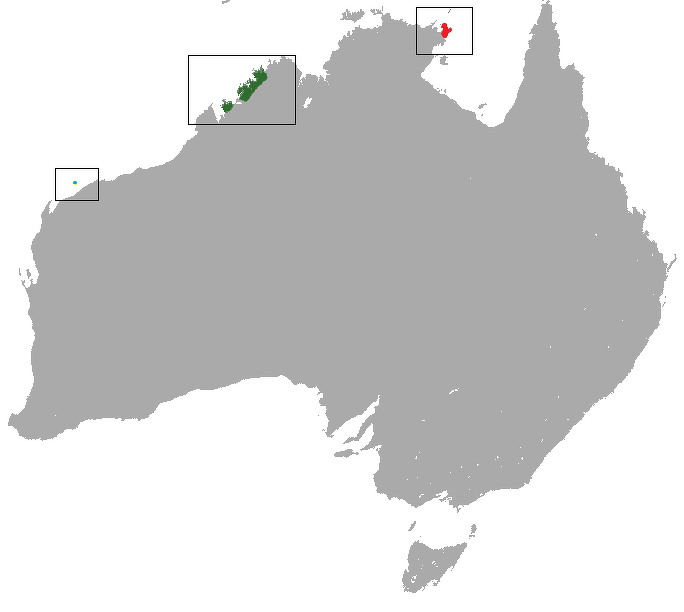
Golden bandicoot range
Golden bandicoots are terricolous (live on the ground), nocturnal (active at night), motile (move around as opposed to being stationary), sedentary (remain in the same area), solitary, territorial (defend an area within the home range). Their home territories range from 1.7 to 35 hectares (4.2 to 86.4 acres) — 4.4 to 35 hectares (10.9 to 86.4 acres) for males and 1.7 to 12 hectares (4.2 to 29.6 acres) for female . Home ranges are slightly larger during the dry season and usually center around nest sites. Although they are solitary creatures, their home ranges can overlap. [Source: Molly Norlin, Animal Diversity Web (ADW) |=|]
Golden bandicoots are omnivores (eat a variety of things, including plants and animals). Their diet mainly consists of insects such as termites, ants and other arthropods particularly spiders. They have been observed feeding on turtle eggs and preying on small reptiles. Among the plant foods they eat are seeds, leaves, roots and tubers Most predators of golden bandicoots are non-native species that were introduced to Australia, such as red foxes and feral cats. Dingoes and domestic dogs also prey upon golden bandicoots. Native predators of golden bandicoots include monitor lizards, northern quolls, scaley-tailed possoms and rock ringtail possums.
Golden bandicoots are solitary except when mating or raising young. They feed at night. During the day, they stay in burrows dug into the sand or nests that they create from flattened plant matter. Some golden bandicoots seek shelter in caves. Because they are nocturnal rely heavily on hearing and smell to find prey and detect predators. They use their whiskers to feel around their environment. They can see relatively well in the dark.
Golden bandicoots engage in year-round breeding. They can breed every 10 to 12 weeks. The average gestation period is two weeks. The number of offspring ranges from two to four. Little is known about the mating system of golden bandicoots. Males and females mate briefly, and the male disperses after copulation. Golden bandicoots reproduce as many times as they can during their short lives, and there is a significant increase in reproduction during seasons with high rainfall. [Source: Molly Norlin, Animal Diversity Web (ADW) |=|]
Young are altricial, meaning they are relatively underdeveloped at birth. Parental care is provided by females. Offspring are very small when born, After birth they attach to one of their mother’s eight teats inside her pouch. The average weaning age is eight weeks. On average males and females reach sexual or reproductive maturity at age three months. Females can begin to mate shortly after the young have weaned.
Long-Nosed Bandicoots
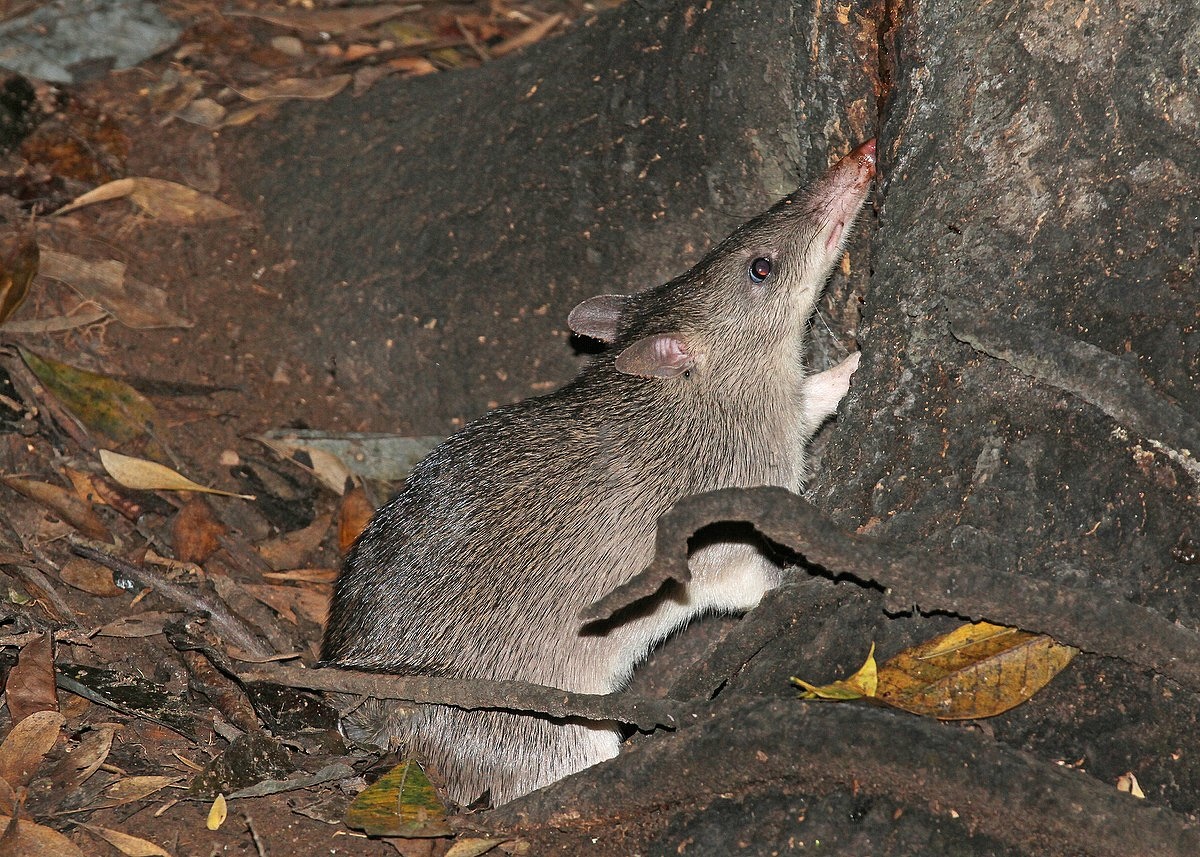
Long-nosed Bandicoot at Crater Lakes National Park, Queensland
Long-nosed bandicoots (Perameles nasuta) are found in eastern Australia, from north Queensland in the north along the east coast to Victoria in the south in a wide variety of habitats including open plains, savanna grasslands, forests, scrub brush, forests, heath, swamps, suburban and urban areas. They are omnivores (animals that eat a variety of things, including plants and animals) with a diet that consists of invertebrates such as insects, small vertebrates, plant roots, and fungi. A study at Sydney Harbor National Park found that invertebrates made up the largest share of their diet. [Source: Ryan Adam, Animal Diversity Web (ADW) |=|]
Long-nosed bandicoots have sandy-, reddish- or grey-brown fur, white to cream underbellies and a long snouty nose. They range in weight from 0.7 to 0.9 kilograms (1.6 to 2 pounds) and have an average length is 40 centimeters (16 inches) and a 15-centimeter (5.9-inch) tail. Their average basal metabolic rate is 1.763 watts (0.002733 W/g cubic centimeters of oxygen per gram per hour). Sexual Dimorphism (differences between males and females) is present: Males are larger than females. Males average 0.9 kilograms (2.2 pounds) and females average 0.7 kilograms (1.6 pounds). Females have a rear-facing pouch (marsupium) and eight nipples.
Long-nosed bandicoots have an elongated rostrum (hard, beak-like structures projecting out from the head or mouth) and a large and slightly cleft upper lip. The rear legs are about five centimeters (two inches) longer than their front legs. They have five toes on their front limbs with the 1st and 5th digit being diminished. The rear feet are fused, with the 1st digit being diminished. Male skull length is 8.3 centimeters (3.3 inches) and female skull length is 7.9 centimeters (3.1 inches). They have 48 teeth with a dental formula of 5/3, 1/1, 3/3, 4/4.
Long-nosed bandicoots are not endangered or threatened. They are designated as a species of least concern on the International Union for Conservation of Nature (IUCN) Red List. But their range is less than what it was in the past. Threats include loss of habitat, introduced predators such as foxes and cats and vehicle accidents. They are sometimes regarded as pests because their burrowing and digging behaviors messes up agricultural fields, gardens, and lawns.
Long-Nosed Bandicoot Behavior and Reproduction
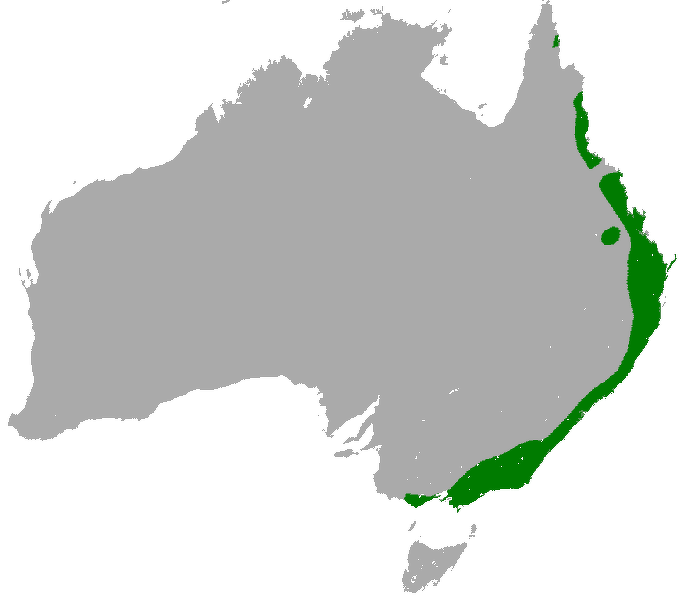
Long-nosed bandicoot range
Long-nosed bandicoots are terricolous (live on the ground), fossorial (engaged in a burrowing life-style or behavior, and good at digging or burrowing), nocturnal (active at night), motile (move around as opposed to being stationary) and sedentary (remain in the same area). Their home territories range from 1.7 (4.2 acres) for female to 4.4 hectares 10.9 acres) for males. Bandicoots spend much of the night foraging for food. During the day, they rest in their burrows. They are primarily solitary and only seem to interact during breeding and, in the case of female, when raising offspring.
Long-nosed bandicoots are prey for a wide range of both native and non-native predators: domestic cats, domestic dogs, red foxes, dingoes, quolls, snakes. Their main defenses are hiding in their burrows and camouflage. Their light brown fur blend in well with their environment.
Long-nosed bandicoots are polygynous (males have more than one female as a mate at one time) and engage in year-round breeding. Long-nosed bandicoots have an inter-litter interval of 53 days. The average gestation period is 12 days. The average number of offspring is two or three. Little is known about breeding behavior in the wild. In enclosures the mating process starts with the male following the female for a period of a few hours and ends with a period of less than an hour in which multiple copulations take place, with each interaction lasting only a few seconds. Female will only mate with one male per reproductive period and typically will not become reproductively active until after the young are weaned. Females have an average of four litters per year with a 66 day interval between birth and weaning.
Parental care is provided by females. Young are altricial, meaning they are relatively underdeveloped at birth. Offspring develop in their mother’s pouch almost to the age of weaning. The average weaning age is 63.5 days. Parental care ends before offspring reach maturity at three months. On average females reach sexual or reproductive maturity at age three months; males do so at four to six months.
Northern Brown Bandicoots
Northern brown bandicoots (Isoodon macrourus) are a species of bandicoot found only on the northern and eastern coasts of Australia and nearby islands, mainly in Papua New Guinea. They range from Sydney in New South Wales in the south to Cape York in Queensland and are also found in the wet-dry tropics of the Northern Territory and the Kimberley region of Western Australia.
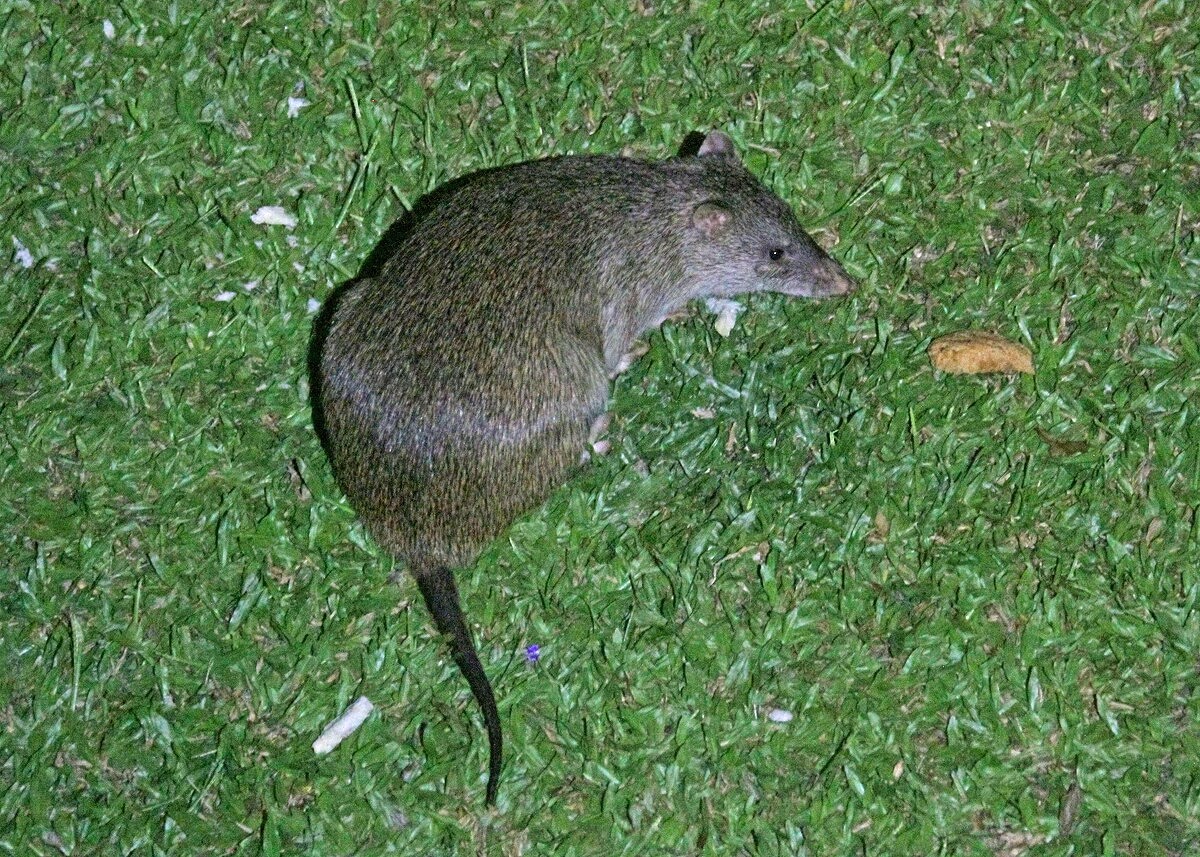
Northern brown bandicoot
Northern brown bandicoots are resilient generalists found in a variety of habitats, including grasslands, scrub forests, heath, Eucalyptus forests and urban and suburban areas. They prefer areas with rich alluvial soils, dense ground cover that allows them to hide from predators and areas disturbed by forest removal and fires, around five years following the fires and disturbances. They can do well in urban landscapes, with tall vegetation. Corridors (less than 15 meters wide and at least 17 meters long), located in moderately dense vegetation, are used to commute to riparian habitats areas usually found along creeks. These marsupials are generally not found very far inland. [Source: Troy Szaura, Animal Diversity Web (ADW) |=|]
Northern brown bandicoots have been considered to be Australia’s most common bandicoot species and are not endangered or threatened. They are designated as a species of least concern on the International Union for Conservation of Nature (IUCN) Red List. However, their range is smaller than it was in the past. Among the threats they face are loss of habitat, predation by foxes and cats and vehicle collision. They sometimes dig up agricultural fields, gardens and yards are regarded as pests in this respect.
Northern Brown Bandicoot Characteristics and Diet
Northern brown bandicoot look sort of rat-like. They range in weight from 0.5 to 3.1 kilograms (1.1 to 6.7 pounds). Their average weight is 2.6 kilograms (5.7 pounds). They range in length from 38 to 68.5 centimeters (15 to 27 inches), including their tail, with their average length being 52.5 centimeters (20.7 inches).Their average basal metabolic rate is 3.2 watts. Their lifespan in the wild is typically two to three years.
Sexual Dimorphism (differences between males and females) is present: Males are larger than females. Adult males ranges in weight from 0.5 to 3.1 kilograms (1.1 to 6.7 pounds), averaging of 2.1 kilograms (4.6 pounds); Adult females ranges in weight from 0.5 to 1.7 kilograms (1.1 to 3.8 pounds), averaging of one kilogram (2.2 pounds). Males have a head an body length of 30 to 47 centimeters (one to 1.5 feet), with a 9-to-21.5-centimeter (3.5-to-8.5-inch) tail. Females have a head an body length of 30 to 41 centimeters (one to 1.3 feet), with a 8-to-18.5 centimeter (3.1-to-7.3 inch) tail. [Source: Troy Szaura, Animal Diversity Web (ADW) |=|]
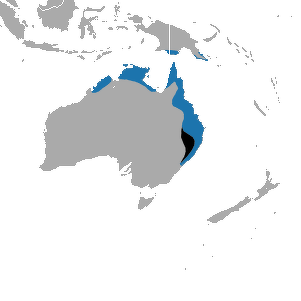
Northern brown bandicoot range: extant ((blue); extinct (black)
Northern brown bandicoot have brown-black speckled fur on their back and sides, with a white belly. The ears are round and small, their snout is relatively short for a bandicoot. Their body is similar to that of a rodent. They have digits (toes) that are fused together. They have polyprotodont dentition and a dental formula of 5/3, 1/1, 3/3, 4/4 = 24, with the third premolar replaced during development. The tympanic bulla (a bony structure in part middle ear) is rather prominent, likely an adaptation to inhabiting arid and semi-arid environments.|
Northern brown bandicoots are omnivores (eat a variety of things, including plants and animals) but are mostly insectivorous (eat insects). Soil-dwelling and terrestrial invertebrates such as insects, spiders and worms are their primary food sources. They also eat vertebrates, such as lizards and birds, and plant matter, such as leaves, stems, roots, seeds and fruits, as well as fungi. They forage for food small quantities at a time spread over many different areas. In urban and suburban areas, northern brown bandicoots sometimes eat pet food and compost material in people’s yards. Hindgut fermentation in the cecum, proximal colon and distal colon has higher diversity of bacteria compared to the bacteria profiles in the small intestine.
Northern Brown Bandicoot Behavior
Northern brown bandicoots are cursorial (with limbs adapted to running), nocturnal (active at night), motile (move around as opposed to being stationary) and solitary. Their home ranges in urban and suburban areas are relatively small: about 1.5 to 6 hectares (3.7 to 14.8 acres). Northern brown bandicoots sleep during the day in nests, typically a 40-centimeter- long patch of gathered vegetation, with a hollowed area for a single bandicoot. These nestsare located above five- to eight-centimeter-deep depressions in the ground, and are supported on all sides by tightly packed plant material except for a single spot of loose vegetation used for passing in and out of the nest. Soil is smeared over the nests as a kind of rain-proofing during wet periods. Northern brown bandicoots tend to change nests fairly frequently and use at least two different nests at one time. [Source:Troy Szaura, Animal Diversity Web (ADW) |=|]
Northern brown bandicoots are extremely vigilant and move around quite a bit when active. Troy Szaura wrote in Animal Diversity Web: Movement patterns during activity are rather variable over consecutive nights. Males exhibit a patrolling pattern throughout the majority of its home range, while female bandicoots do not, resulting in greater home ranges for males. However, this sex specific behavior is said to be too infrequent to resemble territoriality and more likely stems from wanting to become more familiar with the habitat. Foraging is done in a smaller portion of the home range of Northern brown bandicoots, termed the core area. Contact with other bandicoots can arouse individuals to a higher level of activity, likely due to an interest in the other individual, while excessive contact can lead to a decrease in activity due to negative experiences. Typically, northern brown bandicoots spend most of their time alone. |=|
Northern brown bandicoots sense using vision, touch, sound and chemicals usually detected with smell and communicate with chemicals and leave scent marks produced by special glands and placed so others can smell and taste them and They have an elongated rostrum (hard, beak-like structures projecting out from the head or mouth) and scent glands which are viewed as evidence of the importance of smell in the communication of northern brown bandicoots and identification of individuals. After aggressive encounters with other bandicoots, a scent gland behind the ear is used to mark the surrounding area.
Natural predators of northern brown bandicoots include goannas, dingoes, tiger quolls, (Tiger quolls), various snakes and nocturnal birds of prey such as powerful owls. Introduced species known to prey on northern brown bandicoots include European red fox and domestic and feral cats. Northern brown bandicoots protect themselves by hiding in their nests and making quick escapes into dense vegetation.
Northern Brown Bandicoot Mating, Reproduction and Offspring
Northern brown bandicoots are polygynandrous (promiscuous), with both males and females having multiple partners, and engage in seasonal breeding and year-round breeding. They only live one or two years and breed an average of 4.7 times per year, typically at 50 to 60 day intervals. The heaviest breeding may take place between August and April, July and March or July and April, depending on the region. The average gestation period is 12 days — the shortest among mammals. The number of offspring ranges from one to 7, with the average number of offspring being 3.38, with the average number of offspring being four. [Source: Troy Szaura, Animal Diversity Web (ADW) |=|]
On average females reach sexual or reproductive maturity at age at four months; 120 days; males do so between 6½ and 7½ months. Mature females are determined by the presence of elongated teats or suckling young. Males have darkly pigmented scrotums and testes greater than two centimeters long when sexually mature. Reproductive senescence (the decline of reproductive success with age) has been observed in northern brown bandicoots, particularly in their third year of rearing young. However, there is a strong positive relationship between adult female mass and fecundity in their third and final year of reproduction, suggesting that large bandicoots do not experience reproductive senescence.
Northern brown bandicoots are typically only seen together during the mating season. Males have larger home ranges than females and utilize their rambling lifestyle to mate with as many females as they can.. Male bandicoots follow females, with the intention of mating, until the female accepts the male for copulation. According to Animal Diversity Web: The initiation and duration of breeding observed in northern brown bandicoots varies greatly between and within regions. In the wet-dry tropics of Western Australia and the Northern Territory, breeding is very opportunistic, occurring after significant periods of rainfall when soil-dwelling invertebrate populations are high. Breeding in this region occurs between the months of August and April. In the temperate-subtropical portion of their geographical range, both seasonal and non-seasonal breeding have been observed.
No evidence of seasonal breeding has been observed near Brisbane; so it appears they breed year-round there. However, one study found that 98 percent of births there occur between July and March. Breeding appears to be seasonal in New South Wales region, occurring between July and April. In the Australian Wet Tropics of the Queensland region, seasonal breeding was observed and was related to day length in the late dry season. Male testes volume is greatest in the early wet season, young are present in the pouches of mature females between the late-dry and late-wet seasons, and reproduction does not occur during the early-dry season in the Australian wet tropics. The variation in the onset of breeding suggests that breeding could be triggered by more than one factor throughout the species geographical range.
Parental care is provided by females. Young are altricial, meaning they are relatively underdeveloped at birth, when they weigh about 0.2 grams at birth. The skeletons of newborn northern brown bandicoots are entirely cartilaginous. Ossification (transformation to bone) occurs in the maxilla (upper jaw bone) (upper jaw bone), mandible (lower jaw bone) and the long bones of the forelimbs. It takes around 33 days after birth for the skeleton to be fully ossified. The weaning age ranges from 55 to 60 days. In the weeks before weaning, young remain in nests while their mother forages at night. Foraging is done independently by young after weaning.
Western Barred Bandicoots
Western barred bandicoots (Perameles bougainville) are also known as the Shark Bay bandicoots and Marl. They are an endangered species now extinct across most of their former range and only survive on offshore islands and in fenced sanctuaries on the mainland. Western barred bandicoots were found in arid and semi-arid areas with open bluebush, saltbush, scrublands and stony hills. Currently, they live in scrublands, sandhills and grasslands of stable dunes, just off of the beach. If predators are absent, they are fairly adaptable to their introduced habitats. [Source: Laura Rochefort, Animal Diversity Web (ADW) |=|]
On the International Union for Conservation of Nature (IUCN) Red List and the U.S. Federal List Western barred bandicoots are classified as Endangered. In CITES (Convention on International Trade in Endangered Species of Wild) they are in Appendix I, which lists species that are the most endangered among CITES-listed animals and plants. Originally western barred bandicoots inhabited the mainland Australia from Onslow and Wheatbelt in the west to New South Wales and Victoria in the east. Currently, they only reside naturally on Bernier and Dorre islands in Shark Bay, located off of the western coast of Australia. These islands were separated from the mainland about 8,000 years ago and they were separated from each other between 3,000 to 6,000 years ago.
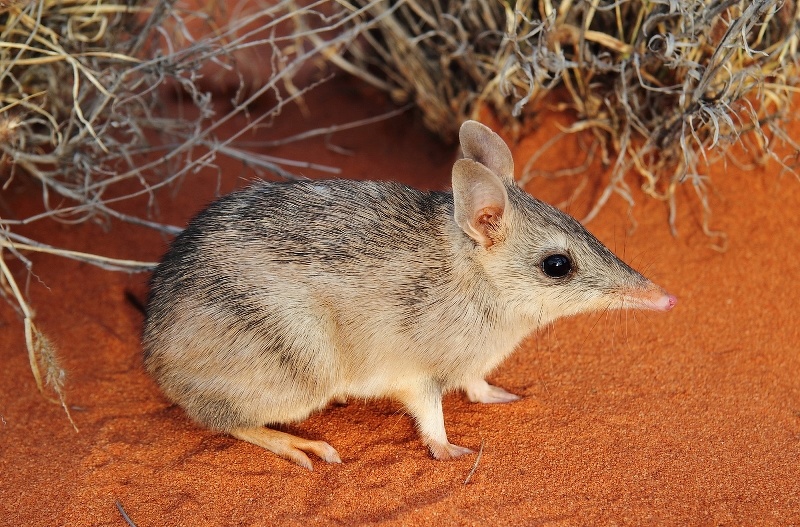
Western barred bandicoot, from the Western Australian Naturalists' Club I
Foxes and feral cats introduced to Australia have devastated native populations of western barred bandicoots. Fire, disease, rats and mice have also created problems by by depleting their habitats or food sources. Bernier and Dorre are protected areas. A recovery plan for Western barred bandicoots was developed between 2005 and 2010 and involves the protection of wild populations and their habitat by maintaining captive populations, enhancing community participation and education and introducing populations to the mainland. Populations have been removed from Dorre and Bernier Islands and reintroduced to Heirisson Prong, Faure Island and the Arid Recovery Reserve at Roxby Downs. Captive breeding programs have been working to establish populations in Dryandra Woodland, Peron Captive Breeding Centre and Kanyana Wildlife Rehabilitation Centre.
Western Barred Bandicoot Characteristics and Diet
Western barred bandicoots are the smallest members of the bandicoot family. They range in weight from 172 to 286 grams (6 to 10 ounces), with an average weight is 226 grams (8 ounces). They have a head and body length of 17.1 to 23.6 centimeters (6.7 to 9.3 inches). Their average length including their tail is 28 centimeters (11 inches). Their tail makes up about a third of their total length. Their average basal metabolic rate is.68 cubic centimeters of oxygen per gram per hour.Sexual Dimorphism (differences between males and females) is present: Females weigh more and have longer snouts than the males. [Source: Laura Rochefort, Animal Diversity Web (ADW) |=|]
Western barred bandicoots have light brown to grey fur that transitions to white on their feet and bellies. They have two to three stripes on their hindquarters, known as 'bars', which alternate between brown-grey and brown-black fur and are the source of their name. Western barred bandicoots have a long, pointed snout and large, erect ears. Their hind feet are elongated and their second and third toes are partially fused, their fourth toe is long and equipped with a strong claw. Their marsupium faces backwards, so dirt is not kicked inside while females dig. The main difference between Western barred bandicoots and their close relatives are their size, location and bars on their hind quarters. Eastern barred bandicoots are longer, between 27 to 35 centimeters and southern brown bandicoots are dark brown and have shorter ears, muzzles and hind feet.
Western barred bandicoots are terrestrial omnivores (animals that eat a variety of things, including plants and animals); they eat arthropods, plants, roots, herbs, seeds, berries, fungi and occasionally small vertebrates. The feed mostly at night and forage and dig for their food. Western barred bandicoots have lived to 5.8 years in captivity. In Heirisson Prong, females have a maximum lifespan of more than five years, where males have a maximum lifespan of 4.5 years; the average lifespan at this facility is less than 18 months. In Peron, the maximum lifespan is five years, females live an average of three years and males live an average of 3.5 years. The lifespan of wild populations has not been determined. There is no physical difference between the different island populations.
Western Barred Bandicoot Behavior
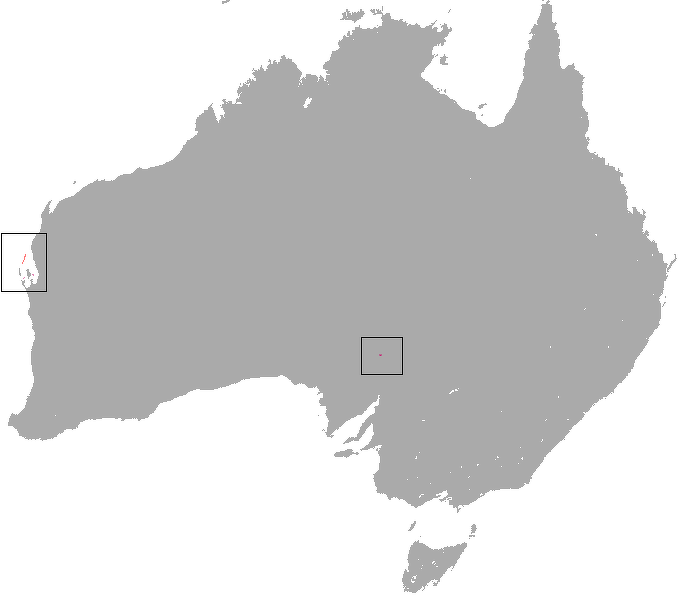
Western barred bandicoot range: native (red), reintroduced (pink)
Western barred bandicoots are terricolous (live on the ground), nocturnal (active at night), motile (move around as opposed to being stationary), sedentary (remain in the same area), territorial (defend an area within the home range). The home range of a male is about 2.5 to 14.2 hectares (6.2 to 35 acres) , while a female’s home range is only 1.4 to 6.2 hectares (3.5 to 15.3 acres). These ranges may overlap but generally only on the outer boundary limits. As the population increases, home ranges generally decrease. [Source: Laura Rochefort, Animal Diversity Web (ADW) |=|]
Western barred bandicoots are generally solitary and spend the day in their nests within their home range. Their nests are built in shallow hollows or leaf litter under low shrubs. At dusk they emerge to forage. Within a 24 hour period, males may travel up to 1,020 meters while females only travel about 490 meters. Foxes and feral cats have devastated populations of western barred bandicoots. These bandicoots are able to run fast, jump straight into the air and change direction quickly to escape these and other predators.
Western barred bandicoots sense using vision, touch and chemicals usually detected with smell. They communicate with touch, sound and chemicals and leave scent marks produced by special glands and placed so others can smell and taste them and They depend on touch, smell and hearing while hunting and traveling at night. Both sexes have special scent glands behind their ears for marking their territory. Males use scent to attract and claim to females for mating. Males make puffing sounds and show their aggression by opening their mouths and chasing other males.
Western Barred Bandicoot Mating, Reproduction and Offspring
Western barred bandicoots have the highest breeding rate of animals their size. The average gestation period is only 12 days. Females typically have one to three young per litter and around four litters a year. They engage in seasonal breeding and year-round breeding. They breed every two months, but more frequently in the cooler months, from April to October. The ratio of males to females at birth is 1.2 to 1. [Source: Laura Rochefort, Animal Diversity Web (ADW) |=|]
Western barred bandicoots polygynandrous (promiscuous), with both males and females having multiple partners. According to Animal Diversity Web: A few nights before estrus, males and females become sexually attracted, particularly at dusk. Immediately after mating, all attraction ceases. Males follow females, attempting to grasp their tails. When they catch a tail, the male holds it to the ground and the female raise her hindquarters. Intromission only lasts about 30 seconds at a time; males continuously penetrate for a period of about 26 to 120 minutes. Their large testes give evidence for a promiscuous mating system. While mating, the female's tail is often severally damaged or may fall off.
Parental care among Western barred bandicoots is provided by females. Young are altricial, meaning they are relatively underdeveloped at birth. At birth, young are about one centimeter long and weigh about 0.25 grams. Females care for young while they are in the pouch and for a very short time after they leave. Inside the pouch, eight teats are arranged in two semicircles. Newborns use a teat that was not been used by the previous litter. The young continue to grow in the pouch until they are about 50 to 54 days old , when they begin to emerge. At this point, the mother leaves the young in the nest while she forages. Around day 61 to 63, the young are weaned and are soon afterwards are evicted from the nest to make room for the next litter. On average females reach sexual or reproductive maturity at age four months; and males do so at five months.
Image Sources: Wikimedia Commons
Text Sources: Animal Diversity Web animaldiversity.org , National Geographic, Live Science, Natural History magazine, Australian Museum, David Attenborough books, Australia Geographic, New York Times, Washington Post, Los Angeles Times, Smithsonian magazine, Discover magazine, The Conversation, The New Yorker, Time, BBC, CNN, Reuters, Associated Press, AFP, Lonely Planet Guides, Wikipedia, The Guardian, Top Secret Animal Attack Files website and various books and other publications.
Last updated July 2025