
Home | Category: Island Ethnic Groups
NASIOI

folks in the Nasioi town of Arawa
The Nasioi, also known as the Kieta, occupy a broad area of southeastern Bougainville, extending from the coastal region around Kieta Harbour inland for about 29 kilometers, between 6° and 6°12' S. Their settlements historically ranged from the coast through interior valleys to elevations of about 900 meters, giving them access to multiple ecological zones. This distribution shaped traditional patterns of exchange and influenced how different communities experienced colonialism and modern social change. Sea-level temperatures average 27°C, with greater variation across a single day than between months. Temperatures drop roughly 3.5°C per 300 meters of elevation. Annual rainfall—about 300 centimeters—is high and evenly spread throughout the year. [Source: Eugene Ogan, “Encyclopedia of World Cultures, Volume 2: Oceania,” edited by Terence E. Hays, 1996]
Although “Nasioi” has been widely used by Europeans since the early 20th century, it is best treated as a linguistic designation. Speakers traditionally identified themselves by more local names. The ethnonym “Kietas” is now commonly used by other Bougainvilleans and missionaries. Contemporary estimates place the Nasioi population at roughly 28,000. In 1963, the number of Nasioi speakers was estimated at 10,654, and rapid population growth since then likely raised the figure to around 14,000 by 1980. The language—also called Naasioi, Kieta, Kieta Talk, or Aunge—is spoken from the central mountains to the southeastern coast of the Kieta District.
Language: Nasioi belongs to the Nasioi Family within the Southern Bougainville branch of non-Austronesian (Papuan) languages, closely related to Nagovisi. Several distinct dialects exist, and many villages include speakers of additional languages. Today, most younger Nasioi also speak Tok Pisin and/or English.
RELATED ARTICLES:
BOUGAINVILLE ISLANDERS — SIWAI, TINPUTZ, NAGOVISI — AND THEIR HISTORY, SOCIETIES AND CULTURE ioa.factsanddetails.com
NISSAN ISLANDERS: HISTORY, RELIGION, SOCIETY, LIFE ioa.factsanddetails.com
NEW IRELAND ETHNIC GROUPS — MADAK, LESU, AND LAK— AND THEIR TRADITIONS AND SOCIETIES ioa.factsanddetails.com
ART FROM NEW IRELAND: MALAGAN, FUNERARY FIGURES AND DRUMS ioa.factsanddetails.com
EAST NEW BRITAIN ETHNIC GROUPS — THE BAINING AND TOLAI — AND THEIR CUSTOMS, LIFESTYLES AND DANCES ioa.factsanddetails.com
WEST NEW BRITAIN ETHNIC GROUPS — NAKANAI, AROWE — AND THEIR TRADITIONS AND SOCIETIES ioa.factsanddetails.com
MASKS AND ART OF NEW BRITAIN ioa.factsanddetails.com
TROBRIAND ISLANDERS: HISTORY, RELIGION, BIG MEN POLITICS, ECONOMY ioa.factsanddetails.com
TROBRIAND ISLANDER CULTURE: CUSTOMS, MATRILINEAL SOCIETY, SEX AND YAMS ioa.factsanddetails.com
ART FROM THE TROBRIAND ISLANDS AND MASSIM REGION OF PAPUA NEW GUINEA ioa.factsanddetails.com
ISLANDERS OF NORTHERN PAPUA NEW GUINEA ON MANAM, WOGEO AND MANUS ioa.factsanddetails.com
SOUTHEAST PAPUA NEW GUINEA ISLANDERS OF MASSIM, MILNE BAY AND DOBU, ROSSEL AND GOODENOUGH ISLANDS ioa.factsanddetails.com
Nasioi History
Archaeological evidence from nearby Buka Island indicates human presence for more than 28,000 years, suggesting that the ancestors of the Nasioi may have occupied Bougainville for over 30,000 years. They are among the island’s earliest inhabitants, with Austronesian-speaking groups arriving much later. South Bougainville’s non-Austronesian peoples, including the Nasioi, historically differed from their neighbors through traits such as cross-cousin marriage, achieved leadership, and likely headhunting. With abundant land, traditional Nasioi life saw little organized warfare. Violence typically took the form of individual homicide and subsequent revenge, and once a killing was “balanced” by another or compensated with material goods, the matter was closed; long-term feuding was not customary. Today, contact with more violent groups and recent political turmoil have produced levels of organized violence that are historically unprecedented.
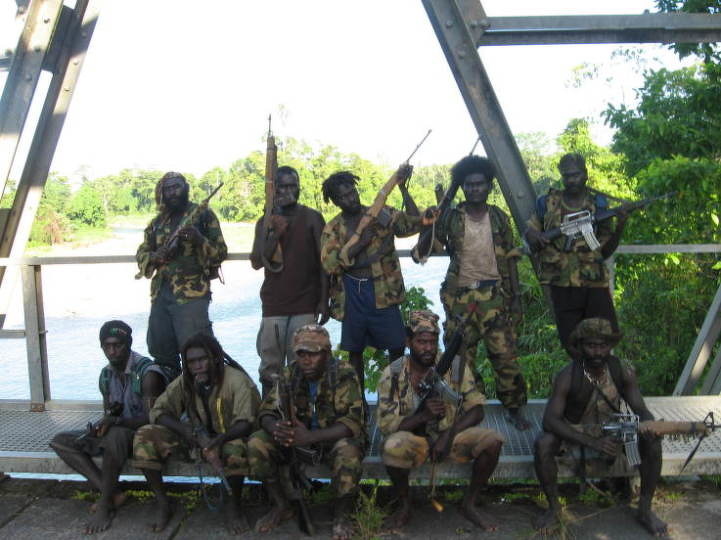
Bougainville separatists
Bougainville was first sighted by Europeans in 1768. In the late 19th century, Nasioi communities along the coast experienced increasing contact with traders due to Kieta’s natural harbor. Catholic missionaries established the first permanent European residence near Kieta in 1902, and German colonial authorities set up an administrative post in 1905. By 1908, colonizers were alienating Nasioi land to create coconut plantations and employing Nasioi as laborers.
Australian rule, beginning in 1914, continued through World War II and up to Papua New Guinea’s independence in 1975. The Nasioi region suffered heavily during the war under Japanese occupation and Allied operations. Postwar dissatisfaction grew steadily as colonial pressures mounted. Nasioi discontent with colonial rule and later political developments fed Bougainville’s separatist movement. For over forty years they have been among the most vocal advocates of independence, and in 1990 the Nasioi-led Bougainville Revolutionary Army claimed control over the entire island.
Social upheaval intensified dramatically in 1968 with the construction of the massive Panguna copper mine on Nasioi land. The mine became a major source of conflict over land rights, environmental damage, labor issues, and unequal distribution of benefits. By the 1980s, tensions had escalated into widespread resistance. In 1988, grievances over colonialism, mining, and relations with the national government culminated in an armed uprising led largely by Nasioi—later known as the Bougainville Revolutionary Army (BRA). The BRA shut down the Panguna mine, fought Papua New Guinea government forces, and declared Bougainville independent. A peace agreement was signed in 1990, but the long-term political future of the Nasioi and Bougainville remained uncertain.
Nasioi Religion and Culture
According to the Christian-oriented Joshua Project, about 98 percent of Nasioi identify as Christian, with Evangelicals estimated at 10–50 percent. Traditionally, the Nasioi recognized supernatural beings inhabiting forests and rivers, but the core of their religion centered on the belief that human well-being depended on the spirits of the dead (ma'naari). People offered special foods—especially pork—and recited invocations to secure these spirits’ favor. Early Roman Catholic converts often interpreted Christian figures as especially powerful ma'naari. Seventh-Day Adventists arrived in the 1920s and Methodists in the 1930s. After World War II, amid colonial frustrations, various cargo-cult movements emerged. These blended traditional beliefs and Christian elements in hopes of transforming Nasioi life to resemble that of Europeans. Colonial officials often condemned these practices as longlong lotu (“crazy religion”). Today, mainstream Christian adherence appears to have declined while cargo-cult movements remain active. [Source: Eugene Ogan, “Encyclopedia of World Cultures, Volume 2: Oceania,” edited by Terence E. Hays, 1996]
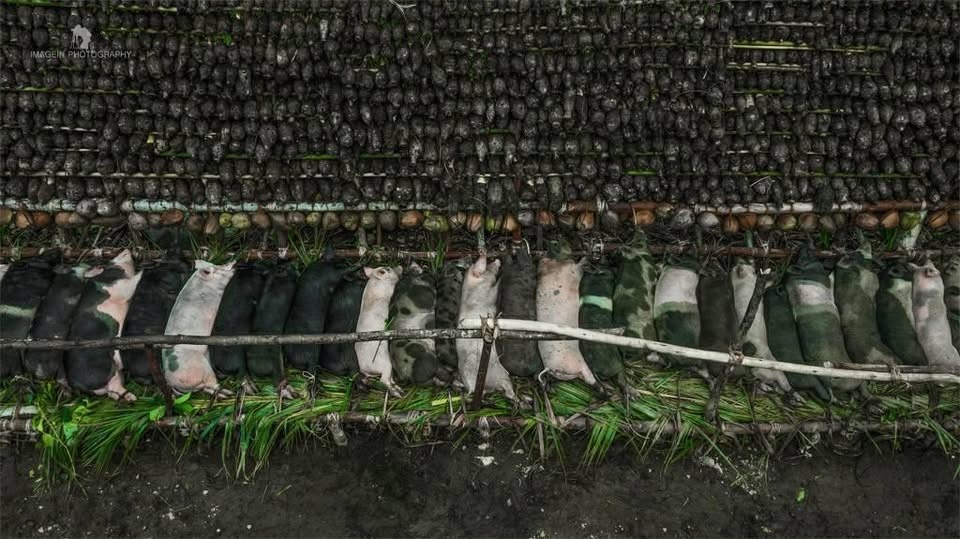
Nasioi feast
Deaths —except among the very young or very old — were mostly believed to result from sorcery or malevolent spirits. People were thought to possess two souls: one that lingered among the living and played an important role, and another whose fate was uncertain. Traditionally, the Nasioi cremated the dead and sometimes kept the lower jawbone in a clan member’s house. Missionaries introduced burial and cemeteries, but since the 1970s cremation has returned as Christian practice has weakened and cargo-cult movements have persisted.
Religious Practitioners: Traditionally, the Nasioi had no full-time religious specialists. Certain individuals were regarded as having special knowledge—often sorcery—derived from a familiar spirit. With missionization, some Nasioi became teachers and catechists; the current Roman Catholic bishop of Bougainville is Nasioi. At least one Nasioi has led a cargo-cult movement for more than twenty years.
Ceremonies: The most common ceremonies involved honoring ma'naari or marking life-cycle events. Propitiation rites were usually performed individually. Mission influence introduced Christian rituals, though these may have waned during recent unrest. Cargo-cult ceremonies often center on the remains of the dead, reflecting continuity with older traditions. Illness was generally attributed to sorcery; plant remedies were used, but healing ultimately depended on spirit helpers. Some people were known for treating bone and muscle injuries. Western medicine is now valued for many conditions, yet malaria remains a major problem despite earlier eradication efforts.
Arts: The Nasioi placed relatively little emphasis on visual arts; utilitarian items like combs were only occasionally decorated. Music and dance were more prominent. Instruments included slit gongs, wooden trumpets, panpipes, and the Jew’s harp, and some dances featured cross-gender roles. Today, many enjoy “string bands” and other Pacific forms of Western-influenced music.
Nasioi Family and Marriage
The typical Nasioi household consisted of a married couple and their young children, sometimes joined by an elderly parent or another close relative. This nuclear-family pattern remains common. From the 1960s onward, adolescent boys sometimes formed their own communal houses, as it was considered inappropriate for them to live under the same roof as sexually active parents. [Source: Eugene Ogan, “Encyclopedia of World Cultures, Volume 2: Oceania,” edited by Terence E. Hays, 1996]
Mothers provided most daily childcare, but fathers, older siblings, and the broader settlement played active roles. Key life events—such as a child’s first visit to the garden—were marked by exchanges and sometimes humorous or ribald performances by the child’s “aunts” (women of another clan), who received gifts in return. A girl’s menarche traditionally involved brief seclusion followed by a feast with singing and dancing; by the 1960s, the practice persisted mainly among the daughters of ambitious men, and missionaries discouraged it further. Boys’ adolescence lacked formal initiation rites. Today, formal schooling has largely replaced these traditional observances.
Marriages traditionally and ideally united bilateral cross cousins—the children of a brother and sister—thereby maintaining long-term exchange relations between two clans and reinforcing ideals of balanced reciprocity. Child betrothal was frequent and usually arranged by mothers. Marriage exchanges involved balancing gifts of food and valuables, but neither bride-price nor dowry existed in the usual sense.
Widows who remarried, or their intended husbands, often provided a gift to the clan of the deceased spouse. Polygyny was rare and limited to exceptionally industrious men. Postmarital residence was uxorilocal, and divorce was generally straightforward. These practices—cross-cousin marriage, polygyny, and child betrothal—were strongly discouraged by missionaries and are now uncommon. Today, educated young adults often marry partners of similar backgrounds, sometimes from other Bougainvillean or PNG groups and occasionally from abroad.
Inheritance: Because much of a deceased person’s property was destroyed or consumed during funerary rituals, little remained for inheritance. Land rights were primarily transferred through the matrilineal line, though substantial prestations made by a deceased man’s children could influence final decisions. In the contemporary economy, money and cash-crop trees typically pass from parents to children of either sex. This shift, however, often generates disputes where traditional land tenure intersects with modern property concepts.
Nasioi Society and Politics
Traditional Nasioi society was notably egalitarian. Women—central to subsistence production and the continuity of matrilineal clans—exerted considerable influence, particularly in marriage decision-making. Today, the traditional ideal of social balance increasingly contrasts with new inequalities linked to education and access to cash. [Source: Eugene Ogan, “Encyclopedia of World Cultures, Volume 2: Oceania,” edited by Terence E. Hays, 1996]
Kinship and Clans: Nasioi social structure was organized around dispersed matrilineal clans (muu’), which were ideally exogamous. Because extensive genealogical knowledge was not emphasized, clan affiliation provided a stable basis for identity and land claims. Although clans did not generally act as unified corporate groups, local segments mobilized for specific social or economic purposes. Nasioi kinship terminology followed a version of the Iroquois system. Siblings and parallel cousins (the children of a father’s brother or a mother’s sister) were grouped together under sibling terms, while cross cousins (the children of a brother and sister) were distinguished and regarded as potential spouses. A father and his brothers shared one term, as did a mother and her sisters; separate terms were applied to a father’s sister and a mother’s brother and to their spouses.
Political Organization: Before colonial rule, Nasioi communities consisted of small, scattered settlements with politically autonomous local groups. The Melanesian “big-man” (oboring) existed in a modest form: influence was earned through diligence, generosity, and good judgment, but it carried no formal authority and could not be inherited. In recent decades some Nasioi have promoted the notion that “paramount chiefs” once existed, although early ethnographic accounts suggest this was not a traditional institution.
The oboring could attempt to mediate disputes, but possessed no coercive power. Social conformity was encouraged through public opinion, shaming, and symbolic acts—for example, a wronged individual might destroy personal property to display grievance and rally community support. The most pervasive traditional deterrent was fear of sorcery. Nasioi opposition to Australian colonial authority during the 1960s and 1970s weakened external forms of social regulation, and intergenerational tensions have since become more pronounced.
Nasioi Villages and Daily Life
Across coastal, valley, and mountain environments, the Nasioi traditionally lived in small, scattered settlements, often consisting of only one or two households. By the 1960s, colonial pressure led to the consolidation of larger villages organized along a central “main street.” Most houses were raised on piles, rectangular in plan, with split-bamboo walls and sago-thatch roofs. Some households also kept separate ground-level cooking huts. By the 1970s, Nasioi involved in the cash economy increasingly built houses using European materials. [Source: Eugene Ogan, “Encyclopedia of World Cultures, Volume 2: Oceania,” edited by Terence E. Hays, 1996]
Subsistence tasks were traditionally divided by gender. Men handled heavy but periodic work such as forest clearing and garden fencing, hunted possums, birds, and feral pigs, and harvested betel nut. Women performed the steady labor of garden cultivation, gathered freshwater crayfish, wove baskets and mats, and took primary responsibility for childcare. With modernization, men became more active as wage laborers and remain more visible in the cash economy. However, women today increasingly grow and market cash crops and pursue higher education.
Land was generally abundant in the traditional setting. Initial rights were gained by clearing virgin forest and were typically inherited through the matrilineal line. Additional claims could arise through marriage, residence, broader kin networks, or ceremonial exchange. Land could never be alienated outside the local group, and—as in much of Papua New Guinea—claims were easier to assert than to extinguish. The growth of cash cropping, rapid population increases, and especially the establishment of the copper mine created major tensions between traditional land tenure and modern economic demands.
Nasioi Agriculture and Economic Activity
While Nasioi communities lived in diverse ecological zones, their food production followed the pattern of Melanesian swidden horticulture. Taro was the principal staple until a wartime blight during World War II, after which sweet potatoes became dominant. Coconuts and sago were important at lower elevations. Traditional crafts included carving, basketry, and coastal pottery. By the 1960s, these arts were practiced by fewer people, as imported goods from trade stores became more common.[Source: Eugene Ogan, “Encyclopedia of World Cultures, Volume 2: Oceania,” edited by Terence E. Hays, 1996]
Before World War II, some Nasioi worked on coastal plantations; afterward they increasingly turned to cash crops, first copra and later cacao. Although widespread resentment toward the copper mine discouraged many from seeking employment there, large numbers worked for contractors during the mine and infrastructure construction boom of the 1970s. Today, many educated Nasioi hold salaried positions in Bougainville and elsewhere in Papua New Guinea.
Trade networks linked communities across ecological zones. Coastal Nasioi produced pottery, sago, fish, and salt; valley dwellers raised pigs and cultivated coconuts; hill communities traded baskets, bows and arrows, and wild game. Shell currency—obtained from the Solomon Islands via southern Bougainville—was used only for special transactions such as marriage.Coastal Nasioi began trading with European ships in the nineteenth century, often exchanging coconuts for metal tools. German colonial officers later encouraged copra production and wage labor. Today, Nasioi people participate widely in the cash economy, though with significant local variation.
Image Sources: Wikimedia Commons
Text Sources: “Encyclopedia of World Cultures, Volume 2: Oceania,” edited by Terence E. Hays, 1996, National Geographic, Live Science, Metropolitan Museum of Art, Natural History magazine, Australian Museum, New York Times, Washington Post, Los Angeles Times, Smithsonian magazine, Encyclopedia.com, Times of London, Library of Congress, The Conversation, The New Yorker, Time, BBC, CNN, Reuters, Associated Press, AFP, Lonely Planet Guides, Google AI, Wikipedia, The Guardian and various websites, books and other publications.
Last updated November 2025