
FIRST FREE SETTLERS IN AUSTRALIA
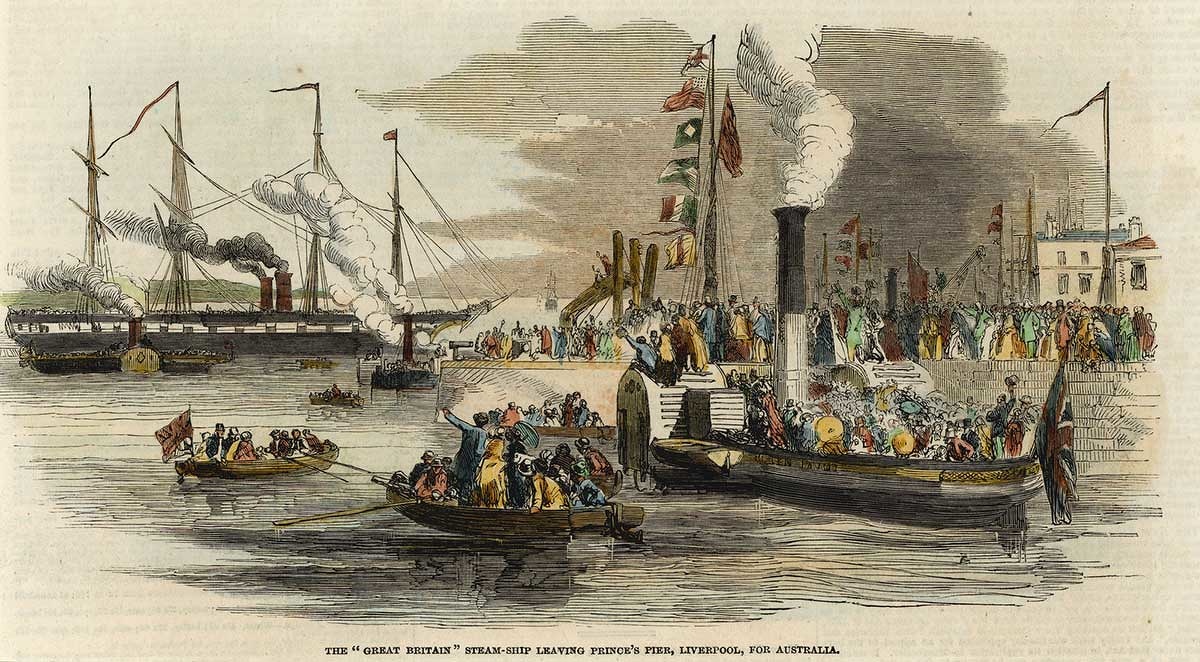
The first free settlers arrived in Australia on January 16, 1793, aboard the ship Bellona. These settlers, including farmer Thomas Rose and his family, were the first to choose to migrate to the colony. This marked the beginning of a new wave of non-convict migration, a change from the initial penal colony setup. The first free settlers received government support, including free passage, tools, provisions, and land grants, as well as access to convict labor.
The free settlers who arrived on the Bellona in 1793 landed in Sydney and were granted land at what they called Liberty Plains, which is now the Strathfield-Homebush district, seven miles (11 km) west of Sydney. The area was named Liberty Plains, as it was the first place free men were granted land.
The first fleet transporting convicts to Australia in 1788, carried 1,500 people, nearly half of them convicts. The others included nearly 400 administrative people, sailors and marines and soldiers. The convicts in the first fleet endured eight months at in stuffy windowless holds of 11 ships, commanded by Captain Arthur Phillips, that left England and sailed for Botany Bay, carrying sheep, cattle and seed, cutting and living plants of peaches, pomegranates, limes, lemons, mustard, garlic, carrots, clover and dozens of other agricultural plants. There were only two mutinies and 48 deaths during the journey.
Settlers arrived along with convicts throughout the late 18th and early 19th centuries. With an increase of free settlers, Australia developed, the interior was penetrated, and six colonies were created: New South Wales in 1786, Van Diemen's Land in 1825 (renamed Tasmania in 1856), Western Australia in 1829, South Australia in 1834, Victoria in 1851, and Queensland in 1859. Australia’s First census in 1828 counted 36,000 convicts and free settlers, as well as 2,549 soldiers.
Related Articles:
EARLY CONVICTS IN AUSTRALIA: MEN. WOMEN, CHILDREN, THEIR LIVES AND LEGACY ioa.factsanddetails.com
SETTLERS EXPAND ACROSS AUSTRALIA: CONVICT-FREE STATES, EXPLORERS, GOLD RUSHES ioa.factsanddetails.com
AUSTRALIAN ABORIGINALS AT THE TIME EUROPEAN COLONIZATION BEGAN ioa.factsanddetails.com
DISCOVERY OF AUSTRALIA BY EUROPEANS ioa.factsanddetails.com
ABORIGINAL TASMANIANS: HISTORY, ABUSE, LIFESTYLE AND NEAR EXTINCTION ioa.factsanddetails.com
CAPTAIN JAMES COOK IN NEW ZEALAND AND AUSTRALIA ioa.factsanddetails.com
FIRST EUROPEAN IN NEW ZEALAND: EXPLORERS, SETTLERS AND SEALERS ioa.factsanddetails.com
FAMOUS BUSHRANGERS (AUSTRALIAN OUTLAWS): THEIR LIVES, EXPLOITS AND DEATHS ioa.factsanddetails.com
NED KELLY: HIS LIFE, GANG, WRITINGS, ARMOR, DEATH AND MISSING HEAD ioa.factsanddetails.com
AUSTRALIA ABORIGINALS FROM 1900 TO PRESENT: DISCRIMINATION, ASSIMILATION, SOME RESTITUTION ioa.factsanddetails.com
AUSTRALIA’S STOLEN GENERATIONS: VICTIMS, LAWS, RATIONALE, OUTRAGE ioa.factsanddetails.com
Early Leaders in Australia
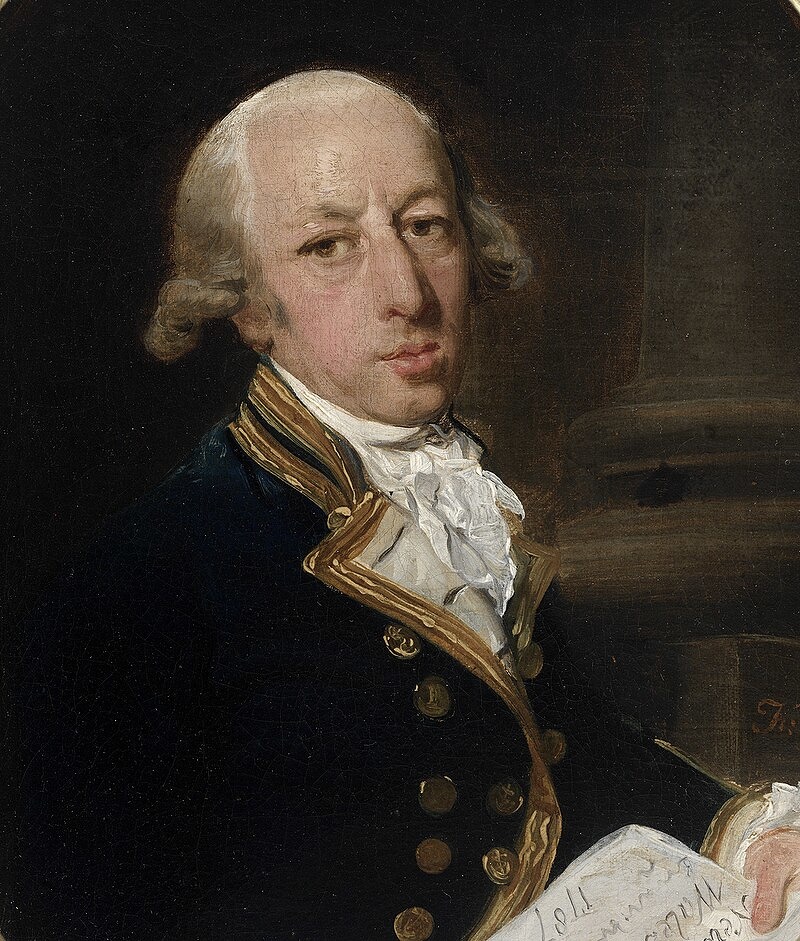
Captain Arthur Phillip in 1786
The threat of starvation hung over the penal colony for the first 16 years. The first arrivals survived by raising wheat, garden produce and livestock under the guidance of the governor Capt. Arthur Phillip, the Captain of the First Fleet that brought the first convicts to Australia in 1788.
Captain Phillip was an incredibly enlightened man. He suggested that the Europeans make friends with the Aboriginals (advise that was not followed). He also believed that Australia's future lie in attracting free settlers rather than relying on convicts. Phillip's successor, Francis Grose, was not so enlightened. He gave out huge land grants to military officers. They prospered by exploiting the labor pool of ex-convict labor and controlling trade.
The infamous Adm. William Bligh of Mutiny in the Bounty fame took over the governorship of New South Wales in 1806. His brutal methods resulted in a second mutiny, the Rum Rebellion, in which officers who paid their workers with run were arrested. Bligh was called back to Britain, and replaced with Lieutenant-Colonel Lachland Macquarie. Macquarie was responsible for establishing the wool industry in Australia, and paving the way for social reforms to improve the lives of ex-convicts.
Development of Australia in the Early 1800s
In the early 19th century, problems arose in Australia from efforts to carry out British policy designed for a penitentiary when other interests — fishing, sealing, farming, and trade — were developing. The economic development begun in the convict phase of settlement included the expansion of agriculture where conditions were favorable, as in Van Diemen’s Land, which started in 1815 to export grain to New South Wales.[Source: Library of Congress, September 2005]
Roads, bridges, and other transportation facilities necessary for commerce were built by convict labor, as were government buildings. In the early nineteenth century, enterprising colonists successfully introduced merino sheep as a source of the fine wool increasingly demanded by the expanding British textile industry. Australia's first bank, the Bank of New South Wales, was established in 1817..
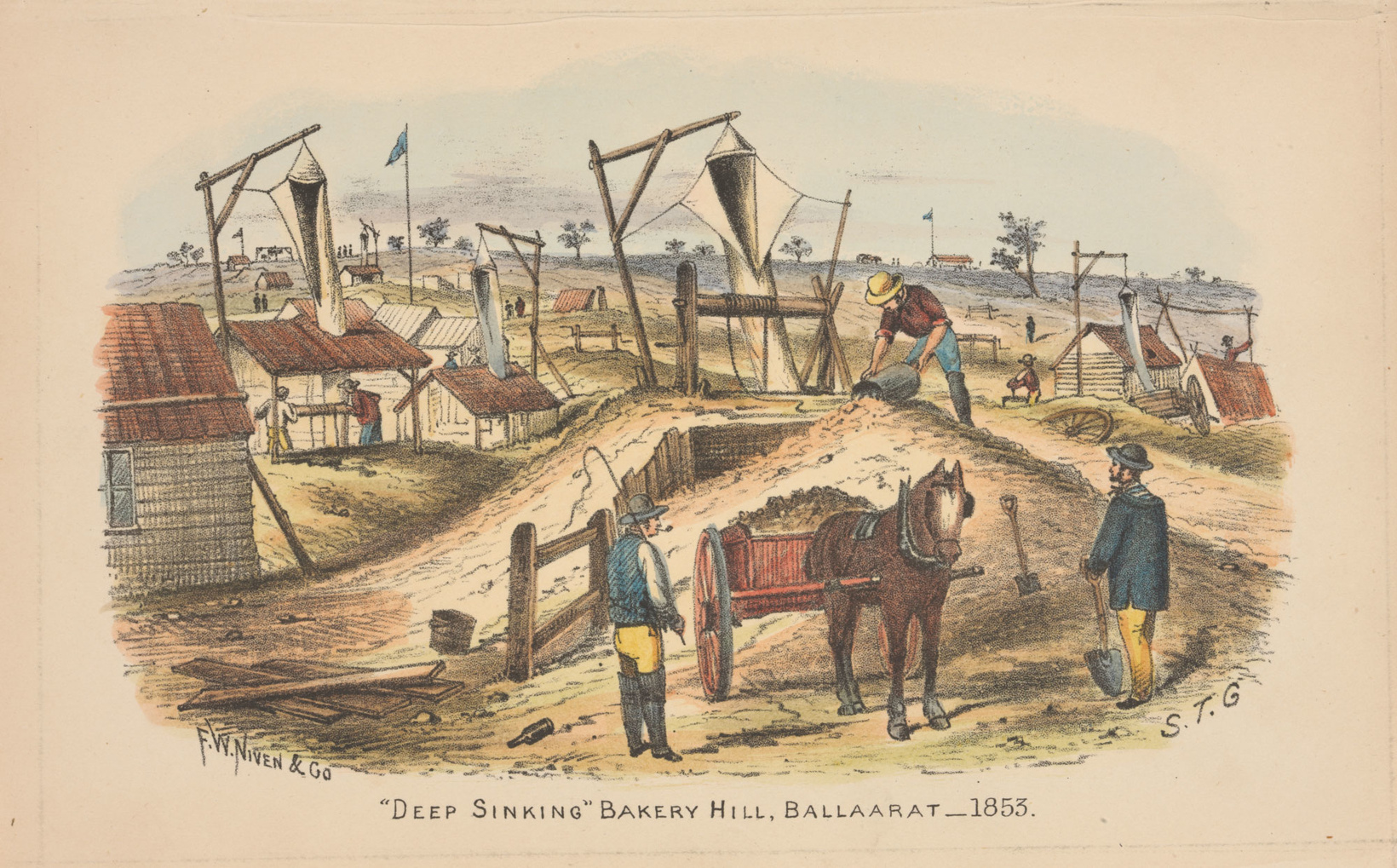
Sheep raising and wheat cultivation soon became the backbone of the economy. The wool industry experienced rapid growth during the squatting migration period, which began on a large scale around 1820. Grazers followed explorers to new pastures, or "runs," where they settled and built homes. Wool exports increased from 111 kilograms (245 pounds) in 1807 to 1.1 million kilograms (2.4 million pounds) in 1831. [Source: “Worldmark Encyclopedia of Nations”, 2007]
Massive areas of land were cleared for agriculture and various other purposes in the first 100 years of European settlement. Under the stimulus of gold production, the first railway line — Melbourne to Port Melbourne — was completed in 1854. Representative government spread throughout the continent, and the colonies acquired their own parliaments
Free Settler Numbers Increase in Australia Beginning in the 1820s
Individual immigrants to Australia increased in number in the 1820s. They were mostly people of some means with which to acquire land, which was in general granted only to those of substance. This land policy, favoring the so-called exclusives, or individuals of established position, over the freed convicts, or emancipists, who sought to advance themselves, facilitated the pastoral expansion of the 1820s. [Source: Library of Congress, September 2005]
The colonies already established — New South Wales and Van Diemen’s Land — got most of the early immigrants, but some immigrants went to the newer colonies, Western Australia and South Australia. In the 1830s, the southern part of New South Wales, which later became the colony of Victoria (1851), was occupied by sheepmen from farther north and from Van Diemen’s Land. Thus, this portion of Australia was originally settled by migration within Australia.
With the increased flow of immigrants following the Ripon Land Regulations of 1831, the population grew from about 34,000 in 1820 to some 405,000 in 1850. The discovery of gold in Victoria (1851) attracted thousands, and in a few years the population had quadrupled..[Source: “Worldmark Encyclopedia of Nations”, 2007]
Squatters in Australia

"Squatter of New South Wales Monarch of more than all he Surveys by Samuel Thomas Gill (1818-1880)
The best land in Australia was held by squatters and people who received large government grants. Efforts by governments in Australia in the mid 19th century to establish land reform laws to provide land for the poor was undermined by large landowners who "squatted" on land for which they had no title and used "dummy" applicants to take over about 85 percent of the land intended for poor settlers.
In 1829, nineteen counties around Sydney in southeastern Australia—covering some 8.9 million hectares—were officially designated as the only areas open to settlement in New South Wales. By that time, however, sheepmen had already established stations and grazing runs beyond these limits. Such individuals were technically trespassers on Crown land and, like their American counterparts who occupied land without legal title, became known as squatters. [Source: Library of Congress, September 2005; Wikipedia]
Unlike squatters in the United States, most Australian squatters came from the middle and upper classes of British society. The term “squatter” carried no stigma; on the contrary, squatters formed the colony’s landed gentry, the so-called squattocracy, whose wealth and influence made them the most powerful economic group in the country.
Their prosperity rested on sheep. By 1850, Australia’s flocks numbered more than 15 million. In 1836, the British government formally legitimized squatting after acknowledging that the original settlement restrictions could not be enforced. The growth of the pastoral industry, however, did not lead to the rise of new towns. The hundreds of sheep stations scattered across New South Wales averaged only about ten to twelve people each, leaving the established seaport cities as the main population centers. As a result, relative urbanization became a defining feature of Australia’s colonial settlement pattern
Convicts Become Settlers
By 1800 there more than 5,000 people living in the settlements around Botany Bay. Most were convicts or former convicts who had finished their seven year sentence and took up farming. The ex-convicts usually worked about 20 acres of land and usually about threes fourths of it was used to raise wheat and maize.
As time passed, the residents of Australia became better at producing their own food and less dependent on Britain for supplies. Convict labor built roads and buildings. There were wide division between the convicts and military personnel and their families who clung to dreams of returning to England.
By the 1820s thing had turned around. Compared to the industrial squalor of England, Australia looked pretty good. Poor people were now committing crimes on purpose just so they could be sent to Australia. Free settlers soon followed and they worked side by side with convicts.
Impact of Australian Settlers on Aboriginals
In addition to its obvious ecological impacts on particular regions, the early clearing of land and importation of hard-hoofed animals by early Australia settlers severely affected Aboriginals by reducing their access to essential resources like food and shelter. They were progressively forced into smaller areas, which reduced their numbers as the majority died from newly introduced diseases and a lack of resources. Widespread indigenous resistance against the settlers led to prolonged fighting from 1788 to the 1920s, resulting in the deaths of at least 20,000 indigenous people and between 2,000 and 2,500 Europeans. [Source: Library of Congress, September 2005]
Anthropologist estimated that between 300,000 and 1 million Aboriginal lived in Australia when Captain Cook initiated the colonization of Australia by Europeans in 1788. At that time there over 250 distinct Indigenous Australian languages and 800 dialects were spoken. At that time neighboring tribes usually spoke different dialects but sometimes they spoke completely different languages.
Soon after the European conquest of the Australia continent in the 18th century, the Aboriginal population began declining rapidly as a result of violence and disease. By 1888 the population had fallen to as low as 60,000 while that of Europeans had risen to over one million. Imported diseases such as smallpox were particularly devastating to Aboriginals, but violence also took its toll.
Europeans often described the Aboriginals as savages and barbarians or some other sub-human term. No treaties were signed by Europeeans with the Aboriginals, who offered less resistance than Maoris on New Zealand, where treaties were signed. As Europeans began settling areas away from the coasts, they came into more direct contact with Aboriginal Australians. Europeans also cleared land for agriculture, impacting Aboriginal Australians’ ways of life.
RELATED ARTICLES:
AUSTRALIAN ABORIGINALS AT THE TIME EUROPEAN COLONIZATION BEGAN ioa.factsanddetails.com
ABORIGINAL TASMANIANS: HISTORY, ABUSE, LIFESTYLE AND NEAR EXTINCTION ioa.factsanddetails.com
Image Sources: Wikimedia Commons, National Museum of Australia
Text Sources: “Encyclopedia of World Cultures, Volume 2: Oceania,” edited by Terence E. Hays, 1996, National Geographic, Live Science, Natural History magazine, Australian Museum, Australia Geographic, New York Times, Washington Post, Los Angeles Times, Smithsonian magazine, Encyclopedia.com, Times of London, Library of Congress, The Conversation, The New Yorker, Time, BBC, CNN, Reuters, Associated Press, AFP, Lonely Planet Guides, Culture Shock! Australia, Wikipedia, The Guardian and various websites, books and other publications.
Last updated October 2025