
BIRDS OF NEW GUINEA
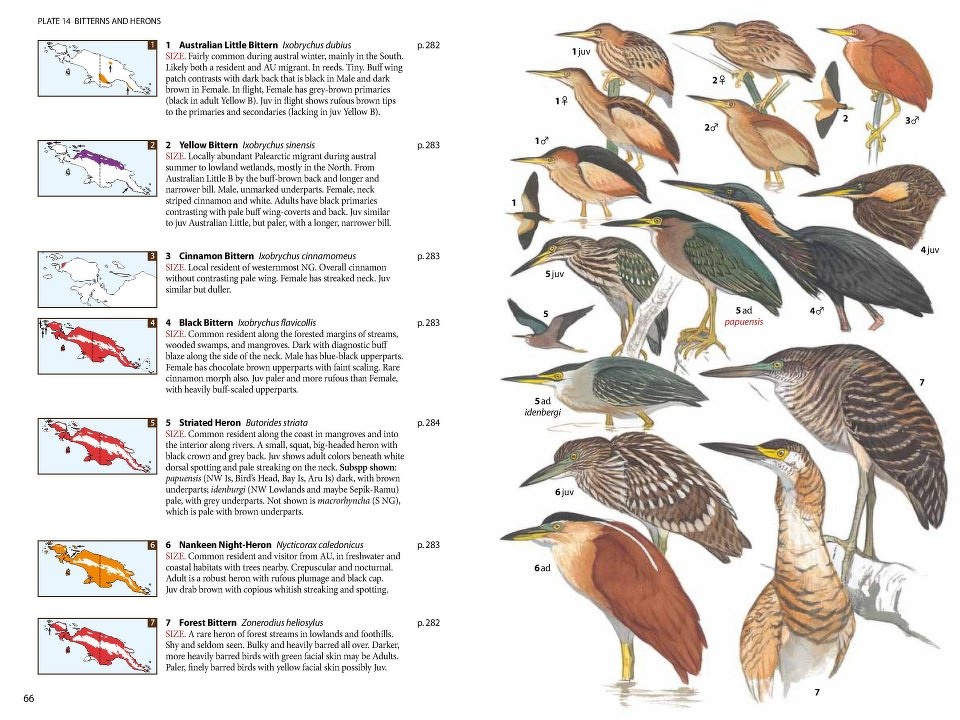
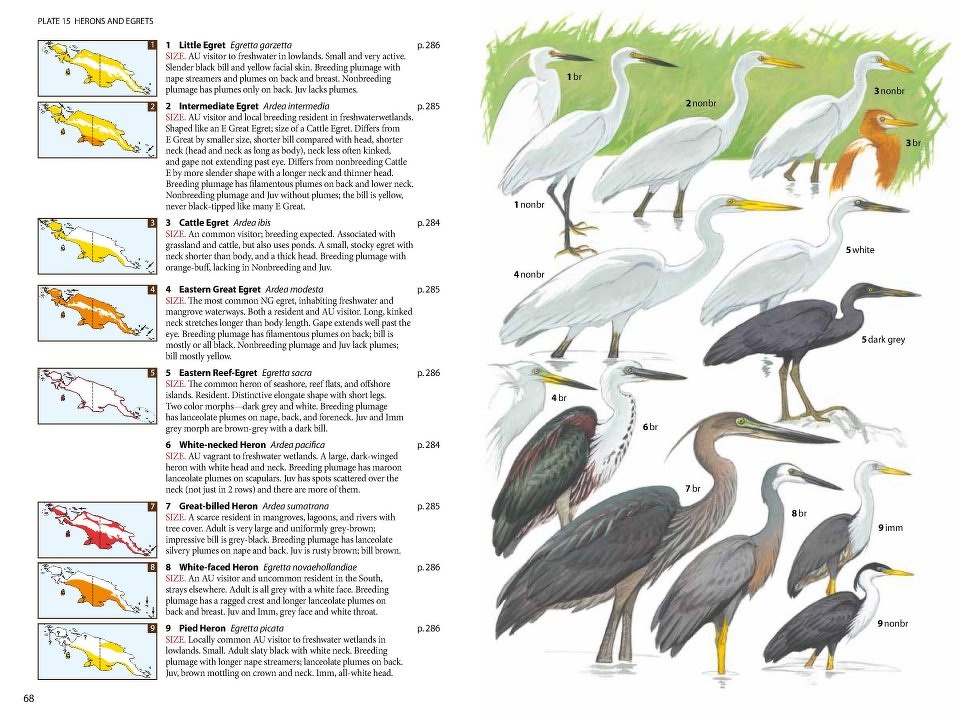
The island of New Guinea is home to a vast number of bird species. Estimates of the numbers of species range from 760 to 970 recorded species. Among the reason why the range is so large is a lack of good data and dealing with migrating and visiting birds A significant number of species are unique to the island, with some sources reporting over 500 endemic species. The island's varied ecosystems, from lowland jungles to misty mountains, support a remarkable variety of bird life.
Because of a lack of mammal predators in New Guinea, birds thrive there. There are no monkeys and squirrels to compete with for fruit and seeds and no predators like foxes, jungle cats and raccoons that feed on eggs and chicks. Freed of worrisome predators and time-consuming searches for food, birds in Papua New Guinea are freed to pursue other endeavors: such a developing elaborate courtship displays like those of birds-of-paradise.
In New Guinea there is glossy, bluish bird called the trumpet manucode that produces an amazing loud sound for a bird its size. It is able to make such a loud sound because it has a 81-centimeters (32-inch) -long windpipe that is coiled inside its body. Birds of similar size have a 15-centimeters (six-inch) windpipe.
The three species of crown pigeon found in New Guinea are the world's largest pigeons. Reaching lengths up to 74 centimeters (29 inches) the goura found in western Papua New Guinea is the largest pigeon in the world.
RELATED ARTICLES:
KOOKABURRAS: CHARACTERISTICS, LAUGHING, BEHAVIOR, SPECIES, REPRODUCTION ioa.factsanddetails.com
PARROTS OF AUSTRALIA-NEW GUINEA: SPECIES, COLORS, CHARACTERISTICS, BEHAVIOR ioa.factsanddetails.com
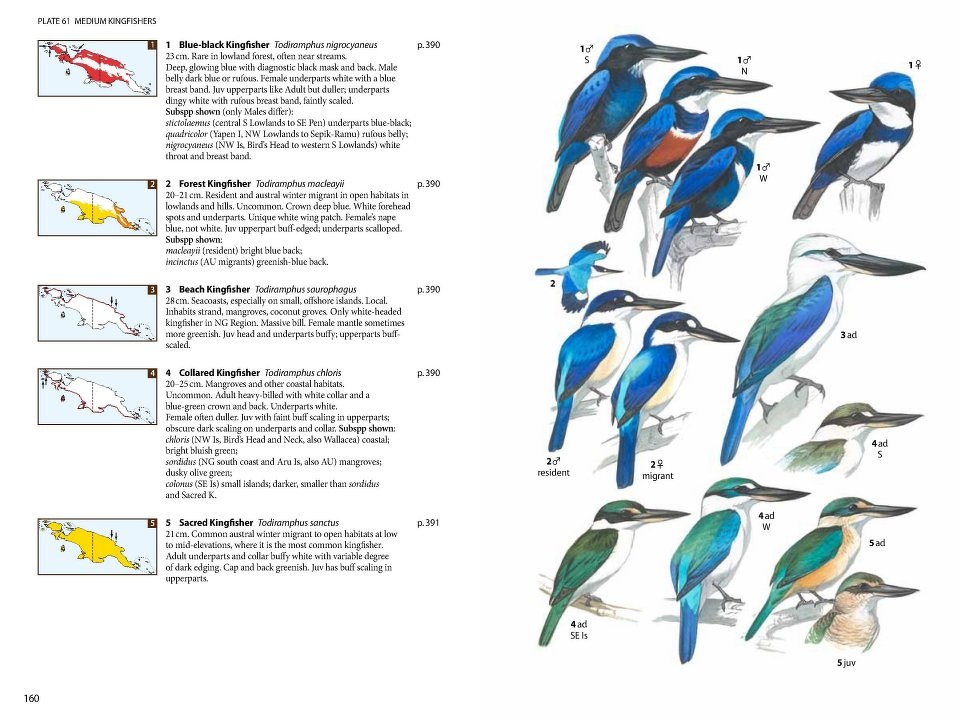
KINGFISHERS: CHARACTERISTICS, BEHAVIOR AND REPRODUCTION factsanddetails.com
Hooded Pitohui — the Venomous Bird of New Guinea
In the 1990s it was discovered that the hooded pitohui, a common red and black New Guinea bird, was venomous. The neurotoxin, which is delivered from the bird's beak, is the same toxin found in poison dart frogs from Central and South America and fugu (the poisonous puffer fish that Japanese eat. The pitohui, one of about ten birds from New Guinea that harbors highly toxic bacteria in its feathers. The bird has been studied by Scott Derrikson and Jack Dumbacher of the Smithsonian's Conservation and Research Center.
Tetrodotoxin, also known as TTX, is a powerful nerve agent, first identified in the tissues of certain puffer fish of the family Tetraodontidae. In Japan the fish is best known for those puffers belonging to the genus Fugu, an expensive, high-thrill delicacy, which is served after the poisonous bits have been skillfully carved away.
After tetrodotoxin was identified in puffers, it started turning up in a variety of places around the globe. In 1982 the ethnobotanist and independent scholar Wade Davis announced that TTX is a major component of the voodoo elixir that turns people into zombies. (A person in a zombie state cannot move, but is fully conscious of everything around him.) TTX was later identified in the skin secretions of the American rough-skinned newt (genus Taricha), an amphibian often kept as a pet, and in the venom of Australia’s tiny blue-ringed and blue-lined octopuses (genus Hapalochlaena).
Perhaps most remarkably, it also turned up in the feathers of two genera of birds, Pitohui and Ifrita, in New Guinea. The source of the toxin turned out to be bacterial. Such microorganisms readily disperse across great distances and throughout a variety of habitats. Thanks to studies by systematists, bioexplorers no longer need to find a particular species of puffer fish in order to obtain TTX.
Birds-of-Paradise
Birds-of-paradise are extraordinary birds. The males grow plumage that comes in unusual shapes and brilliant colors. There are 39 species of birds-of-paradise (“cendarawasih”). Most live in New Guinea, or islands near New Guinea. They tend to be few in number, elusive and difficult and expensive to find. [Source: Much of the information in this article if from David Attenborough’s “The Life of Birds,” Princeton University Press, 1998]
Mel White wrote in National Geographic, “In New Guinea kangaroos climb trees, and butterflies the size of Frisbees dart through rain forests where egg-laying mammals scuttle across the muck. Frogs sport noses like Cyrano’s, and the rivers are full of rainbow fish. Yet none of New Guinea’s wild wonders have fascinated scientists as deeply as the creatures that 19th-century naturalist Alfred Russel Wallace called “the most extraordinary and the most beautiful of the feathered inhabitants of the earth”: the birds-of-paradise. [Source: Mel White, National Geographic, December 2011 |+|]
In Indonesia you can find bird-of-paradise in Kepala Burung and the north coast of Pulau Yapen in Papua, the Aru island in the Moluccas, on Waego, Missol, Batanta and Salawati islands off the coast of Sorong, in arts of the Teluk Cendarawasih. Trips to look for them can be organized in Biak, Jayabura, and Sorong.
RELATED ARTICLES:
BIRDS-OF-PARADISE ioa.factsanddetails.com
BIRD-OF-PARADISE TAXONOMY: SPECIES, HYBRIDS AND DISPLAY TYPES ioa.factsanddetails.com
ALFRED RUSSEL WALLACE ON BIRDS OF PARADISE factsanddetails.com
PARADISAEA BIRDS-OF-PARADISE: LESSER, RED, BLUE, EMPEROR'S, GOLDIE'S AND RAGGIANA SPECIES ioa.factsanddetails.com
GREATER BIRD-OF-PARADISE: CHARACTERISTICS, BEHAVIOR AND REPRODUCTION factsanddetails.com
KING OF SAXONY BIRD-OF-PARADISE factsanddetails.com
SICKLE-TAILS (CICINNURUS): MAGNIFICENT, WILSON'S AND KING’S BIRDS-OF-PARADISE factsanddetails.com
ASTRAPIA BIRDS-OF-PARADISE: CHARACTERISTICS, BEHAVIOR AND REPRODUCTION ioa.factsanddetails.com
PAROTIA BIRDS-OF-PARADISE: CHARACTERISTICS, BEHAVIOR, DANCES ioa.factsanddetails.com
LOPHORINA (SUPERB BIRD-OF-PARADISE): CHARACTERISTICS, SPECIES AND WILD COURTSHIP DANCES factsanddetails.com
RIFLEBIRDS (PTILORIS): CHARACTERISTICS, BEHAVIOR, SPECIES, REPRODUCTION ioa.factsanddetails.com
SICKLEBILL BIRDS-OF-PARADISE: CHARACTERISTICS, BEHAVIOR, SPECIES ioa.factsanddetails.com
BIRDS-OF-PARADISE AND HUMANS ioa.factsanddetails.com
BIRDS: THEIR HISTORY, CHARACTERISTICS, COLORS factsanddetails.com
Cassowaries
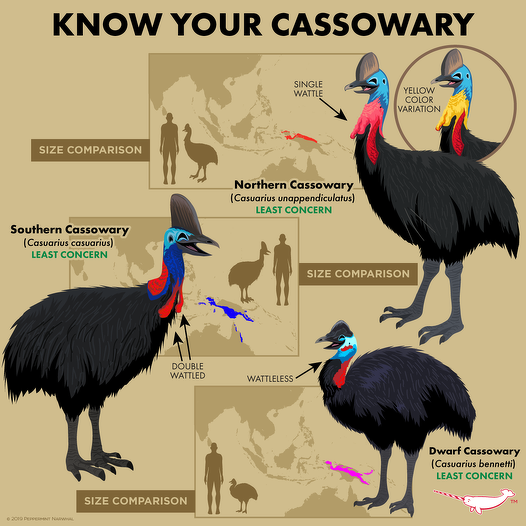
Cassowaries are among the largest land animals in Australia and New Guinea. Bigger than emus and most kangaroos, they are second heaviest bird in the world after ostrichs and the third tallest birds after the ostrichs and emus. Cassowaries stand as tall as a 1.8-meter (6-foot) man and can weigh over 60 kilograms (121 pounds). One shot in 1880 weighed 83 kilograms. Cassowaries can live 40-50 years in the wild. Age has been estimated based on the appearance of the casque (See Below), the size of the footprint, and the presence of wrinkles on the neck.
Cassowaries are large flightless birds. Cousins of emus, they have colorful plumage and live in the rain forests of northern Queensland and New Guinea in both Papua New Guinea and Papua and West Papua in Indonesia, some islands around New Guinea and Seram and Aru Islands in the Moluccas of Indonesia. The family Casuariidae includes three living cassowary species, all of the genus Casuarius. Their previous distribution may have been wider, and the current distribution may not reflect natural ranges, as cassowaries have been hunted and traded by humans for hundreds and maybe thousands of 500 years. [Source: Danielle Cholewiak, Animal Diversity Web (ADW)]
Cassowaries has even described as "monstrous purple turkies." They are prized as a source off food by tribesmen in New Guinea. In addition to There is a lot of variation between different birds ans as many as 17 subspecies of cassowary have been described but none of them are universally recognized. The Australia species, the Southern Cassowary, is the largest. Ostriches, emus and rheas belong the ratite family of big flightless birds.
RELATED ARTICLES:
CASSOWARIES: HISTORY, CHARACTERISTICS, BEHAVIOR AND REPRODUCTION ioa.factsanddetails.com
CASSOWARIES AND HUMANS: HISTORY, SIDE BY SIDE, ATTACKS ioa.factsanddetails.com
SOUTHERN CASSOWARIES: CHARACTERISTICS, BEHAVIOR AND REPRODUCTION ioa.factsanddetails.com
CASSOWARIES OF NEW GUINEA: SPECIES, WHERE THEY LIVE, WHAT THEY'RE LIKE ioa.factsanddetails.com
Bowerbirds
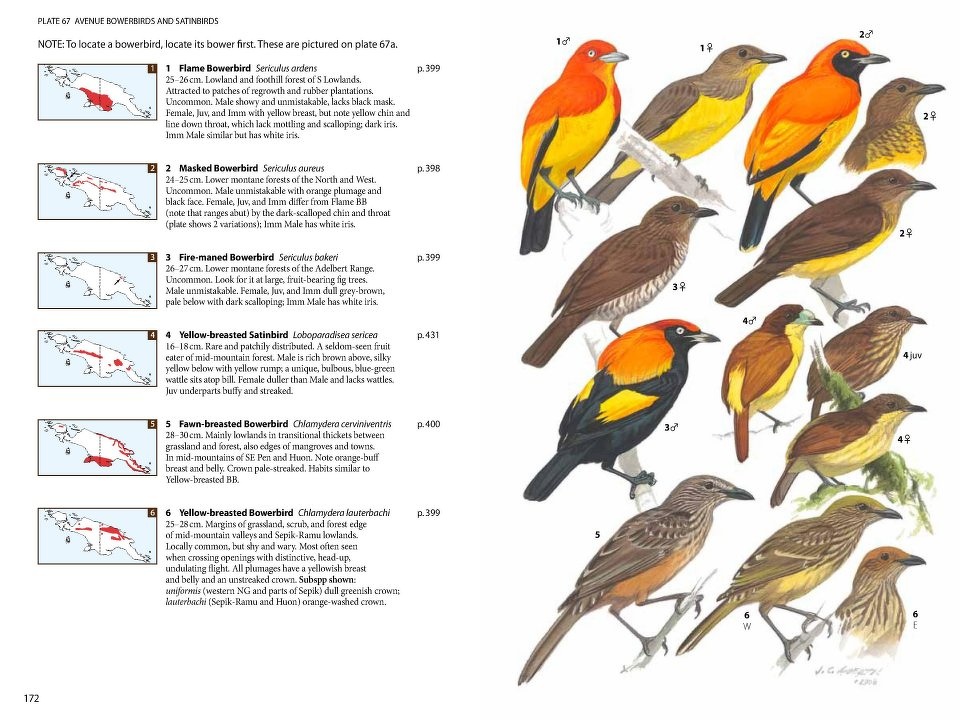
Bowerbirds are stocky, stout-billed bird known for their unusual behavior. Male bowerbirds construct house-like "bowers" to attract females. Bowerbirds, especially females, are rather drab-looking birds. Some have some coloration which they only show during displays. Males of some species are more brightly colored than females and are very promiscuous. One scientist observed a male mate with five females and try to woo ten others.
Bowerbirds are about the size of pigeons and are found only on New Guinea — both Papua New Guinea and Papua and West Papua in Indonesia — and in Australia. Bowerbirds are are found in many of the same places as birds of paradise. Instead of using their feathers for elaborate courtship displays they use objects. A bower is a special construction of twigs used to display these objects. Bowerbirds are considered. Most songbirds have nine to 10 secondary feathers, bowerbirds have more, ranging from 11 to 14. They also have larger lacrimal bones, a trait shared by lyrebirds (Menuridae). Their legs and feet are short, strong, and covered in scales. [Source: Aqua Nara Dakota, Animal Diversity Web (ADW) |=|]
Bowerbirds make up the bird family Ptilonorhynchidae. The family has 27 species in eight genera of which about 20 are recognized as bowerbird. They are medium to large-sized passerines (perching birds). The smallest is the golden bowerbird, which is 22 centimeters (8.7 inches) long and weighs 70 grams (2.5 ounces). The largest is the great bowerbird, which is 40 centimeters (16 inches) long and weighs 230 grams (8.1 ounces). Their diet consists mainly of fruit but may also include insects (especially for nestlings), flowers, nectar and leaves in some species. Satin and spotted bowerbirds are sometimes considered agricultural pests due to their habit of feeding on introduced fruit and vegetable crops and have occasionally been killed orchard owners. [Source: Wikipedia]
RELATED ARTICLES:
BOWERBIRDS: BOWERS, TYPES, DECORATIONS, COURTSHIP DISPLAYS ioa.factsanddetails.com
BOWERBIRD SPECIES: CHARACTERISTICS, BEHAVIOR AND REPRODUCTION ioa.factsanddetails.com
Cockatoos
Cockatoos are parrots. There are 21 species of cockatoo and they belong to the family Cacatuidae and superfamily Cacatuoidea. Along with true parrots (Psittacoidea) and large New Zealand parrots (Strigopoidea), they make up the order Psittaciformes. Cockatoos have a mainly Australasian distribution, ranging from the Philippines and the eastern Indonesian islands of Wallacea to New Guinea, the Solomon Islands and Australia.
Cockatoos are identified by their prominent crests and curved bills. Their plumage is generally white, grey, or black — less colourful than that of other parrots — often with coloured features in the crest, cheeks, or tail. Cockatoos are usually large birds — larger than other parrots, with the exception of cockatiels, the smallest cockatoo species, which are medium-sized. Cockatiels are one of the earliest offshoots of the cockatoo lineage. The remaining species are in two main clades: 1) The five large black-coloured cockatoos of the genus Calyptorhynchus; and 2) the 12 species of white-plumaged cockatoos of the genus Cacatua. The three monotypic genera that branched off earlier are the pink and grey galahs, the mainly grey gang-gang cockatoo and the large black-plumaged palm cockatoo.
Cockatoos are monogamous and nest in tree hollows. Some cockatoo species have suffered from habitat loss and degradation. The clearing of large, mature trees has resulted in a shortage of suitable nesting hollows. Competition between cockatoo species for nesting sites is high, and may result in egg or nestling death when cockatoo individuals fight over a nest. Cockatoos play an important role in the dispersal of seeds for many fruit-bearing trees. Many plant species have evolved methods to attract large, fruit-eating birds to enhance and increase the probability of seed dispersal. [Source: Justine Zingsheim, Animal Diversity Web (ADW) |=|]
RELATED ARTICLES:
article/entry-832.html"> ioa.factsanddetails.com
COCKATOO SPECIES: CHARACTERISTICS, BEHAVIOR AND REPRODUCTION ioa.factsanddetails.com
COCKATOOS: COLORS, DIET, LONG LIFESPANS, DANCING, VOCALIZATIONS, HUMANS ioa.factsanddetails.com
Image Sources: Wikimedia Commons
Text Sources: Animal Diversity Web animaldiversity.org , National Geographic, Live Science, Natural History magazine, Australian Museum, David Attenborough books, Australia Geographic, New York Times, Washington Post, Los Angeles Times, Smithsonian magazine, Discover magazine, The Conversation, The New Yorker, Time, BBC, CNN, Reuters, Associated Press, AFP, Lonely Planet Guides, Wikipedia, The Guardian, Top Secret Animal Attack Files website and various books and other publications.
Last updated September 2025