
Home | Category: Highland and Mainland Ethnic Groups
FLY RIVER

Fly River
The Fly River is the largest river by volume of discharge in Oceania, the largest in the world without a single dam in its catchment, and overall the 23rd-largest primary river in the world by discharge volume. Located in the southwest of Papua New Guinea and in the South Papua province of Indonesia, it is the third longest river on the island of New Guinea, after the Sepik and Mamberamo, with a total length of 1,060 kilometers (660 miles). [Source: Wikipedia]
Rising in the Victor Emanuel Range of the Star Mountains, the Fly River flows through the southwestern lowlands of Papua New Guinea before emptying into the Gulf of Papua in a vast delta. Together with its major tributary, the Strickland River, the Fly–Strickland system extends 1,224 kilometers (761 miles)—the longest river system on any island in the world. The Strickland itself, measuring 824 kilometers (512 miles), is both the largest and most distant tributary of the Fly.
For most of its course, the Fly flows through Western Province, forming for a short distance the international boundary between Papua New Guinea and Indonesia’s West Papua. In this section, the border deviates slightly west of the 141°E longitude line; to compensate, the boundary south of the river lies slightly to the east. Under a bilateral agreement, Indonesia retains the right to navigate the Fly River to its mouth. The river’s principal tributaries are the Strickland and the Ok Tedi. Near its mouth, the Fly experiences a tidal bore, when incoming tides push water upstream until the tide reverses—a phenomenon whose full range remains unmeasured.
The Fly River was first recorded by Europeans in 1845, when Francis Blackwood, commanding HMS Fly, surveyed the western coast of the Gulf of Papua. He named the river after his ship and noted its navigability for small steam vessels.In 1876, Italian explorer Luigi D’Albertis became the first to ascend the river successfully, traveling 900 kilometers inland aboard his steamer Neva—the farthest any European had penetrated into the New Guinea interior at that time.
The Fly River system has faced serious environmental challenges stemming from mining operations. Both the Strickland and Ok Tedi Rivers have been affected by tailings discharge from the Porgera and Ok Tedi mines, respectively. As of 1994, sediment samples from the Fly Delta showed no significant elevation in copper levels. However, in 2008, former Ok Tedi Mining advisor Ian Campbell reported that internal company data indicated large portions of the Fly River floodplain were at risk of acid mine drainage.
RELATED ARTICLES:
KERAKI OF THE TRANS FLY REGION: LIFE, SOCIETY AND SODOMIST INITIATIONS ioa. factsanddetails.com
ETHNIC GROUPS OF THE GREAT PAPUAN PLATEAU AND WESTERN HIGHLANDS ioa. factsanddetails.com
KALULI (BOSAVI): HISTORY, RELIGION, LIFE SOCIETY ioa. factsanddetails.com
NINGERUM PEOPLE OF CENTRAL NEW GUINEA: HISTORY, RELIGION, LIFE, SOCIETY ioa. factsanddetails.com
MOTU — THE PORT MORESBY AREA PEOPLE — AND THEIR HISTORY, CULTURE, LIFE, SOCIETY ioa. factsanddetails.com
ETHNIC GROUPS IN SOUTHERN PAPUA NEW GUINEA: GEBUSI, PURARI, OROKOLO ioa. factsanddetails.com
ETHNIC GROUPS IN SOUTHEAST PAPUA NEW GUINEA: MEKEO, MAILU, WAMIRA ioa. factsanddetails.com
OROKAIVA AND MAISIN PEOPLE OF ORO PROVINCE IN SOUTHEAST PNG ioa.factsanddetails.com
Fly River Ethnic Groups
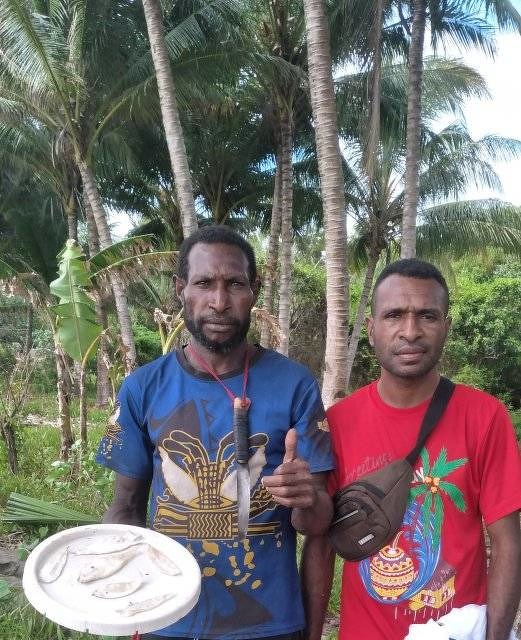
The Fly River region is home to several ethnic groups, including the Boazi, Yei, Gogodala, and Wopkaimin. These groups have distinct cultures, languages, and social organizations. Some have been displaced by conflict or mining operations, which has impacted their traditional lifestyles and territories.[Source: Google AI]
The Gogodala are a fairly large tribe whose territory extends from the Aramia River to the lower Fly River. Anim speakers includes groups like the Tirio, Bitur, Adulu, and Lewada-Dewara who speak languages of the Anim language family and live on the south bank of the lower Fly River.
The Boazi, also known as Boadzi or Suki, are a group of people living in the lagoon areas of the Fly River. The Yei, : Originally from the Fly River area, this group moved westward into what is now Indonesia and later formed new settlements.
The Wopkaimin is a small tribe of the Faiwol people, who traditionally lived in the Star Mountains. The Ok Tedi Mine has severely disrupted their way of life, and they now often live in rotating locations near the mine, in Tabubil, and in villages away from the mine. The Kaeti and Yonggom are refugee groups who have settled in enclaves within the Middle Fly region.
Waruna and Their Sexually-Active Adolescents
The Waruna are a people in Papua New Guinea who live along the north bank of the Fly River in the Middle Fly District of the Western Province near the wide part of the Fly River. They speak the Waruna language, which is part of the Gogodala-Suki language family, and use the larger, neighboring Gogodala language for communication with other groups. Their livelihood is based on fishing, growing crops such as rubber, and raising poultry, and they rely heavily on canoes for transportation and sustenance. Mining pollution has threatened their environment and way of life. [Source: Google AI]
According to the Christian-group Joshua Project the Waruna population in the 2020s was 1,500, with 10 to 50 percent being Christians, and 5 to 10 percent being Evangelicals. The Ari, Waruna extremely small and may no longer be recognizable as a distinct group. According to the Joshua Project their population in the 2020s was 100 and their main language is Ari. About 83 percent of them are Christian and to 10 to 50 percent are Evangelicals. [Source: Joshua Project]
The self-reported literacy rate in the region where the Waruna live is around 71.8 percent for males and 60.7 percent for females, but there are no written materials in the Waruna language. In addition to mining pollution, the Waruna face challenges from infrastructure development projects, logging, land disputes, and a lack of access to basic services like education and healthcare.
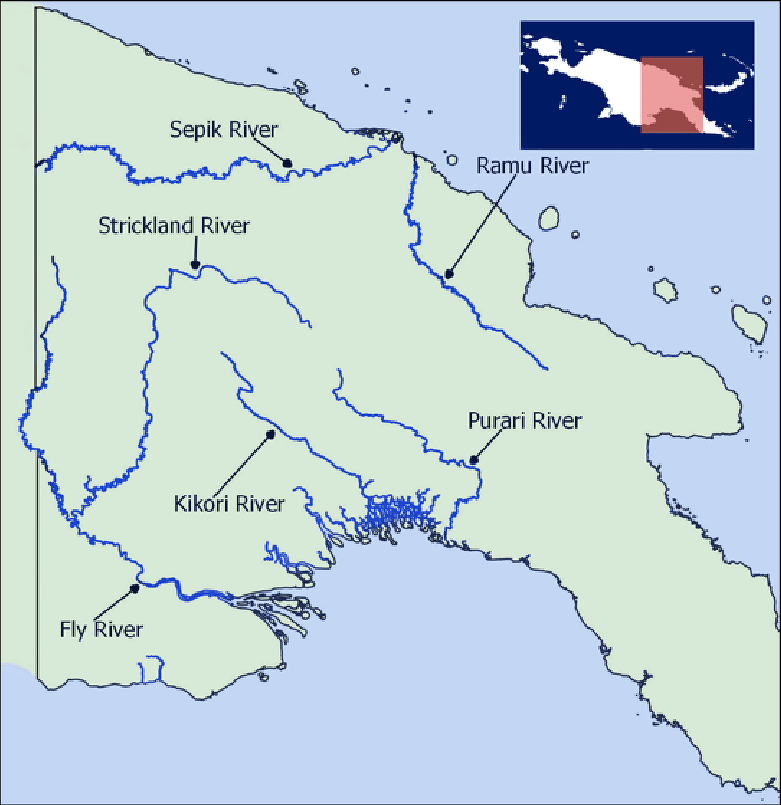
Major rivers of Papua New Guinea
According to “Growing Up Sexually”: “Girls are quite free sexually before marriage, and promiscuous intercourse between young people is the rule. The girls do the asking, and they will ask a boy to sleep with them, and he will come to their parents’ or brothers’ house to have connection. If a boy goes to a girl who has not asked him, he may have his way or may not, but in either case the girl will shun that boy afterwards and will also tell her friends he is no good”. [Source: Frazer, J. G. / Liston-Blyth, A. (compil.)(1953) Notes on Native Customs in the Baniara District (N.E.D.), Papua, J Royal Anthropol Instit Great Britain & Ireland 53:467-71, at p. 468, “Growing Up Sexually. Volume I” by D. F. Janssen, World Reference Atlas. 0.2 ed. 2004. Berlin: Magnus Hirschfeld Archive for Sexology, Berlin, June 2005]
“Marriages are arranged by the parents, when the children are very young. After the two families have settled this, the children, even if still in arms, are what is called in Motuan Mahenta, and locally as Bobeia, which means, roughly, engaged, and they are spoken of, even as infants, as husband and wife…When the marriage is to be ratified [not invariably so], the boy takes the girl to his father’s house and sleeps with her, without touching her…No sexual intercourse is permitted the bride and groom till they have planted two gardens, and fattened up a pig and sold it (that is to say, for one year after marriage. …when a feast is given the girl has connection with a man not her husband and is then free to the husband”. Paradoxically, “the woman has invariably been deflowered before marriage, and in fact they prefer such a woman to be a virgin”.
“Before children come to puberty no clothes are worn at all. When a boy is getting near puberty families meet and arrange — another family have a girl coming on, and they are approached and arrangement made for a combined feast. The maternal uncles decorate the children and they are given dance ornaments, and a dance is arranged. The boy is told during the dance to take the girl and have connection with her; the dance lasts all night, and whilst the people dance outside the boy “has” the girl in his parents’ house…this connection has no effect on future marriage, and has nothing to do with it — it is merely initiation. The dance may last several days, and advantage is taken of it to initiate all children who can be. However long the dance lasts the two children only copulate once. This is called Iarata, and all boys initiated are called Iarata. Circumcision is not practiced”. Menstruation is explained by copulating moons — “small girls are held up to the moon, and told that the moon will have them first and afterwards their husbands”.
Gogodala
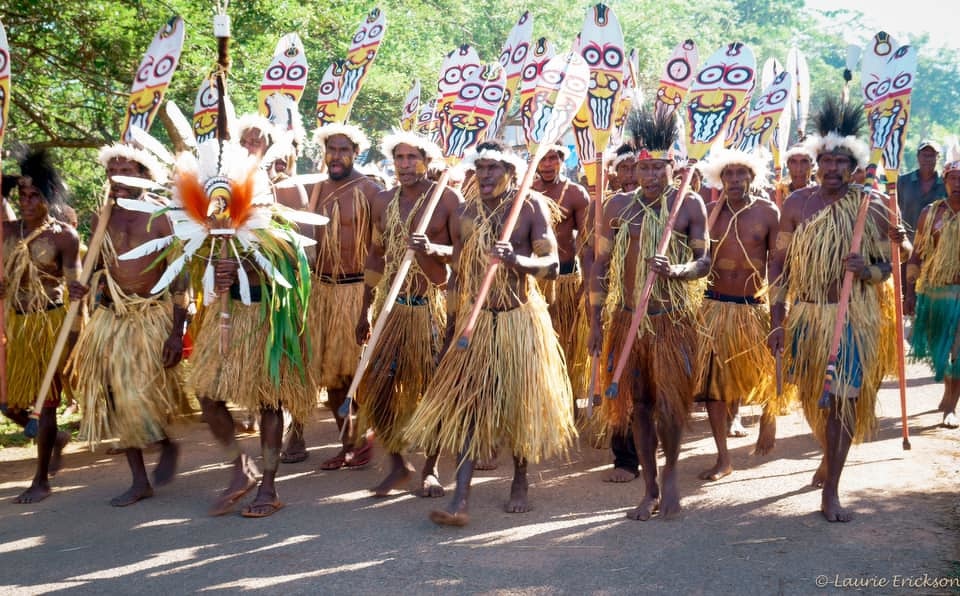
Gogodala in ceremonial clothes
The Gogodala, also known as the Girara, Gogodara, or Kabiri, live across the swampy floodplains of the Middle Fly District near the Aramia and lower Fly Rivers in Western Province, Papua New Guinea. They are traditionally a canoe-using river people, relying heavily on hunting, fishing, and sago palms for subsistence. Earlier names for the group arose from misunderstandings of local terms—girara meaning “language” or “speech,” and Kabiri referring to a small creek. The origin of the name Gogodala itself remains uncertain. [Source: Terence E. Hays, “Encyclopedia of World Cultures, Volume 2: Oceania,” edited by Terence E. Hays, 1996; Wikipedia, Google AI]
According to the Joshua Project, the Gogodala population in the 2020s numbered around 33,000. Earlier estimates suggested about 25,000 in the early 2000s and only 7,000 speakers in the 1990s, a significant recovery from the early twentieth century when their numbers were reported as low as 5,000 (1916). Traditionally, the Gogodala lived in 33 villages, most along the Aramia River, with a few on the north bank of the Fly. Their homeland consists of a flat, flood-prone landscape—a mosaic of swamps, waterways, and grasslands dotted with low ridges where villages are built. During the wet season (December–May), heavy rainfall (about 216 cm annually) submerges much of the land, leaving canoes as the only means of transport. The area teems with birdlife and game—including wallabies, cassowaries, wild pigs, and deer—as well as the ever-present mosquitoes.
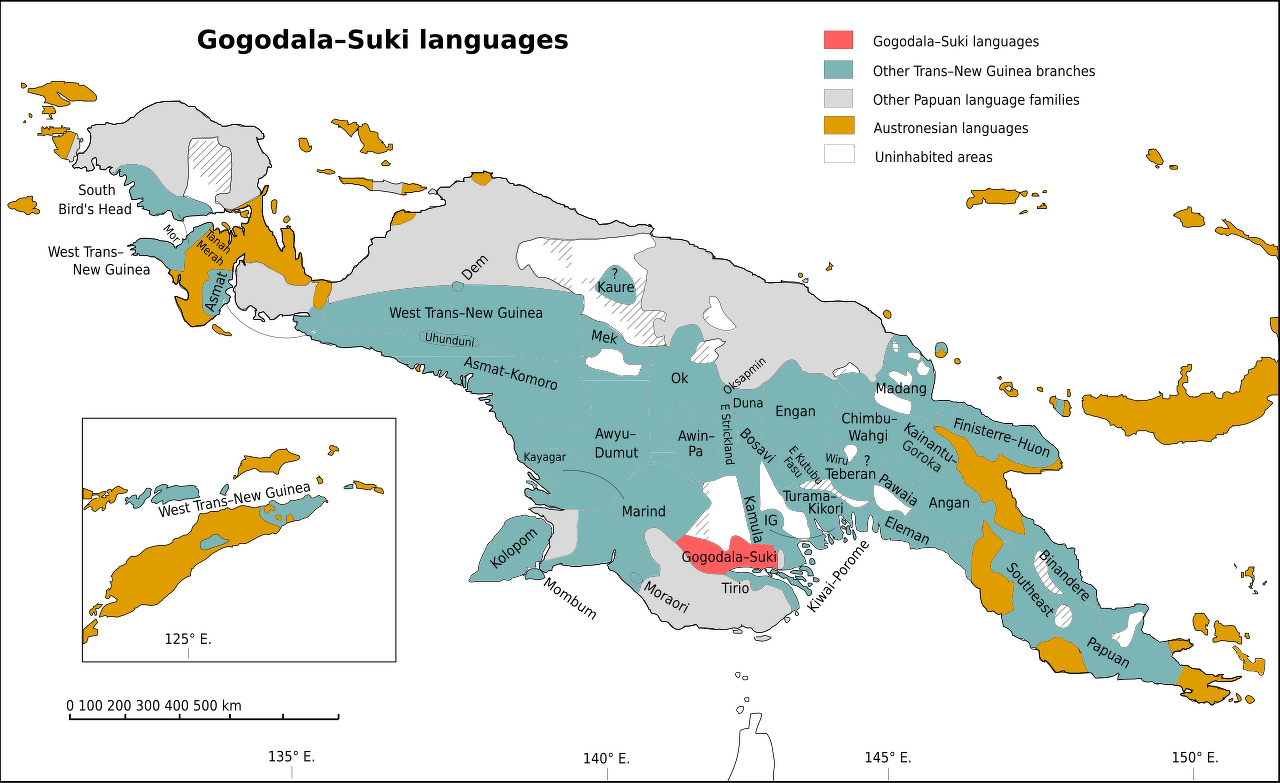
Gogodala Language is Non-Austronesian, belonging to a small family whose only other member is Ari-Waruna, which Gogodala people understand but do not speak. Linguistic ties link them with the Suki people within the Trans–New Guinea phylum. Today, most Gogodala also speak Tok Pisin, and many are fluent in English.
History and Origins: According to oral tradition, the ancestors of the Gogodala arrived in the region in large canoes after years of migration along the Fly River. They settled along the Aramia River, drawn by its abundance of sago, fish, and wild game. Each clan traces its lineage to one of these ancestral canoes, which are remembered as both spiritual and genealogical symbols of origin. The Gogodala share physical and cultural features with the Trans-Fly peoples of southwestern New Guinea.
Before government control in about 1912, wars arose from vendettas between Gogodala communities and disputes with the Kiwai and other peoples north of the Aramia River. Although head trophies were taken, the Gogodala did not practice cannibalism. Traditionally, disputes arose over land or women, and at moots, everyone was free to voice their opinions. Subsequent truces or agreements were celebrated with races between clan-owned canoes. Before colonial pacification, trade was limited due to hostility with neighboring groups, including cannibal tribes to the north and south. Once peace was established, the Gogodala began trading European goods with the Kiwai people of the Fly River for stone adze blades sourced from the Torres Strait. Inter-village trade flourished as well, involving tobacco, bird-of-paradise plumes, ornaments, and daggers, with coastal villages supplying shells and marine items.
Most early information on their traditional life comes from brief government visits between 1910 and 1916, and from the fieldwork of Swiss anthropologist Paul Wirz in 1930. In 1934, the Unevangelised Fields Mission (now the Asia Pacific Christian Mission) established a station in Gogodala territory. Two years later, mass conversions led to the destruction of traditional art and ceremonial objects. During World War II, outside contact ceased, but missionary activity resumed strongly in the 1950s and 1960s, leading to the abandonment of traditional longhouses and major social transformation. A cultural revival in 1972 marked a turning point: a new longhouse was built at Balimo—site of the first mission station—as the Gogodala Cultural Centre, serving as a museum, educational space, and proud expression of ethnic identity.
Gogodala Religion: Christianity, Judaism and Animism
The Gogodala have a complex religious history. According to the Christian-group Joshua Project 95 percent are Christians, with the estimated number of Evangelicals being 10 to 50 percent. Alongside Christianity, they developed a unique spiritual identity blending traditional beliefs with elements of Judaism. This fusion reflects both their openness to new faiths and their desire to root these within their own origin traditions.
The Gogodala that believe they are one of the lost tribes of Israel claim descent from ancestors who came from Jerusalem, which they call Yabis Saba. They see the Torah as their ancestral story, and traditional dances are said to recount their exodus and eventual return. In keeping with this belief, some Gogodala wear yarmulkes and prayer shawls, and celebrate Jewish festivals such as Passover. Scholars and missionaries have noted that segments of the community appear to be moving toward a fuller embrace of Judaism, integrating it alongside or even within their Christian faith.
The arrival of Christianity in the 1930s–1950s led to the emergence of a syncretic belief system, merging Christian and traditional spiritual concepts. Early missionaries from the Unevangelised Fields Mission replaced much of the old ceremonial life, yet Gogodala spirituality adapted rather than vanished. In many communities, Christian blessings are incorporated into ancestral spirit ceremonies, illustrating how faith and culture have become intertwined.
Traditional Religion: Before conversion, Gogodala spirituality centered on ancestral totems—notably the snake, crocodile, pig, bird of paradise, hornbill, eel, hawk, and cassowary—which served as clan emblems and were displayed on canoes, weapons, and ceremonial objects. A general spiritual force was believed to govern the world, accessible through carved effigies placed around longhouses and gardens to ensure health, fertility, and protection.
Traditional ceremonial life was once rich and communal. Men’s initiation rituals, known as the aida cult, united the males of a village and neighboring longhouses in a secret society. Ceremonies marked first menstruation rites for girls, male initiations, and major feasts, often accompanied by kava drinking. Canoe races symbolized both rivalry and unity between clans. These practices largely disappeared under missionary influence, but the Gogodala Cultural Centre—founded in Balimo in 1974—has since revived aspects of these ceremonies in new, syncretic forms blending tradition and modern identity. Illness and death were traditionally seen as results of spiritual attack or sorcery. People wore protective charms, and effigies were erected to repel harmful spirits. When spiritual means failed, medicinal plants—mostly used as external treatments—were employed. Since World War II, mission clinics have introduced Western medicine, though traditional healing knowledge persists.
Death and Afterlife: Mourning customs were distinctive: relatives of the deceased wore coarse net veils covering the head for up to a year. The dead were buried facing east, and if the deceased was male, an effigy was placed in his garden to prevent theft until a communal feast was held, during which his pigs and garden produce were consumed. The soul was believed to depart with the rising sun the day after death, journeying westward to its final resting place.
Gogodala Society and Family
Gogodala society was traditionally organized into two moieties, each composed of four clans, providing a dualistic framework that shaped marriage rules, ceremonial cooperation, and intercommunity relations. Each of the eight clans is exogamous and totemic, represented by its own ceremonial canoe adorned with distinctive totemic insignia. According to origin traditions, the eight clans trace their descent from Ibali, the ancestral father of the Gogodala, who bestowed a powerful canoe upon each of his eight sons—the founding ancestors of the clans. Within each clan, people are further divided into subclans (or “canoes”), each tracing lineage to its own founding ancestor. Among Gogodala men, personal strength and capability are expressed through kamali, a vital force believed to dwell in the blood. Kamali signifies both physical energy and moral vigor—it is visible in a man’s productivity, craftsmanship, and cooperation in communal work such as house building, sago processing, hunting, and gardening.[Source: Terence E. Hays, “Encyclopedia of World Cultures, Volume 2: Oceania,” edited by Terence E. Hays, 1996; Wikipedia]
Kinship and Descent: Descent is patrilineal, and a person’s clan membership, rights, and obligations are inherited through the male line. Land, lagoons, and sago swamps are clan-owned and subdivided among subclans. A man cultivates gardens and hunts on the land of his own clan, while a woman fishes in the territory of her husband’s clan—though she may also have access to her father’s clan waters. A man bequeaths his land and property to his sons, or to his brothers if he has none; daughters do not inherit, though widows may continue to use their husband’s land.
Marriage and Family: Traditional marriage followed a system of sister exchange, with strict prohibitions against marrying within one’s own clan, a mother’s or father’s mother’s clan, or among one’s father’s sister’s children. Polygyny was once common but is now rare, and divorce was historically uncommon. In the past, all members of a community lived together in the longhouse, though husbands and wives slept separately. Today, families maintain separate living quarters but still work cooperatively in their daily tasks. Men garden and hunt, women fish and process sago, and families often spend long periods together in the bush gathering materials or tending gardens.
A child’s early upbringing combines affection and autonomy. Mothers and older sisters care for infants, while fathers show tenderness in early childhood but later become more distant as sons gain independence. From an early age, children imitate adult roles—boys build and race small canoes and accompany their fathers to gardens and hunts, while girls join their mothers in the sago swamps and learn to fish. Fathers teach practical skills, while a boy’s maternal uncles instruct him in the ritual secrets of manhood and clan life.
Kinship Terminology follows the Hawaiian (generational) type, distinguishing relatives primarily by generation and gender rather than by lineage branches. All men of the parental generation are addressed as “Father,” and all women as “Mother.” Similarly, all males of one’s own generation—brothers and cousins alike—are “Brother,” and all females “Sister.” This system reflects the Gogodala’s emphasis on communal identity and equality, consistent with the egalitarian ethos described by anthropologist Paul Wirz, who found no evidence of formal leadership or hereditary chieftainship.
Gogodala Life, Villages and Art
The Gogodala have traditionally lived in villages built on ridges above expansive lagoons, using brightly painted dugout canoes as their main mode of transport across the swampy lowlands. These canoes are central to daily life, serving for fishing, collecting firewood, carrying materials, and transporting people and produce. As Wilde (2004) notes, the Gogodala even describe themselves as metaphorically “being inside” their clan canoe — a symbol of both identity and unity. The tribe’s villages are strategically located along waterways, providing access to fishing, fresh water, and extensive travel routes through the maze of rivers and channels.[Source: Terence E. Hays, “Encyclopedia of World Cultures, Volume 2: Oceania,” edited by Terence E. Hays, 1996; Wikipedia]
Traditionally, the Gogodala diet has centered on sago palm, fish, and wild game, supplemented by the raising of pigs. Houses were once made entirely of palm materials with thatched roofs, though metal sheeting is increasingly common today. Until the mid-20th century, Gogodala villages were dominated by a single massive communal longhouse, often more than 100 meters in length and standing several meters above the ground. The largest, built at Isago in the 1950s, measured 127.7 meters and stood three stories high before being dismantled in 1979. These towering structures had distinct gendered spaces — men entered from the ends and slept on elevated platforms, while women entered from below, sharing the lower level with pigs and storage areas. Gardens surrounded the longhouses, laid out along the slopes of nearby ridges. Since the 1960s, communal longhouses have given way to smaller rectangular family dwellings made of split palm and sago thatch, or increasingly, corrugated iron.
The Gogodala are renowned for their craftsmanship, particularly in wood. Everyday tools such as bows and arrows, digging sticks, canoe paddles, nets, and wicker traps are made from local materials. Women traditionally wore grass aprons and made fiber bags and nets. Although the region has ample clay, pottery was never part of Gogodala material culture. Instead, their artistry found expression in elaborately carved house posts, canoe prows, and decorative objects — some canoes measuring up to 12 meters long. Traditionally, Gogodala men made their own tools, built houses, and hunted, while women focused on food preparation, fishing, weaving, and domestic work. Wild piglets captured during hunts were tended by women. Boys learned woodworking from an early age, and those with special skill were apprenticed to master craftsmen and artists, who, though living ordinary lives, held a respected position within the community.
With the arrival of missionaries in the early 20th century, many traditional practices were suppressed. Smoking tobacco, drinking kava, and participating in male initiation rituals — particularly those connected to the Aida ceremonies — were banned. Missionaries, along with newly converted Gogodala Christians, actively promoted the destruction of ritual objects and sacred artworks deemed incompatible with Christian belief (Dundon 2002).
Arts: Before missionary influence, the Gogodala were celebrated for their intricate woodcarvings and richly painted ceremonial objects. Their art — among the most abstract and individualistic in the Gulf of Papua region — adorned every aspect of daily life: longhouse posts, ladders, canoes, paddles, drums, and ancestral effigies. Typically carved from lightweight wood and cane, their sculptures and masks displayed bold concentric designs and asymmetrical extensions, symbolizing spiritual and ancestral forces. These creations were not merely decorative but integral to religious life, meant to invoke ancestral intervention in worldly affairs. Following the suppression of traditional religion in the 1930s, much of this artistic heritage was lost. However, since the 1970s, Gogodala art has experienced a revival, with contemporary artists blending traditional motifs with new forms of expression. Many now produce their work for sale, and some have exhibited internationally — as far afield as West Germany — carrying forward the distinctive legacy of Gogodala creativity.
Gogodala Economic Activity
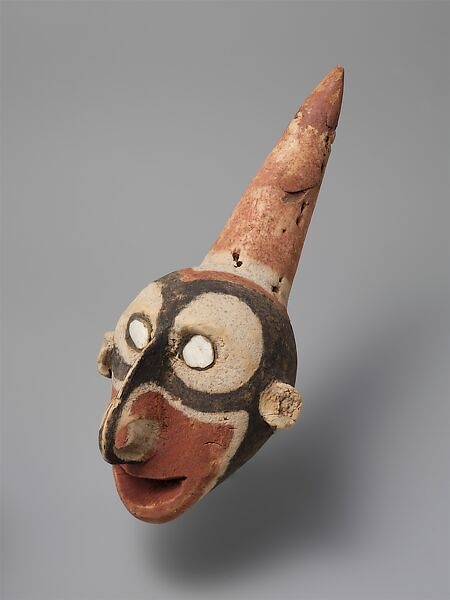
Gogodala Ganabi (Head), early 20th century, Metropolitan Museum of Art
In Gogodala society, labor is clearly divided along gender lines, with work centered around extended family units. Both men and women contribute to the household economy and assist one another when needed, but their roles remain largely distinct. Men engage in activities such as paid employment in the nearby town of Balimo, as well as hunting, gardening, building houses, constructing canoes, clearing land, and cutting grass. Women, on the other hand, are responsible for domestic and subsistence tasks — child-rearing, cooking, fishing, preparing sago, weaving sago bags and grass mats, making fishing baskets, gathering firewood and bush materials, caring for animals, and maintaining the household (Wilde 2004). [Source: Terence E. Hays, “Encyclopedia of World Cultures, Volume 2: Oceania,” edited by Terence E. Hays, 1996; Wikipedia]
Fishing — using nets, traps, and plant poisons — provides a vital protein source, while hunting yields game for food and ceremonial exchange. Woodcarving has also become a major source of income, with artisans selling carvings locally and abroad. While many Gogodala aspire to the conveniences of town life — money, clothes, food, houses, water tanks, electricity, and store-bought goods — they also recognize the cost of these modern desires. As Wilde (2004) observed, “town people lament the loss of freedom afforded by the village lifestyle.”
Agriculture: Sago is the staple food and a cornerstone of Gogodala subsistence and culture. Women are primarily responsible for every stage of its production — from cutting down the palms to extracting, washing, and cooking the sago flour. Because Gogodala villages are situated near lagoons and swamps ideal for sago palms, women often travel long distances to harvest and process it (Dundon 2002). Oral traditions tell of a male ancestor who first introduced sago to the people and cultivated it for communal use. Properly eaten, sago is believed to give energy and vitality, symbolizing both nourishment and cultural identity.
Beyond sago, Gogodala gardens supply yams, taro, cassava, breadfruit, bananas, coconuts, and sugarcane. Newer crops like sweet potatoes, pumpkins, corn, and cucumbers have been introduced in recent decades. Kava (Piper methysticum) was once grown in specially manured beds and remains in use despite missionary discouragement.
Boazi
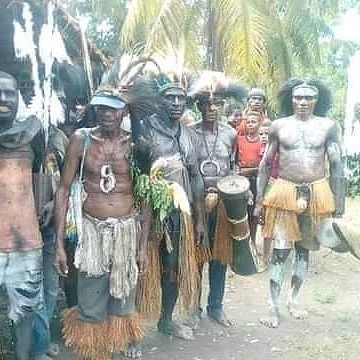
The Boazi are an Indigenous group of about 2,500 people living along the middle reaches of the Fly River and the northern and central shores of Lake Murray in the southern lowlands of Papua New Guinea. Also known as the Boadzi and Suki, they are comprised of eight territorial groups that share a common language, history, and culture. The Lake Murray–Middle Fly region is a vast floodplain of rivers, lagoons, and sago swamps surrounded by low forested ridges. The area receives heavy rainfall, especially during the northwest monsoon from December to April, creating ideal conditions for sago cultivation. The term Boazi refers both to their language and, more recently, to the collective identity of these groups—a concept that emerged during the colonial period. [Source: Mark Busse, “Encyclopedia of World Cultures, Volume 2: Oceania,” edited by Terence E. Hays, 1996]
Language: Boazi is part of the Boazi language family (related to Zimakani) within the Trans–New Guinea Phylum. It has three main dialects: Kuni (Lake Murray), North Boazi, and South Boazi (Fly River).
History: Boazi oral traditions describe long residence in the Lake Murray–Middle Fly area, marked by intergroup warfare and conquest. The first European contact occurred in 1876 during Luigi d’Albertis’s Fly River expedition. Dutch Catholic missionaries arrived in the 1930s, pacifying the region and ending traditional warfare and headhunting. The Boazi became citizens of Papua New Guinea in 1956.
Religion: Today, Boazi belief blends Christianity with traditional animism. People acknowledge forest and marsh spirits, ghosts of the dead, and location-specific spirits that can bring good or harm. Knowledge of sorcery and magic is open to both men and some women. Ceremonies such as tame-pig feasts and mourning rites remain important cultural events.
Boazi Society and Life
Boazi
Boazi society is patrilineal and organized into lineages, totemic groups, and two moieties—one of land-animal totems and the other of water-animal totems. Marriage traditionally involved sister exchange between opposite moieties, with uxorilocal residence (the husband living with his wife’s family) until several children were born. [Source: Mark Busse, “Encyclopedia of World Cultures, Volume 2: Oceania,” edited by Terence E. Hays, 1996]
The Boazi were historically egalitarian, though men held more authority. The only formal leader was the war leader (kamok-anem), chosen for bravery. Today, villages elect representatives to local government councils. Historically, conflict—especially over land or women—was frequent, though now largely suppressed by state law and Christianity.
Families are nuclear but may include extended relatives. Children are raised by mothers and older sisters and are encouraged to be independent and resilient. Boys enjoy freedom until marriage, while girls assume domestic duties by age ten.
Villages range from 50–600 people, built on low islands or peninsulas near swamps. Families alternate between village life and sago camps. Unmarried men traditionally slept in separate men’s houses that also stored sacred cult objects.
Economic Activity: The Boazi are expert hunters, fishers, and sago makers. Their environment supports wild pigs, cassowaries, deer, wallabies, and abundant bird and fish species. Sago—their staple food—is extracted from palm trees, while coconuts, bananas, and small gardens supplement the diet. Trade once involved raiding for stone tools, but today people sell crocodile skins and local crafts for cash.
Traditional tools were made of stone, bone, and wood. Men carved canoes, paddles, and hunting gear, while women made mats, baskets, and roof panels from sago palm leaves. Representational art was rare, though ceremonial headhunting trophies and musical performances with drums and bullroarers were once common.
Fly River Delta and Kiwai Island
The Fly River Delta, one of the largest in Papua New Guinea, spans more than 100 kilometers (63 miles) across at its seaward entrance but narrows to about 11 kilometers (7 miles) at its apex, just upstream from Kiwai Island. From this apex, three major distributary channels—the Southern, Northern, and Far Northern Entrances—branch outward, separated by long sand–mud islands stabilized by dense mangrove forests. These islands are highly dynamic, eroding and rebuilding rapidly near the apex, where lateral migration can reach 150 meters per year, though those farther seaward shift more slowly.In tidal areas, vegetation consists almost exclusively of mangroves and nipa palms, but further inland there are large freshwater swamps and dry savannas. [Source: Wikipedia]
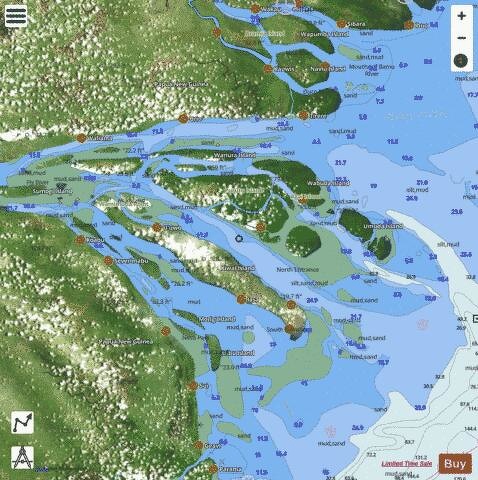
Nautical chart of the Fly River Delta GPS Nautical Charts
The delta is a mosaic of low, swampy mangrove and nipa palm islands with fertile alluvial soils like the banks and coastlines near the mouths of the rivers in the area. Major islands include Kiwai, Purutu, Wabuda, Aibinio, Mibu, and Domori, of which Kiwai, Wabuda, and Domori are inhabited. Upstream from the delta’s apex, the Fly River narrows to about 1.6 kilometers in width. In plan view, the delta forms a distinctive funnel shape sculpted primarily by strong tidal action. The mean spring tidal range increases from roughly 3.5 meters at the mouth to 5 meters at the apex. Geological studies show that the delta is advancing seaward at about 6 meters per year, making it a classic example of a tide-dominated delta and a benchmark for sedimentologists studying similar ancient systems.
Kiwai Island, the largest island in the Fly River Delta, measures about 59 kilometers (37 miles) in length and up to 9 kilometers (5.6 miles) in width, covering an area of roughly 359 square kilometers (139 sq mi). It separates the north and south entrances of the Fly River. The island is densely wooded and lies only a few feet above sea level. The main village, Iasa, is located on the island’s southern side, with Sumai about 24 kilometers (15 miles) farther northwest and Doropo midway along the north coast. Smaller settlements—Sagasia, Ipisia, Agobara, and Oromosapuo—are found toward the eastern end. Administratively, the island falls within the Kiwai Rural Local-Level Government area of South Fly District, Western Province. Vegetation varies by elevation and salinity: mangroves and nipa palms dominate tidal zones, while freshwater swamps and dry savannas occupy the interior. The region receives about 200 centimeters (79 inches) of rainfall annually, most of it during the northwest monsoon (December to April), when daily rain, thunderstorms, and high winds are common.
Kiwai People
The Kiwai live between the Pahoturi and Fly rivers and on the islands and river banks of the estuaries of the Fly and Bamu rivers. They speak the Kiwai language and rely on subsistence farming, fishing, and hunting. Their culture is rich in oral traditions, ceremonies, and craftsmanship, particularly in canoe-making and wooden carvings. Almost all of what we know about these people comes from the work of Gunnar Landtman, who lived among the Kiwai of Kiwai Island in the Fly River Delta for two years from 1910 to 1912 and whose major descriptions were published in 1917 and 1927. [Source: Mark Busse , “Encyclopedia of World Cultures, Volume 2: Oceania,” edited by Terence E. Hays, 1996 ~]
According to the Christian-group Joshua Project the Southern Kiwai population in the 2020s was 26,000.In 1980, the Kiwai population was estimated at about 13,400, including 7,800 Southern Kiwai, 2,000 Wabuda, and 3,600 Bamu Kiwai speakers—roughly 2.5 people per square kilometer. Earlier population data and trends are unreliable.
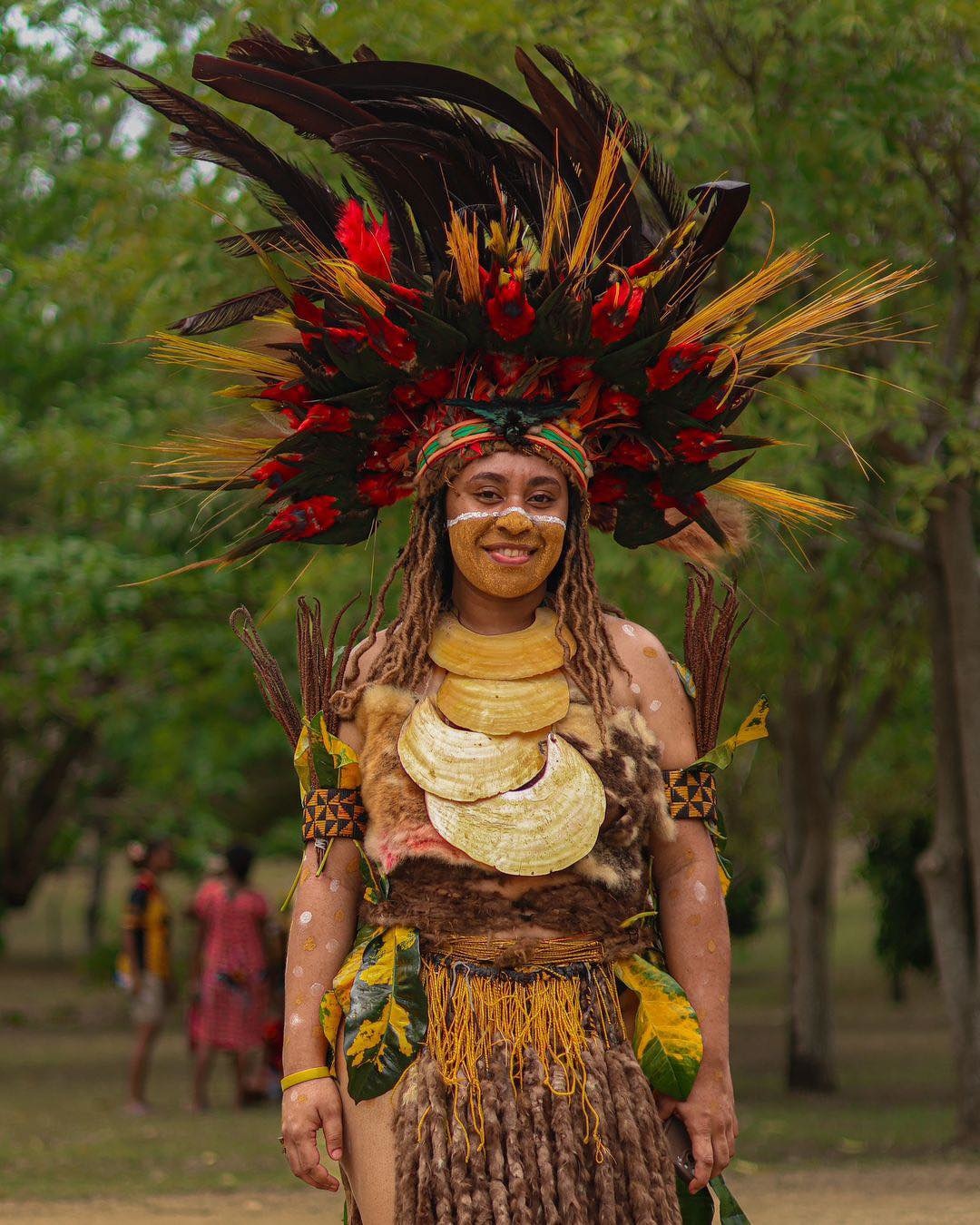
Kiwai girl
Kiwaian Language Family, identified by Stefan Wurm, includes seven related languages: Southern Kiwai, Wabuda, Bamu Kiwai, Morigi, Kerewo, Arigibi, and Northeastern Kiwai. These form part of the Trans-Fly stock within the Trans–New Guinea language phylum, though Wurm classified them as “aberrant members,” suggesting their similarities may reflect contact and borrowing rather than shared ancestry. Kiwaian languages also show close ties with the Ok and Awin-Pa language families of the Upper Fly region.
History: Ethnographically, the Kiwai share broad cultural traits with the Marind-anim to the west and the Gogodala to the northwest. Archaeological finds include some of the largest stone axes ever discovered, believed to have served as ceremonial grave markers. Most of these were made of igneous rock originating from the Torres Strait Islands, indicating a long-standing trade network between Kiwai Islanders and Torres Strait Islanders—stone axes exchanged for large seagoing canoes.
Before pacification, clan-based warfare and revenge killings were common, often sparked by disputes over women. Retribution for homicide was the duty of the entire clan, though today such conflicts are settled through compensation payments rather than violence. European contact began in 1842 when the mouth of the Fly River was charted. By the late 19th century, the Kiwai regularly interacted with traders, missionaries, and labor recruiters, and by 1910 many men spoke Tok Pisin and worked on Torres Strait pearl boats or plantations along the Papuan coast. The area became part of British New Guinea in 1884, later the Australian Territory of Papua (1905), and since 1975 has been part of independent Papua New Guinea.
Kiwai Religion and Culture
According to the Christian-group Joshua Project 97 percent of Kiwai are Christians, with the estimated number of Evangelicals being 10 to 50 percent. Traditional Kiwai religion is unsystematic but filled with numerous supernatural beings—water spirits, malevolent female entities, and guardians of specific places. Nearly every notable feature in the landscape is thought to house a spirit, humanlike or animal in form. Central to their mythology is Sido, the first man to die, who opened the way to Adiri, the land of the dead. [Source: Mark Busse , “Encyclopedia of World Cultures, Volume 2: Oceania,” edited by Terence E. Hays, 1996 ~]
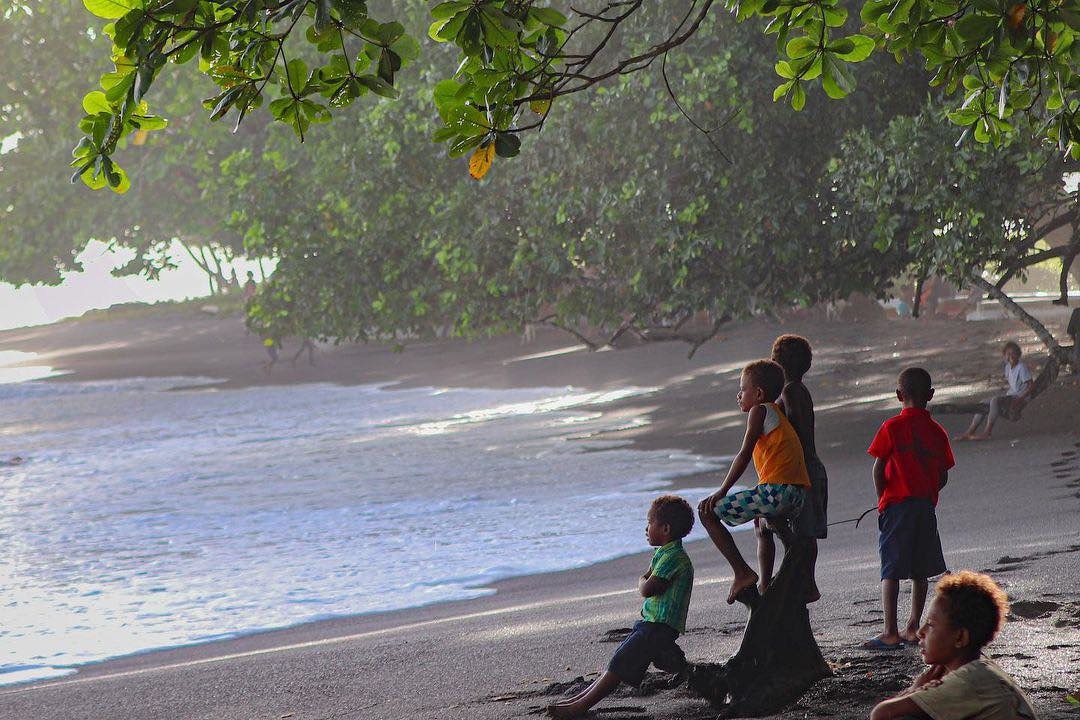
in the Fly River Delta
The Kiwai have no priests or formal training for ritual work. Sorcery is learned individually, and sorcerers are paid well—often with sexual favors. Success in daily life is believed to depend on magical practice. Sorcerers use personal materials such as hair or nail clippings to harm or influence others. Illness is attributed to sorcery, spirits, comets, or earthquakes. Remedies include bleeding the affected area and feeding patients “strong” foods such as pig or shark meat, while soft or taboo foods like bananas, turtle, and dugong are avoided. Contact with anyone recently sexually active is also avoided, as it is thought to weaken the sick.
Ceremonies and Art: The Kiwai observe many rituals—from pre-battle ceremonies to initiations that instill fearlessness and strength. 1) The Hóriómu, held annually at the start of the dry season, honors the dead. 2) The Mogúru, their most secret ceremony, provides sexual instruction for adolescents and involves preparing a potent magical mixture. 3) The Mimía, or fire ceremony, marks male initiation through symbolic burning, beating, and the application of strengthening substances. Kiwai art is highly representational, often carving human figures even on tools. They produce drums, rattles, whistles, panpipes, flutes, shell trumpets, Jew’s harps, and bullroarers, and craft ceremonial masks from wood and turtle shell.
Death and Afterlife: After death, wailing begins immediately. The corpse is painted, decorated, and displayed before being placed on a platform outside the village. Once decomposed, the bones are cleaned and buried in the deceased’s garden; sometimes the skull is kept and decorated. Widows undergo seclusion and wear mourning dress made of grass, while widowers mourn through abstinence. Spirits may linger near their homes, deliver messages through dreams, or possess the living, with the ghosts of sorcerers and violent deaths especially feared.
Kiwai Society and Family
Kiwai society is largely egalitarian, with no formal ranks or chiefs. Status comes from personal skill and achievement — respected men include expert hunters, gardeners, orators, warriors, and sorcerers. People with disabilities or those considered idle or boastful are looked down upon. Women hold nearly equal status, controlling their own property and labor, though they are excluded from men’s religious knowledge and rituals. Political authority rests with clan heads, middle-aged men known for their ability and wisdom. Leadership is collective and temporary, fading as a man’s strength declines. [Source: Mark Busse , “Encyclopedia of World Cultures, Volume 2: Oceania,” edited by Terence E. Hays, 1996 ~]
The nuclear family is the main productive unit, though clan members traditionally lived together in the móto (men’s longhouse). Children are nursed until they speak and undergo ear and nose piercing in early childhood. Boys are gradually introduced to men’s ceremonies, culminating in the Mogúru initiation, after which they sleep in the men’s house. Girls are initiated at menarche with bathing and procession rituals marking their readiness for marriage.
Marriages traditionally were arranged through exchange of women between families, though bride-wealth payments later became common. Reciprocal gifts affirmed prestige and social ties. Marriages often occurred soon after puberty, with exogamy strictly observed — people could not marry within their totemic clan or close kin. There was no formal ceremony, but feasts marked the union. The wife moved to her husband’s home, and polygyny, while permitted, was rare. Divorce was common, often due to infertility or poor household management.
Kinship: The Kiwai are organized into patrilineal totemic clans, each strictly exogamous; some regions also recognize ritual moieties. Married women remain members of their natal clan. Descent and inheritance follow the male line, with sons receiving their father’s land and property. Kinship follows a Hawaiian system, classifying relatives mainly by generation and gender. All men of the parental generation are called “Father,” all women “Mother,” and all cousins are “Brothers” or “Sisters.”
Kiwai Life, Villages and Economic Activity
The Kiwai practice a mixed subsistence economy based on gardening, fishing, and hunting. They grow yams, taro, sweet potatoes, bananas, coconuts, sago palms, and sugarcane, and hunt pigs, cassowaries, and wallabies with dogs, as well as crocodiles, turtles, and dugongs using harpoons. Fish are caught with hooks, spears, and traps, and modern nylon nets are now common. [Source: Mark Busse , “Encyclopedia of World Cultures, Volume 2: Oceania,” edited by Terence E. Hays, 1996]
Villages of 50–500 people are built near the water. Traditionally, families lived in large communal houses (móto), while unmarried men stayed in men’s houses (dárimo). These long, raised palm structures have largely been replaced by smaller single-family homes of palm and thatch.
The Kiwai once used only stone tools but now rely on steel and other imported goods. Trade was extensive: inland groups exchanged feathers, cassowaries, and produce for Kiwai canoes, sago, and mats, while Torres Strait Islanders traded shells, meat, and stone tools. Canoes were their most valued trade item.
Labor is divided loosely by gender. Women gather, prepare sago, cook, weave mats and baskets, and fish in small creeks; men build houses and canoes, hunt, and fish in open waters. Both sexes garden, though men handle heavier work and plant or harvest yams.
Land belongs collectively to villages and kin groups, though individual men hold usage rights. Swamps are shared community property. Ownership is distinct from usufruct rights, which may be granted for gardening. Hunting and fishing are open to all. Upon a man’s death, land and property pass to his sons; widows and daughters are supported by male kin but do not inherit land.
Image Sources: Wikimedia Commons
Text Sources: “Encyclopedia of World Cultures, Volume 2: Oceania,” edited by Terence E. Hays, 1996, National Geographic, Live Science, Metropolitan Museum of Art, Natural History magazine, Australian Museum, New York Times, Washington Post, Los Angeles Times, Smithsonian magazine, Encyclopedia.com, Times of London, Library of Congress, The Conversation, The New Yorker, Time, BBC, CNN, Reuters, Associated Press, AFP, Lonely Planet Guides, Google AI, Wikipedia, The Guardian and various websites, books and other publications.
Last updated November 2025