
ENDANGERED ANIMALS IN AUSTRALIA
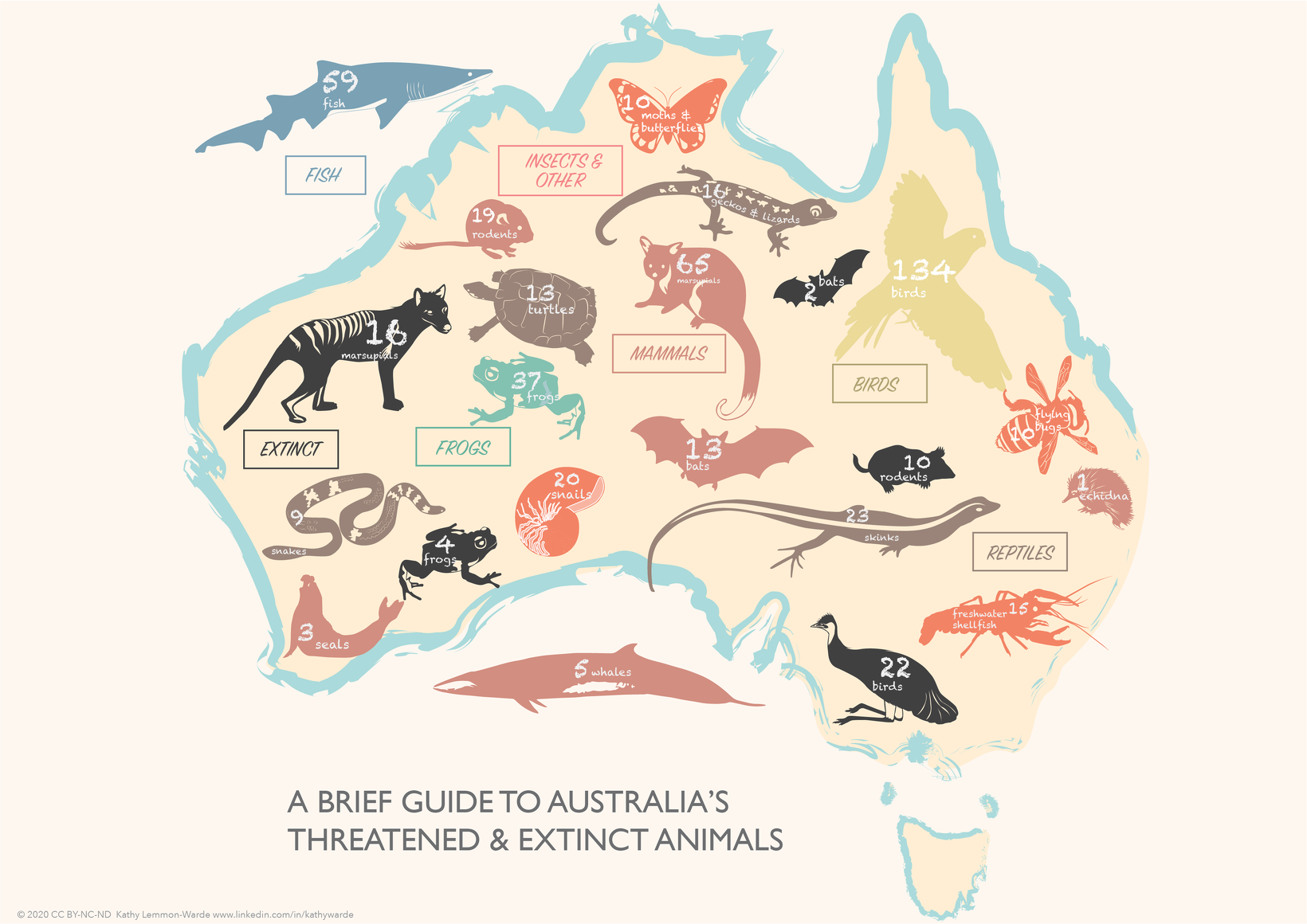
Australia has one of the highest animal extinction rates in the world. Australia has the worst mammal extinction rate of any country in the world, according to World Wildlife Fund (WWF) Australia. During the past 200 years, more mammals have gone extinct in Australia than anywhere else in the world. Species have become extinct and endangered faster in Australia than anywhere else. Currently, 562 animals species and 1,411 plant flora species are listed as threatened under the Environment Protection and Biodiversity Conservation Act of Australia. Of these, 110 are listed as National Priority Species. In the 2000s, there are 143 endangered and vulnerable animals.
As of 2022, 1,067 Australian animal species are listed as threatened under the International Union for Conservation of Nature (IUCN) Red List and a further 438 listed as near-threatened.For plants, 791 species were listed as threatened and a further 258 listed as near-threatened.
According the Australia’s Threatened Species Index (TSX) 2022 report: At the national scale, threatened and near-threatened species continue to trend downward, with an average decline of 55 percent in abundance since 1985 for the 278 species represented. Overall, the abundance of threatened and near-threatened species in the TSX database has declined by 3 percent per annum since 2000. Trends for birds are similar to the main index, with an average decline of 48 percent since 1985 across the 70 species represented. Since 2000, birds have declined by an average of 2.7 percent per annum. Trends for mammals are less severe. Across the 79 species for which the TSX has data, the average decline in abundance is 19 percent since 1985. Since 2000, mammals have declined by 1.5 percent per annum but displayed a relatively stable trend since 2003. Across the 129 plants for which the TSX has suitable data, the average decline in abundance is 77 percent since1985. The decline since 2000 is steep and linear, averaging 3.25 percent per annum. [Source: Australia’s Threatened Species Index (TSX) 2022 report tsx.org.au]
In 2002, there were about 252 species of mammals, 497 species of birds, and over 15,500 species of higher plants. According to the 2004 International Union for Conservation of Nature (IUCN) Red List Report, the number of threatened species included 63 types of mammals, 60 species of birds, 38 types of reptiles, 47 species of amphibian, 74 species of fish, 176 types of mollusks, 107 other invertebrates, and 56 species of plants. [Source: “Worldmark Encyclopedia of Nations”, 2007]
The nations with the most threatened species in the 2000s included: 1) Indonesia (128 mammal and 104 bird species); 2) Brazil (71 mammal and 103 bird species); 3) China (75 mammal and 90 bird species); 4) India (75 mammal and 73 bird species); 5) The Philippines (49 mammal and 86 bird species); 6) Peru (46 mammal and 64 bird species); 7) Mexico (64 mammal species); 8) Columbia (64 bird species); 9) Australia (58 mammal species); 10) Papua New Guinea (57 mammal species); 11) Ecuador (53 bird species); 12) Madagascar (46 mammal species); 13) the U.S. (50 bird species); 14) Vietnam (47 bird species).
RELATED ARTICLES:
ANIMALS IN AUSTRALIA: TYPES, UNIQUENESS, HABITATS, CLIMATE ioa.factsanddetails.com
DANGEROUS ANIMALS IN AUSTRALIA ioa.factsanddetails.com
VENOMOUS ("POISONOUS") ANIMALS IN AUSTRALIA ioa.factsanddetails.com
WORLD'S OLDEST LIFE FORMS: STROMATOLITES, ALGAE AND THROMBOLITES ioa.factsanddetails.com
CAMBRIAN EXPLOSION AND THE WORLD'S OLDEST ANIMALS ioa.factsanddetails.com
DINOSAURS IN AUSTRALIA: TYPES, CHARACTERISTICS, WHEN AND WHERE ioa.factsanddetails.com
ICE-AGE ANIMALS IN AUSTRALIA: WHEN, WHERE AND HOW THEY LIVED AND WENT EXTINCT ioa.factsanddetails.com
GIANT ICE-AGE ANIMALS IN AUSTRALIA: WOMBATS, KANGAROOS AND THUNDER BIRDS ioa.factsanddetails.com
Endangered Species in Australia
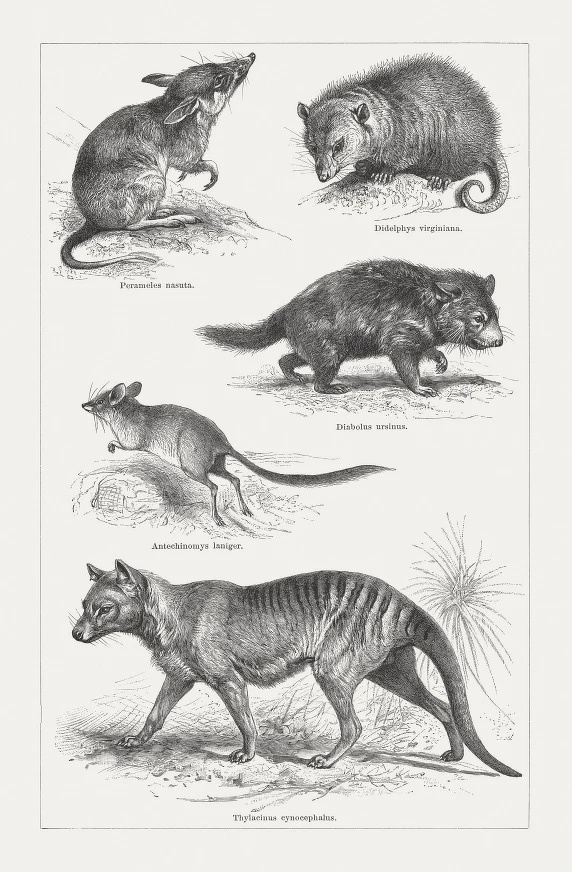
Endangered and extinct animals in Australia
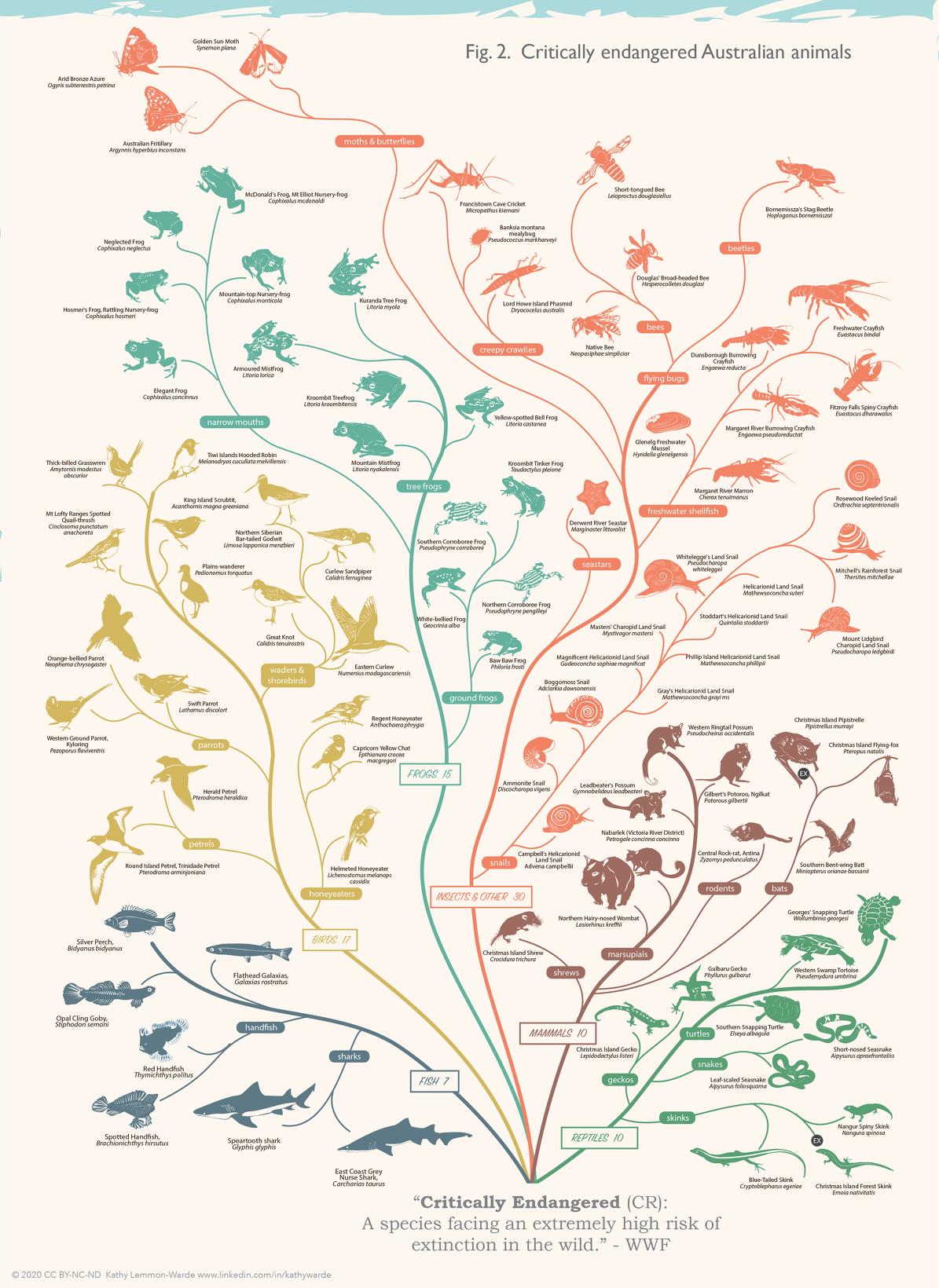
Endangered species in Australia include numbats, greater rabbit-eared bandicoots, Leadbeater's opossums, northern hairy-nosed wombats, Brush-tailed bettongs (woylies), bridled nailtail wallabies, five species of turtle (western swamp, green sea, hawksbill, leatherback, and olive ridley), Tasmanian freshwater limpets, granulated Tasmanian snails, western ground parrota, paradise parakeets, helmeted honey eaters, noisy scrub-birds, western rufous bristlebirds, Lord Howe wood rails, Lord Howe currawongs, small hemiphlebia damselflies, Otway stoneflies, giant torrent midges, and Tasmanian torrent midges. [Source: “Worldmark Encyclopedia of Nations”, 2007]
Koala populations have declined due to habitat loss and disease. Tasmanian devils face threats from a contagious cancer and habitat destruction. Black-flanked rock-wallabies are vulnerable, but making a comeback in some areas. Black-footed tree-rats are vulnerable, but doing well in some areas. Norfolk Island Green Parrot and Northern Quolls are Endangered. Eastern Regent Parrots, Freshwater sawfish, Great Desert skinks and Greater Bilbies are Vulnerable.
Numbats are Critically Endangered, with fewer than 1,000 left in the wild. Northern Hairy-Nosed Wombat are one of the rarest land mammals, with a very small population. Leadbeater's possum and Gilbert's potoroo are Critically Endangered and facing a high risk of extinction. Spotted Handfish and Mountain Pygmy-possums are Critically Endangered due to habitat destruction, threats from invasive species and climate change. Kangaroo Island Dunnarts: are Critically endangered, with a very small population following bushfires. Endangered bird species include Regent Honeyeaters and Swift Parrot. They suffer from due to habitat loss and competition for resources. Eastern Curlew are Endangered shorebirds due to habitat loss and hunting pressure.
A new species and genus of turtle was relatively recently discovered in Queensland. The new genus—“Elusor” ("to escape notice")—was first noticed in 1963 by biologist John Cann, who discovered strange turtle hatchling in Sydney pet stores. The shop owners refused to identify where they got the turtles and it took Cann until 1990 to track down the source in Queensland.
Extinct Animals in Australia
Ten species of marsupial and 25 percent of the rodent species in Australia have become extinct in the last 200 years. Lord Howe stick insect, Gray's marble toadleta, dusky flying foxes, nailtail wallabies, pigtailed bandicoot, Tasmanian wolves and the banded hare wallaby are among the country's 42 extinct species in Australia. Among the animals near extinction are the burrowing bettong and the northern hairy-nosed wombat. [Source: “Worldmark Encyclopedia of Nations”, 2007]
Since the arrival of European in Australia, 20 mammal species — including 10 types of marsupial — have become extinct. That is about half of all the mammal species that have become extinct worldwide. No other nation has such a poor record.
Animals (and the approximate time year they went extinct): 1) giant island emu (1820); 2) Darling Downs hopping mouse (1850); 3) broad-faced potoroo (1870); 4) atsern hare wallaby (1890); 5) pig-faced bandicoot (1900); 6) lesser stick-net rat (1930); 7) Tasmanian tiger (1930); 8) desert rat kangaroo (1940); 9) desert bandicoot (1940); 10) crescent nailtail wallaby (1960).
Reasons for Endangered Animals in Australia
Threats to Australian wildlife include habitat destruction, ###drought-and-rain cycles (possibly exacerbated by global warming), and the introduction of nonnative species. As agricultural and grazing land increases there is less land habitat for wild animals. Introduced non-native species are called "ferals" in Australia.
Much of Australia is inhospitable desert to begin with Clearing land for agriculture, development, and mining significantly reduces available habitat for many species. Rising temperatures associated with climate change have altered rainfall patterns, and increased frequency of extreme weather events (like bushfires).
Invasive animals like foxes, cats, and rabbits compete with native species for resources and prey on native species. Some diseases, like the cancer affecting Tasmanian devils, can decimate populations. The status of some species has been particularly affected by the arrival of Europeans and the population dynamics of predator species. Some species of wallabies have been central in an ongoing debate among conservation biologists about the definition of a Critical Weight Range (CWR). According to Animal Diversity Web: It has been the reigning consensus that non-flying, mid-sized Australian mammals have been most affected by European settlement. Traditionally, the Critical Weight Range species were considered those with mean adult body weights of 35 to 5.5 kilograms However, reevaluation of the effect of colonization on populations of western brush wallabies has prompted a push to extend this range to eight kilograms. [Source: Natalie Morningstar, Animal Diversity Web (ADW) |=|]
Conservation Efforts by WWF Australia and other organizations include habitat restoration, predator control, and disease management. Public awareness and advocacy for stronger nature laws are also crucial for protecting Australia's unique wildlife.
Endangered Mammals in Australia
An alarming number of mammals face an extinction in Australia as a result of habitat loss, introduced predators, and climate change. An international conservation group listed 59 threatened Australian marsupials. Half of them were listed as "endangered" and "vulnerable." The other half, including the koala, were listed as "potentially vulnerable."
Some of the most endangered mammals include mountain pygmy-possums and the northern hairy-nosed wombat. Koalas have a declining populations due to habitat loss, disease, and bushfires, particularly in New South Wales. Mountain Pygmy-possum, found only in alpine and sub-alpine regions, facing habitat loss and climate change threats. Gilbert's Potoroos are one of the most endangered marsupials globally, with a small population.
Northern Hairy-nosed wombats are Critically Endangered with a small population restricted to a single location in Queensland. Kangaroo Island Dunnarts are Critically Endangered. Their population has been severely impacted by bushfires. Leadbeater's Possum, also Critically Endangered are found only in Victoria. They face habitat loss and threats from forestry. Populations of Woylie (Brush-tailed Bettong) have drastically reduced due to predation and habitat loss.
Numbats are threatened by habitat loss and predation. Golden bandicoot populations have been decimated by feral cats. Greater glider populations have decline due to habitat loss and fire. Eastern quolls are vulnerable to cane toad toxins, fire, and introduced predators. Tasmanian devil are threatened by a contagious facial tumor. Greater Bilbies, found in arid and semi-arid areas,are threatened by habitat loss and feral predators.
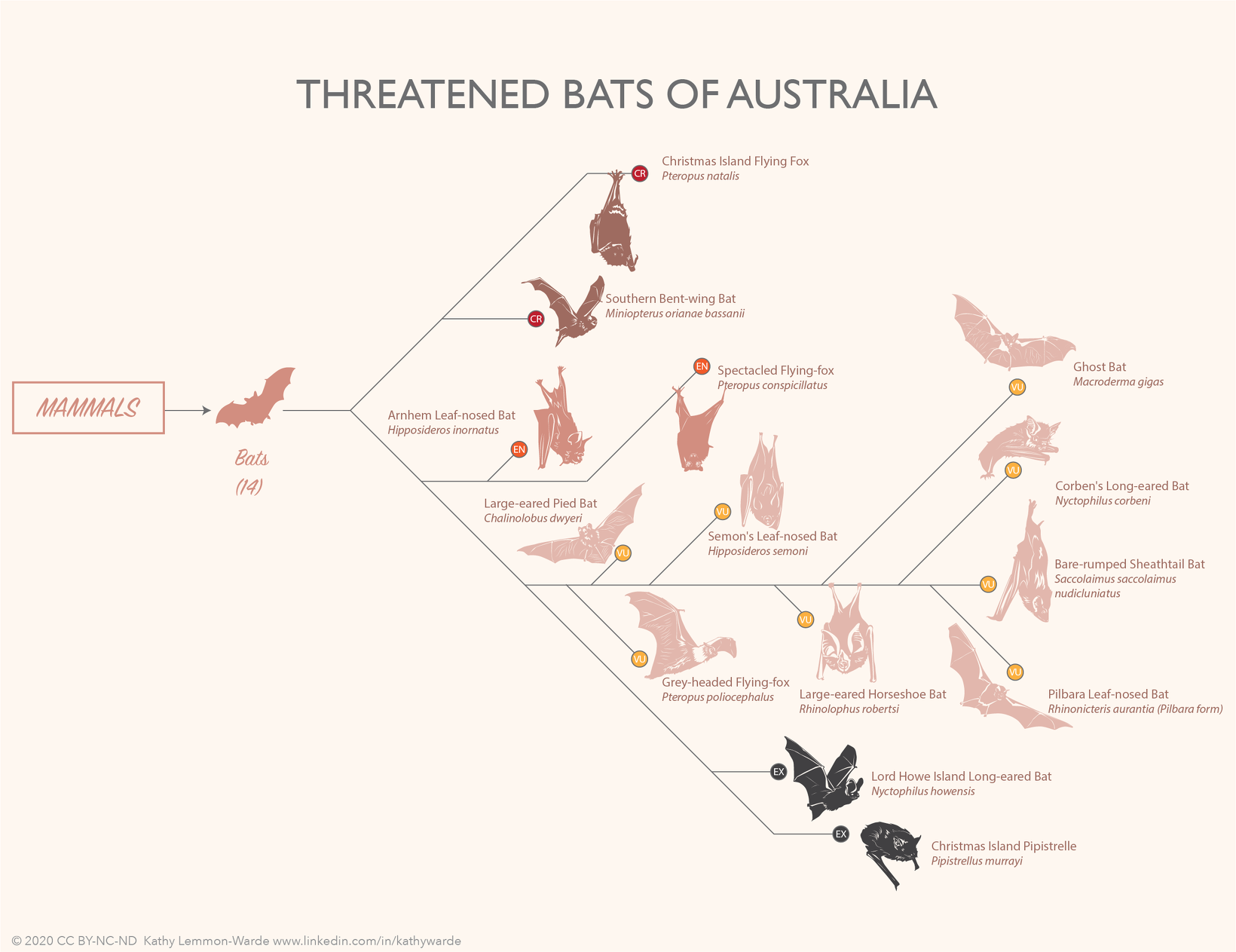
Mahogany gliders and Mala (Rufous Hare-wallabies) are Critically endangered, with reintroduction programs underway.for the later. Western Quolls, Black-footed rock-wallabies, Brush-tailed rabbit-rats, Eastern barred bandicoots and Western Ringtail possums are all threatened by habitat loss and predation. Christmas Island flying-foxes have Low population numbers. Central Rock-rats and Eastern Bettongs have limited population distributions.
Endangered Reptiles and Birds in Australia

Australia has numerous endangered reptiles, with the Victorian Grassland Earless Dragon being one of the most critically endangered. Many species are facing threats from habitat loss, invasive species like cane toads and feral cats, and climate change. A study identified 20 Australian reptiles (snakes and lizards) as being at high risk of extinction in the next two decades. More than half of these are found in Queensland.
Victorian Grassland Earless Dragons were once common but haven't been seen since 1969. Habitat loss is a major factor in its decline. Organizations like Perth Zoo and the Christmas Island National Park are involved in breeding and reintroduction programs. For example, the Christmas Island National Park has had success with captive breeding programs for Lister's geckos and blue-tailed skinks, and has even translocated blue-tailed skinks to a predator-free island.
Australia is home to a number of endangered bird species, with some facing a high risk of extinction. Again, the main threats are habitat loss, climate change, and introduced species. Orange-bellied Parrots, one of the most endangered Australian parrots, primarily threatened by habitat loss. Regent Honeyeaters, A critically endangered species, with a population of less than 400, faces habitat loss and fragmentation. Western Ground Parrots are also critically endangered, with threats including habitat loss and predation. King Island Brown Thornbill and King Island Scrubtit are at high risk of extinction within 20 years.
Swift Parrot are A critically endangered species, facing threats from habitat loss and climate change. Helmeted Honeyeates, another critically endangered species, have a small population largely restricted to a specific area. Australasian Bitterns, listed as endangered, face threats from habitat loss and degradation. Numbers of Carnaby's Cockatoo have declined due to habitat loss and other factors. Eastern Curlews, Golden-shouldered Parrot and Western bristlebirds are listed as endangered, facing threats from habitat loss, degradation along migratory routes and challenges related to fire and predator management. Red goshawk are Australia's rarest bird of prey. They have been spotted in Central Australia after a long absence there.
The clearing of native vegetation for agriculture, urban development, and other purposes has significantly reduced the available habitat for many bird species. Changing rainfall patterns, increased frequency of extreme weather events, and rising temperatures are impacting bird habitats and breeding cycles. Feral cats, foxes, and other introduced predators prey on native birds and their eggs, while other introduced species compete for resources. Changes in fire regimes, including more frequent and intense bushfires, can destroy habitats and directly kill birds. Unsustainable land management practices and other human activities can also contribute to habitat degradation and bird decline.
Conservation Efforts in Australia
Conservation efforts include 1) habitat protection and restoration: Protecting and restoring native habitats is crucial for bird survival; 2) Predator control: Managing populations of feral cats, foxes, and other predators can reduce predation pressure on native birds; 3) Fire management: Implementing appropriate fire management strategies can help minimize the impacts of bushfires on bird habitats; 4) Captive breeding and release.
For some species, like the orange-bellied parrot, captive breeding programs are used to supplement wild populations. Aussie Ark has or plans to reintroduce "cornerstone species" to the Australian ecosystem in the future: Tasmanian devils, eastern quolls, brush-tail rock wallabies, rufous bettongs, long-nosed potoroos, parma wallabies and southern brown bandicoots.
Tasmania, which once connected to the Australian mainland by a land bridge, has served as a last refuge for animals that are extinct or endangered on the mainland. A lot of enegry has gone into saving Tasmanian devils and searching for Tasmanian wolves. Brooke Jarvis wrote in The New Yorker: But some people erupted in frustration at the mention of the wolf. “We killed them off a hundred years ago and now, belatedly, we’re proud of the Tasmanian wolf!” Anna Povey, who works in land conservation, nearly shouted. She wanted to know why the government fetishizes the wolf’s image when other animals, such as the eastern quoll—cute, fluffy, definitely alive, and definitely endangered—could still make use of the attention. I couldn’t help thinking of all the purported Tasmanian wolf videos that are dismissed as “just” a quoll. “It does piss us off!” Povey said. “It’s about time to appreciate the things we have, Australia, my God! We still treat this place as if it was the time of the Tasmanian wolves—as if it was a frontier and we can carry on taking over.” [Source: Brooke Jarvis, The New Yorker, June 25, 2018]
In the nineteen-seventies, Bob Brown, later a leader of the Australian Greens, a political party, spent two years as a member of a Tasmanian wolf search team. He told me that although he’d like to think the fascination with Tasmanian wolves is motivated by remorse and a desire for restitution, people’s guilt doesn’t seem to be reflected in the policies that they actually support. Logging and mining are major industries in Tasmania, and land clearing is rampant; even the forest where Naarding saw his wolf is gone. Throughout Australia, the dire extinction rate is expected to worsen. It is a problem of the human psyche, Brown said, that we seem to get interested in animals only as they slide toward oblivion.
Cats — A Major Threat to Australian Wildlife
Feral and domestic cats in Australia pose a significant threat to native endangered animals, contributing to numerous extinctions and hindering the recovery of vulnerable populations. Cats, both feral and roaming pets, are implicated in the decline of over 200 nationally listed threatened species. Cats are an introduced, invasive species, and their impact is magnified because native animals haven't evolved defenses against them. The presence of cats can disrupt wildlife behavior, forcing animals to spend more time hiding or escaping and less time foraging or breeding. Cats are efficient predators, killing a vast number of native animals each year. Estimates range from 1.5 billion to over 3 billion animals killed annually by cats in Australia. Cats have played a major role in the extinction of at least 20 native mammal species in Australia since European settlement. Species like the numbat, bandicoot, bilby, and bettong are particularly vulnerable to predation by cats. Cats can also spread diseases like toxoplasmosis, which can be fatal to native animals.
The Greater Bilby, is listed as endangered, faces threats from feral cats and foxes. Numbats, once found across southern Australia, is now endangered due to habitat loss and predation by cats and foxes. Many bandicoot species are endangered and face threats from habitat loss, foxes, and cats. Certain bettong species are also threatened by predation from cats. Northern quolls, in particular, are critically endangered and face threats from cane toads (which they eat, leading to poisoning) and cats. Gilbert's potoroo is one of the most threatened mammals in Australia, with fewer than 200 individuals remaining, due to predation by foxes and cats. Western ringtail possums are critically endangered due to habitat loss, predation, and car strikes. Black-flanked rock-wallabies are endangered, with habitat loss, fire, and introduced foxes and cats posing threats.
Both feral cats and roaming pet cats contribute to the problem. Various strategies are being employed to control feral cat populations, including trapping, hunting, and baiting. There's a growing awareness of the need for responsible pet ownership, with recommendations to keep cats indoors or confine them to a cat enclosure. Raising awareness about the impact of cats on wildlife and encouraging community participation in conservation efforts is crucial.
Foxes — Also a Major Threat to Australian Wildlife
Foxes, introduced to Australia in the 1800s, are also a significant threat to many native animal species, particularly those considered endangered. Their predation, along with that of feral cats, contributes to the decline of numerous species, including the mountain pygmy possum, numbat, and brush-tailed bettong.
Foxes prey on various native animals, including birds, reptiles, and especially mammals, with those in the critical weight range (105 grams to 5.5 kilograms) being particularly vulnerable. Foxes are a major factor in the extinction of at least 20 Australian mammal species and are a threat to many more.
Fox predation is a major factor in the decline of critically endangered Mountain pygmy possum: species. Endangered numbats are also threatened by fox predation. Foxes are a significant predator of vulnerable Brush-tailed bettong: Foxes have been known to destroy a high percentage of Loggerhead turtle nests on some beaches. Other endangered animals in Australia impacted by foxes include the Western ringtail possum, eastern quoll, and grey-headed flying fox.
Foxes, along with feral cats, contribute to the overall decline of native wildlife, exacerbated by habitat loss and other factors. Foxes are estimated to cost Australia over $227 million annually in combined environmental and agricultural impacts. Foxes can also transmit diseases like rabies, potentially impacting both native animals and livestock. Programs like Western Shield in Western Australia, which utilizes 1080 poison baiting, have been successful in protecting over 5 million hectares and demonstrating the positive impact of fox control.
Illegal Animal Trade in Australia
The illegal exportation of exotic birds out of Australia resembles a drug smuggling operation. Individual shipments of roseate cockatoos, sulfur crested cockatoos and parakeets, which may number several thousand birds, are delivered by high powered speed boats to fishing boats on the ocean side of the Great Barrier Reef. The smugglers stop in Indonesia to pick up phony papers and then head for Hong Kong, Bangkok and Singapore where the birds are sold primarily to European dealers. Certain species of parakeet sell for over US$10,000 a pair and it is estimated that one shipment of birds can net the smugglers over a million dollars. Birds cages are equipped with a rope and a rock so the birds can be heaved overboard if the police show up.
Endangered Australian birds such as galahs, cockatoos and lorikeets are smuggled and laundered in New Zealand and legally re-exported to Europe and North America. Black palm cockatoo sell for between $12,000 and $20,000 on the black market. They are among the world's most intelligent parrots. They are found on the Cape York peninsula of Australia, New Guinea and in Indonesia. Shingleback skinks sell for $2,500 on the black market. Stout lizards with large distinctive scales also fetch high prices. Oenpelli sell for up to $50,000 on the black market. They are extremely rare large snakes capable of changing colors. They live in northern Australia. Sometimes animals are smuggled into Australia. A bird breeder tried to smuggle four parakeets into Australia by stuffing them in pants. Customs officials arrested him when they noticed movement and loud chirping behind his zipper.
In January 2024, police thwarted a plan by criminal syndicate to illegally export hundreds of native Australian lizards — with an estimated street value of US$805,000 — to Hong Kong according to New South Wales Police. Three men and a were arrested in Sydney. The BBC reported: Some 257 lizards and three snakes were seized by police after allegedly being kept in poor conditions. They have been treated and returned to the wild. [Source: Hannah Ritchie, BBC January 8, 2024]
Police set up a taskforce to investigate the alleged smugglers in September after 59 live lizards were intercepted in nine small containers on their way to Hong Kong. Officers have conducted a series of raids in New South Wales in the past few weeks. At one home in Sydney they seized 118 lizards, three snakes, eight eggs and 25 dead lizards. A search of a property in rural Grenfell turned up four lizards hidden in bags. The four suspects — all aged between 31 and 59 — have been charged with offences including exporting native reptiles, dealing with the proceeds of crime and participating in a criminal group, If convicted, they face up to 15 years in prison. Two of the men were refused bail after appearing in court over the weekend.
In recent decades, Hong Kong has grown to dominate the international trade in a range of exotic animals, according to the World Wide Fund for Nature (WWF). In 2021, a study published by the ADM Capital Foundation found that over a five-year period, four million live animals from at least 84 countries were imported into the city.
Image Sources: Quillshadow, Wikimedia Commons
Text Sources: Animal Diversity Web animaldiversity.org , National Geographic, Live Science, Natural History magazine, Australian Museum, David Attenborough books, Australia Geographic, New York Times, Washington Post, Los Angeles Times, Smithsonian magazine, Discover magazine, The Conversation, The New Yorker, Time, BBC, CNN, Reuters, Associated Press, AFP, Lonely Planet Guides, Wikipedia, The Guardian, Top Secret Animal Attack Files website and various books and other publications.
Last updated June 2025